Got an Invention Idea? Get a 3D Printed Prototype Made
You have an idea, a drawing, and a growing suspicion that the invention-promotion companies advertising on late-night television are not the answer. What you actually want is a physical object you can hold, hand to somebody, and find the flaws in. That is a prototype, and getting one printed is far cheaper and far less mysterious than the industry around inventors makes it sound.
This is the practical version: what a first prototype costs, what you need to hand over, how many revisions to expect, when to stop printing and start tooling, and how to protect the idea while you do it. No agency retainers, no "submission packages."
How do I get a 3D printed prototype of my invention made, and what does it cost?
Send sketches or a CAD file to a maker or print service and pay $120–400 for a first prototype modelled from scratch, or $15–60 per part if you already have a printable file. Modelling time, not plastic, is the dominant cost. Budget for three to five revisions before the design settles.
Last verified: July 2026
Key takeaways
- •A first prototype modelled from sketches costs $120-400. A repeat print of an existing file costs $15-60 per part.
- •The US Patent and Trademark Office does not require a physical model or prototype with a patent application.
- •Public disclosure matters more than the prototype. The US gives a one-year grace period for your own disclosure; most other countries apply absolute novelty.
- •On typical numbers, injection moulding only beats printing above roughly 930 units: a $5,000 tool at $0.60 per part versus $6 per printed part.
- •Expect three to five revisions. Ask for the CAD source file, not just the STL, or every revision restarts the modelling cost.
Decide Which Kind of Prototype You Need First
"Prototype" covers three very different objects, and asking for the wrong one is the most common way inventors overspend. Say which of these you want in the first sentence of your request and every quote you get back becomes comparable.
| Type | What it proves | Typical cost |
|---|---|---|
| Looks-like model | Size, shape, ergonomics and how it photographs. Non-functional. Usually resin or FDM with a sanded and painted finish. | $40–200 |
| Works-like prototype | That the mechanism actually functions. Ugly is fine. Often assembled from several printed parts plus bought hardware. | $120–500 |
| Production-intent part | That the design can be manufactured at volume in the real material. This is where you leave printing behind. | $500+ |
Most first-time inventors need a works-like prototype and ask for a production-intent part, which is how a $200 job becomes a $2,000 one. Prove the mechanism in cheap plastic first. Nobody who has ever funded a product cares that your first prototype had visible layer lines.
What each prototyping route costs for one part
Printing from a file you already own is the cheapest route at $15-60 a part, against $120-400 once somebody has to build the CAD model first. The expensive step is not printing, it is the modelling on the first version and the tooling on the last.
| route | Typical low | Typical high |
|---|---|---|
| Print from your own file | $15 | $60 |
| Model + print, first version | $120 | $400 |
| Resin appearance model | $40 | $150 |
| CNC machined metal part | $250 | $900 |
| Injection mould tooling | $3000 | $10000 |
Source: Comparable independent maker commissions and published service-bureau pricing for a palm-sized part, July 2026. Tooling figures are for a simple single-cavity aluminium tool and vary widely by part complexity.
What You Need to Hand Over
You do not need CAD skills, and you do not need a patent. You need enough information that somebody else can build the model without asking you twenty questions.
If you have a 3D file, send an STL or 3MF. That is what a slicer eats directly. A STEP file is even better because it can be edited rather than just printed. Our guide on preparing a 3D model for printing covers the checks worth running before you send it.
If you have drawings, send dimensioned sketches. Hand-drawn is fine. What matters is that the critical dimensions are written down: overall size, anything that has to mate with an existing product, and any wall thickness you care about. Add a photo of a comparable object for scale.
If you have neither, write down what it does, what it attaches to, how big it should be, and what it must be made of. Then expect the first quote to include design time. That is normal and it is money well spent, provided you ask for the editable CAD file at the end. If you only receive an STL, every revision means paying somebody to rebuild the model from scratch. This one clause has more effect on your total spend than any other negotiation you will have.
Protecting the Idea While You Get It Made
This is the question every inventor asks first and almost nobody answers straight. Two facts, then the practical advice. This is general information rather than legal advice, and a patent attorney is worth an hour of their fee before you spend anything serious.
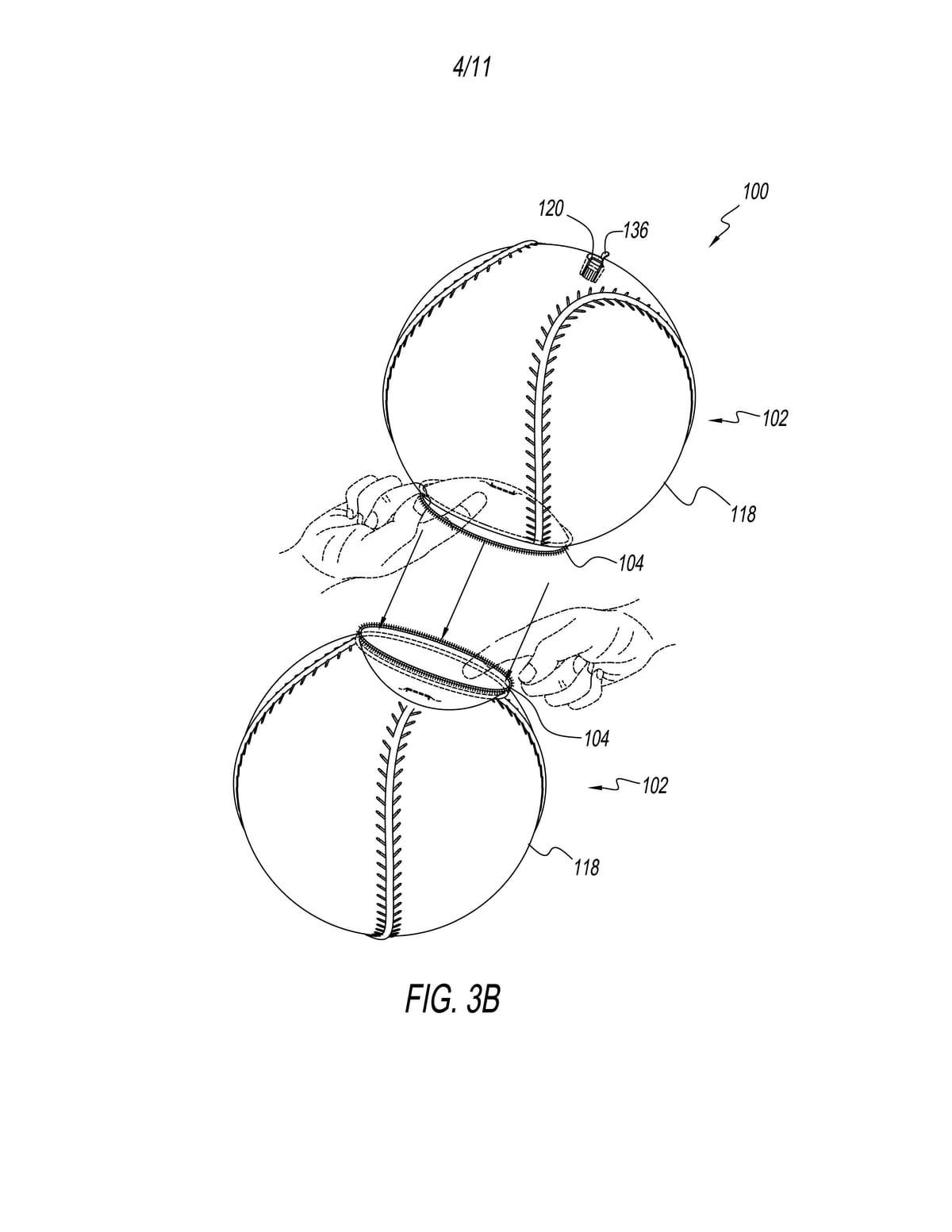
You do not need a prototype to file. The US Patent and Trademark Office has not routinely required models with applications for well over a century, and its rules treat models and exhibits as something admitted only in specific circumstances rather than as a standard requirement. A patent application is a written and drawn description. The prototype is for you, your testers and your investors.
Disclosure is the thing to manage, not the prototype. In the United States an inventor gets a one-year grace period after their own public disclosure to file. Most other major jurisdictions apply absolute novelty, meaning a public disclosure before filing can destroy patentability there permanently. So the risk is not that a maker prints your part. The risk is that you put it on social media before you file.
Practically: use a short written NDA with whoever you hire, keep the job description off public forums if you care about international rights, and consider filing a provisional application before you start showing the physical object around. Hiring one maker under an NDA is a controlled disclosure. Posting your CAD file to a public model site is not.
How we handle inventor projects
You can post a project with a private description, review bids before revealing details, and require an NDA as a condition of the job. Payment sits in escrow until you have seen photos of the finished part, so a maker who never sends the prototype never gets paid. You keep every file involved.
Budget for Revisions, Not for One Perfect Part
The single most useful thing to know before you start: your first prototype will be wrong. Not catastrophically, just wrong enough that you immediately see three changes. That is what it is for. Inventors who budget for one prototype run out of money at revision two; inventors who budget for four finish.
A sensible plan is roughly $300–600 total across three or four printed revisions of a palm-sized part, front-loaded into the first one because that is where the modelling sits. Later revisions are usually a tweak to the CAD plus a reprint, so they come in at print cost plus a small edit fee. You can price the print side of any revision yourself with our 3D print cost calculator to check that a quote is reasonable.
When to Stop Printing and Start Tooling
Printing has no setup cost and a high per-part cost. Injection moulding has a large setup cost and a very low per-part cost. The decision is arithmetic, not ideology, and the crossover is further out than most people assume.
Cost per unit: 3D printing vs injection moulding
At $6 per printed part against a $5,000 aluminium tool with a $0.60 piece price, injection moulding only becomes cheaper above roughly 930 units. Below that, printing wins and lets you keep changing the design for free.
| qty | 3D printed, per unit | Injection moulded, per unit |
|---|---|---|
| 100 | $6 | $50.6 |
| 250 | $6 | $20.6 |
| 500 | $6 | $10.6 |
| 1,000 | $6 | $5.6 |
| 2,500 | $6 | $2.6 |
| 5,000 | $6 | $1.6 |
Source: 3D Print Bounty modelling of a palm-sized part at $6 printed, and a simple single-cavity aluminium tool at $5,000 with a $0.60 piece price. Tooling quotes vary widely with part complexity, July 2026.
Two things that chart does not show. First, tooling locks the design: once the steel or aluminium is cut, a change costs real money, which is why you only tool a design that has stopped moving. Second, printing lets you sell before you commit. Plenty of products fund their first tool out of revenue from a few hundred printed units, which is a far better position than tooling on a hunch.
If you are still at the "is this even a thing" stage, our post on going from an idea to a printed object covers the earlier steps in more detail.
Three Ways Inventors Waste Money Here
Paying an invention-promotion firm for a prototype. The prototyping work is routine and priced accordingly by makers and service bureaus. Packages that bundle it with "industry submission" are charging for the bundle.
Ordering a beautiful first prototype. Sanding, filling and painting can double the cost of a part you are about to throw away. Buy the finish on the version you show to buyers, not the version you show to yourself.
Accepting STL-only delivery. An STL is a mesh of triangles, effectively uneditable for design changes. Without the CAD source, revision two costs what revision one did. Put "editable CAD source file included" in the job description.
Frequently asked questions
How much does a 3D printed prototype cost?
If you already have a printable 3D file, a single FDM prototype part costs $15-60. If somebody has to model it from your sketches first, budget $120-400 for the first version, because two to five hours of CAD work is the dominant cost. Most inventors go through three to five revisions before the design settles.
Do I need a patent before I get a prototype made?
No, and the US Patent and Trademark Office does not require a physical model with an application. What matters is disclosure. In the US you have a one-year grace period after your own public disclosure, but most other countries apply absolute novelty, so a public reveal before filing can end your rights abroad. Use a written NDA, or file first.
Should I 3D print or injection mould my invention?
Print until the design stops changing, then get quotes for tooling. On typical numbers, a $5,000 aluminium tool at $0.60 per moulded part only beats $6 per printed part above roughly 930 units. Below that, printing is cheaper and lets you change the design between batches at no cost.
What file do I need to send to get a prototype printed?
An STL or 3MF exported from CAD is what a printer actually needs. A napkin sketch, a photo of a competing product, or a dimensioned hand drawing is enough to get a quote, but somebody still has to build the CAD model from it, and that modelling work is what you are mostly paying for on a first prototype.
Will a 3D printed prototype be strong enough to test?
For fit, ergonomics and mechanism testing, yes. For load and fatigue testing, be careful: FDM parts are noticeably weaker between layers than along them, so a printed part can fail in a way the moulded version never would. Print test parts in more than one orientation before you conclude the design is wrong.
Get Your Prototype Quoted
Post your sketches or CAD file, say whether you need looks-like or works-like, and ask for the editable source file in the deliverables. Makers bid, you choose, and payment stays in escrow until you approve photos of the finished prototype. Our 3D printed prototype service page covers materials, turnaround and how the NDA option works.