How to Make Money 3D Printing in 2026: 9 Revenue Paths
Most people who try to make money 3D printing start by printing a hundred articulated dragons and taking them to a craft fair. It is a reliable way to convert $60 of filament into $40 of sales and a lost Saturday. The problem is not the printer, and it is not the quality. It is that nobody was looking for an articulated dragon.
The paths below are ordered by how quickly they produce a first paying customer. Each one gets a realistic revenue range, what it costs to start, and an honest note about who it does not work for. Some of these are worse businesses than they look on YouTube.
How do you make money 3D printing in 2026?
The reliable paths are commission printing, discontinued replacement parts, miniatures, cosplay props, prototyping, design sales, scanning and CAD, physical products, and teaching or repair. A part-time operator with one to three printers typically grosses $200–900 a month. Revenue per machine hour ranges from $2–5 for decorative goods to $12–35 for prototyping.
Last verified: July 2026
Key takeaways
- •One FDM printer offers roughly 500 usable machine hours a month if you run it hard, which is the real ceiling on print-based income.
- •Revenue per machine hour is the metric that matters: $2–5 for decorative goods, $8–20 for replacement parts, $12–35 for prototyping.
- •Filament at $22/kg costs about $0.18–0.55 per machine hour on a typical part, so material is almost never why a job is unprofitable.
- •Service paths with no machine hours (3D scanning, CAD, teaching, printer repair) have the highest hourly rates and the slowest start.
- •STL design sales have a heavily top-heavy earnings distribution: a few designers earn full-time incomes, most listings earn very little. No marketplace publishes median seller earnings, so treat design sales as a second stream, not a first.
The Nine Paths, and What Each One Pays
The ranges below are monthly gross revenue for a part-time operator, before filament, electricity and platform fees. The wide spans are real: the difference between the bottom and the top of each range is almost always demand generation, not printing skill.
Typical monthly gross revenue by path, part-time operator
Service-led paths (scanning, CAD, prototyping) have the highest ceilings because they are not limited by machine hours. Craft-fair and marketplace print work has the lowest ceiling because the price is set by competition, not by scarcity.
| path | Typical low | Typical high |
|---|---|---|
| Marketplace jobs | $150 | $800 |
| Replacement parts | $200 | $900 |
| Minis + terrain | $250 | $1200 |
| Cosplay props | $300 | $1500 |
| Selling STL designs | $0 | $600 |
| Local prototyping | $400 | $2500 |
| Craft fairs / Etsy | $100 | $700 |
| Scanning + CAD | $500 | $3000 |
| Teaching + repair | $150 | $900 |
Source: 3D Print Bounty estimates from maker quotes and comparable independent operator rates, July 2026. Indicative ranges, not measured earnings, and gross of consumables and fees.
1. Commission printing through a marketplace
Someone has a file and no printer. You print it and ship it. This is the fastest path to a first paying job because the demand already exists and you are not building an audience. It is also the most price-competitive: expect $3–6 of revenue per machine hour. Browse open print projects to see what people are actually asking for before you commit to any of the other paths, and read our guide on how to price a single 3D printing commission before you bid on your first one.
2. Discontinued replacement parts
A $25 fridge shelf clip that takes 90 minutes to print is about $17 per machine hour, and the customer has no alternative because the manufacturer stopped making the part years ago. This is the highest-margin printing work available to a hobbyist, and it comes with a real barrier: you need to be able to measure and model, not just slice. See our replacement parts service page for the categories that come up most often.
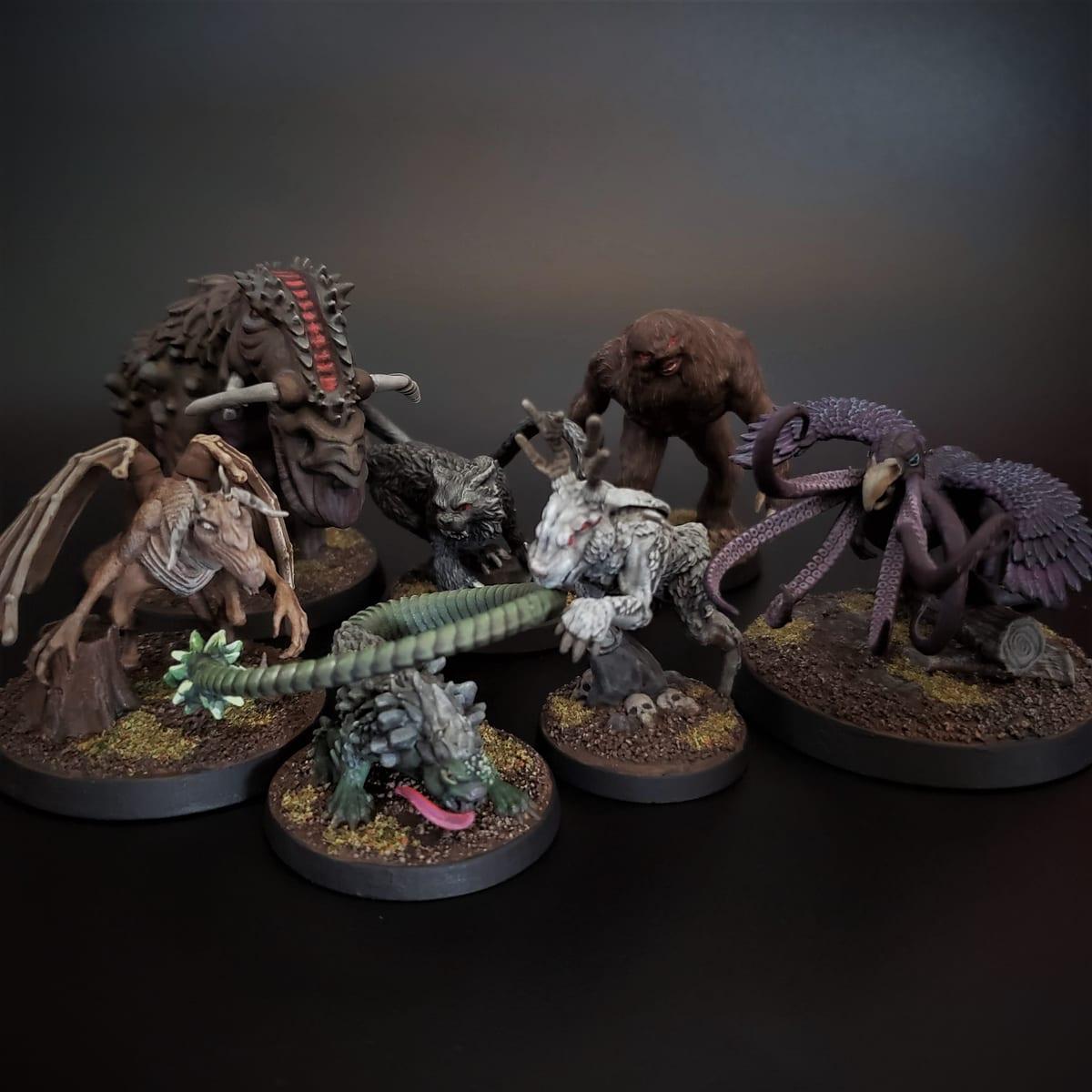
3. Tabletop miniatures and terrain
Resin minis at 28mm sell for $3–8 each and take 20–40 minutes of machine time in a full plate. The catch is that resin printing is a chemical hobby: nitrile gloves, IPA washing, UV curing, ventilation, and disposal rules that vary by locality. Add roughly $200 to your startup budget for handling gear you cannot skip.
4. Cosplay props and armor
Individually large jobs, often $300–1,500 each, but only $3–7 per machine hour because armor is mostly air and hours. It pays through volume of hours rather than rate. It also carries licensing exposure that other categories do not, because a character file carries whatever licence its individual sculptor wrote, and plenty of those do not cover printing for someone else. Only take these jobs when the customer supplies files they hold the right to print, and ask them to show you the licence.
5. Selling your own STL designs
Zero machine hours, infinite copies, and a long tail nobody warns you about. The distribution on design marketplaces is extremely top-heavy: a handful of designers earn full-time incomes and most listings earn very little. Nobody can tell you the median, because no marketplace publishes seller earnings, and any post that quotes you one has made it up. Designs that solve a specific fitting problem (a bracket for one exact camera, an organiser for one exact drawer system) outperform decorative models, because they are searched for by name.
6. Prototyping for local small businesses
The best-paying printing work there is, at $12–35 per machine hour, because you are being paid for turnaround rather than plastic. A machine shop that needs a fixture tomorrow does not price-compare. This path needs one thing most hobbyists never do: you have to physically walk into local businesses.
7. Craft fairs and Etsy products
The most popular path and the worst one on a per-hour basis, at $2–5 per machine hour before booth fees. It works when you have a genuinely differentiated product and a brand, and it fails when you are selling the same public-domain model as four hundred other shops. Be honest with yourself about which one you have.
8. 3D scanning and reverse engineering
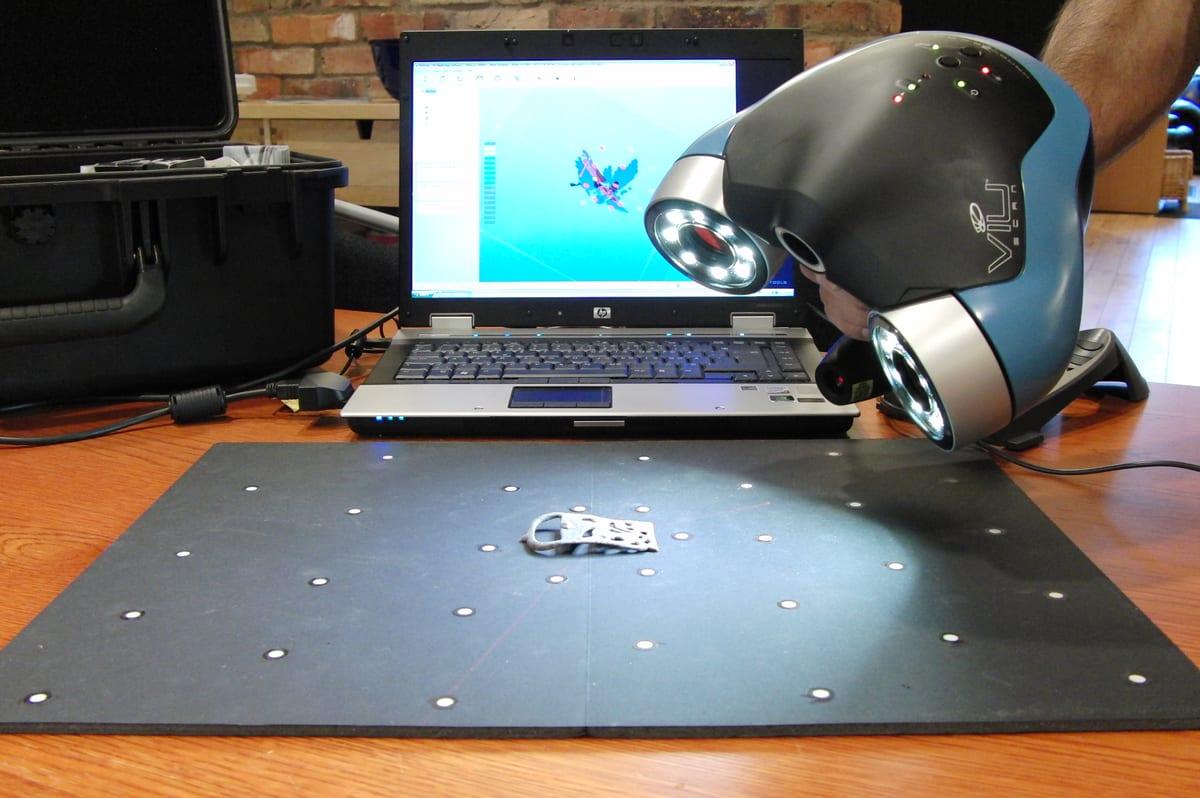
Scanning an object and delivering a printable, dimensionally correct model is billed at $60–150 an hour of your time, and consumes no machine hours at all. Entry-level handheld scanners start around $600 in 2026. This is the highest-rate path on the list and the slowest to build, because it sells on demonstrated competence.
9. Teaching, printer setup and repair
Schools, libraries and makerspaces buy printers and then discover nobody on staff can level a bed or diagnose a clog. A half-day workshop or a maintenance callout bills at $150–400. No inventory, no shipping, no machine hours. It also happens to be the best lead source for every other path on this list.
Revenue Per Machine Hour Is the Only Metric That Matters
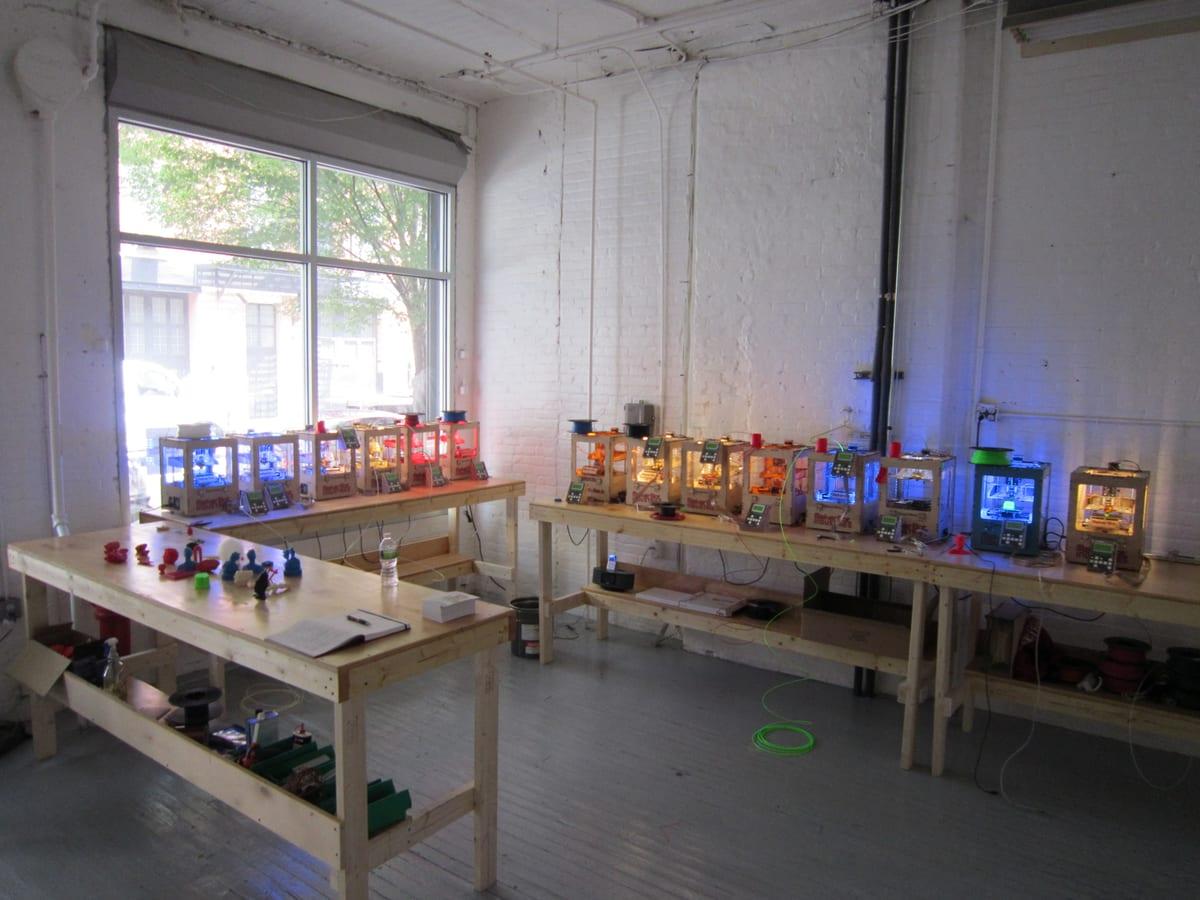
One printer gives you roughly 500 usable machine hours a month if you run it hard and accept some failures. That is a hard ceiling, and it means the question is never "how much does this job pay" but "how much does this job pay per hour the printer is tied up." A $400 armor commission that occupies the machine for 90 hours is worse business than eight $25 replacement parts.
Revenue per machine hour by printing path
Small functional parts earn roughly four times more per machine hour than decorative goods ($8–20 against $2–5), because the customer is paying for availability rather than for plastic. Prototyping pays most, at $12–35, because it is priced on turnaround.
| path | Typical low | Typical high |
|---|---|---|
| Craft fair goods | $2 | $5 |
| Cosplay props | $3 | $7 |
| Marketplace jobs | $3 | $6 |
| Minis + terrain | $6 | $14 |
| Replacement parts | $8 | $20 |
| Prototyping | $12 | $35 |
Source: 3D Print Bounty estimates from maker quotes and comparable independent operator rates, July 2026. Indicative ranges, not measured earnings. Paths with no machine-hour cost (design sales, scanning, teaching) are excluded.
That figure is worth sitting with, because it kills the most common beginner mistake: pricing a job off the weight of the plastic. On a part that takes four hours and uses 60g of filament, material is about $1.30, or $0.33 a machine hour. If you quote $6 because "it is only a bit of plastic," you have priced four hours of a finite resource at $1.50 an hour, of which $0.33 was never yours to keep. Run your own numbers through the print cost calculator and you will see the same shape on every job.
What Each Path Costs to Start
| Path | Startup cost | Time to first paid job | Main risk |
|---|---|---|---|
| Marketplace jobs | $180–350 printer, $25 filament | Days | Underbidding your own machine hours |
| Replacement parts | Printer + $30 calipers + CAD time | 1–4 weeks | Modelling from a broken original that no longer holds its shape |
| Minis + terrain | $200–500 resin printer + $200 handling | 2–6 weeks | Resin handling, ventilation and licence terms on sculpts |
| Cosplay props | Printer + $150 finishing supplies | 2–8 weeks | Licence exposure and 60-hour finishing jobs quoted as 6-hour ones |
| Selling designs | $0 (free CAD) + a printer to test | 1–6 months | Heavily top-heavy earnings distribution, and no marketplace publishes seller earnings, so you cannot forecast it |
| Prototyping | Printer + business cards + door knocking | 2–8 weeks | Needs in-person selling most hobbyists avoid |
| Craft fairs / Etsy | Printer + $200 stock + $40–120 booth | 1–3 months | Unsold inventory and a saturated model catalogue |
| Scanning + CAD | $600+ scanner, or start with photogrammetry | 1–3 months | Sells on demonstrated skill, so the first jobs are slow |
| Teaching + repair | $0 beyond tools you already own | 2–6 weeks | Irregular demand; not a full-time income on its own |
Three Things That Do Not Work
Buying more printers before you have a queue. Machines do not create demand. A second printer is the right purchase when your first one is booked out two weeks and you are turning work away, and the wrong purchase at any point before that.
Competing on price with an injection-moulded product. If the thing you are printing exists on a shelf for $6, you cannot win. Every profitable category on this list shares one property: the customer cannot easily buy the item any other way.
Printing licensed characters for resale. It is the fastest-selling category at a craft fair and the one that gets accounts closed and listings removed. A fan-art file carries whatever licence its sculptor attached, and a licence granted to the buyer does not transfer to you when a customer sends you the file. Read it before you print it, and remember the underlying character is a separate right again.
Frequently asked questions
Can you actually make money 3D printing in 2026?
Yes, but not by selling generic printed trinkets. The paths that pay are the ones where the customer has a problem and no alternative supplier: discontinued replacement parts, prototypes for small businesses, cosplay and miniature commissions. A single-printer side hustle in those categories typically clears $200–900 a month.
How much can one 3D printer earn per month?
One well-used FDM printer running commission work realistically produces $200–900 a month in revenue, before filament and electricity. The ceiling is machine hours: about 500 usable hours a month if you run it hard, at $2–35 of revenue per machine hour depending on what you print — $2–5 for decorative goods, $8–20 for replacement parts, $12–35 for prototyping.
What is the most profitable thing to 3D print and sell?
Small, high-value parts that are hard to buy elsewhere. Discontinued appliance and furniture parts earn $8–20 per machine hour because a $25 part may take 90 minutes to print. Bulk decorative items earn $2–5 per machine hour and rarely cover the time spent selling them.
Do I need an expensive printer to start earning?
No. A $180–350 bed-slinger or entry CoreXY handles most commission work, and print quality on those machines in 2026 is not the bottleneck. Reliability is. Budget for a spare nozzle, spare hotend and a build plate rather than a more expensive printer.
Is selling STL files better than selling prints?
It scales better and pays worse at first. Design sales have no machine hours and no shipping, but the earnings distribution is heavily top-heavy: a small number of designers earn full-time incomes and most listings earn very little. No marketplace publishes median seller earnings, so treat any specific figure you see quoted with suspicion. It works as a second income stream on top of print work, not as a first one.
Start With Work That Already Exists
The shortest route to a first paying job is bidding on something someone has already posted. Browse open projects, bid what your machine hours are worth, and get paid from escrow once the customer approves photos of the finished part. Need something printed yourself, or want to see what a well-written brief looks like before you bid on one? Post a job and watch the bids come in.