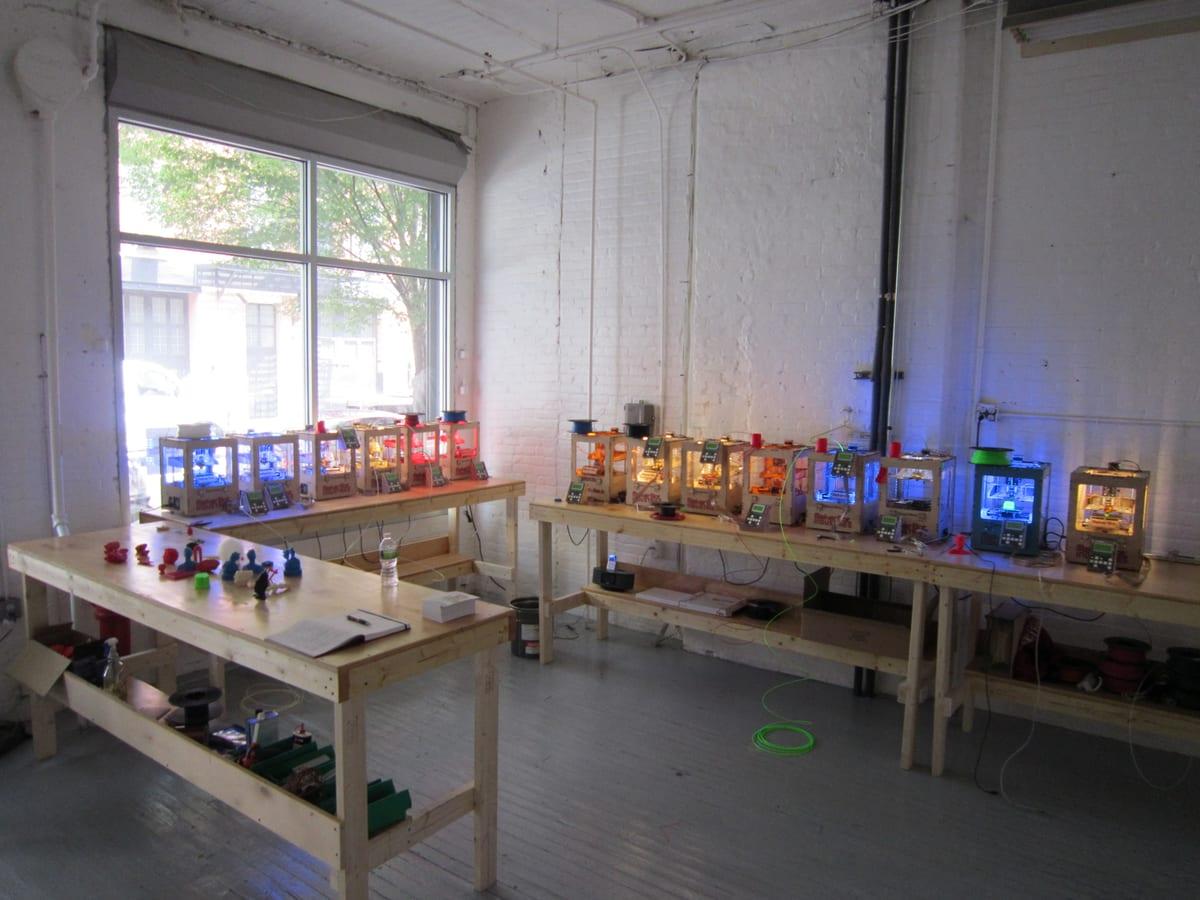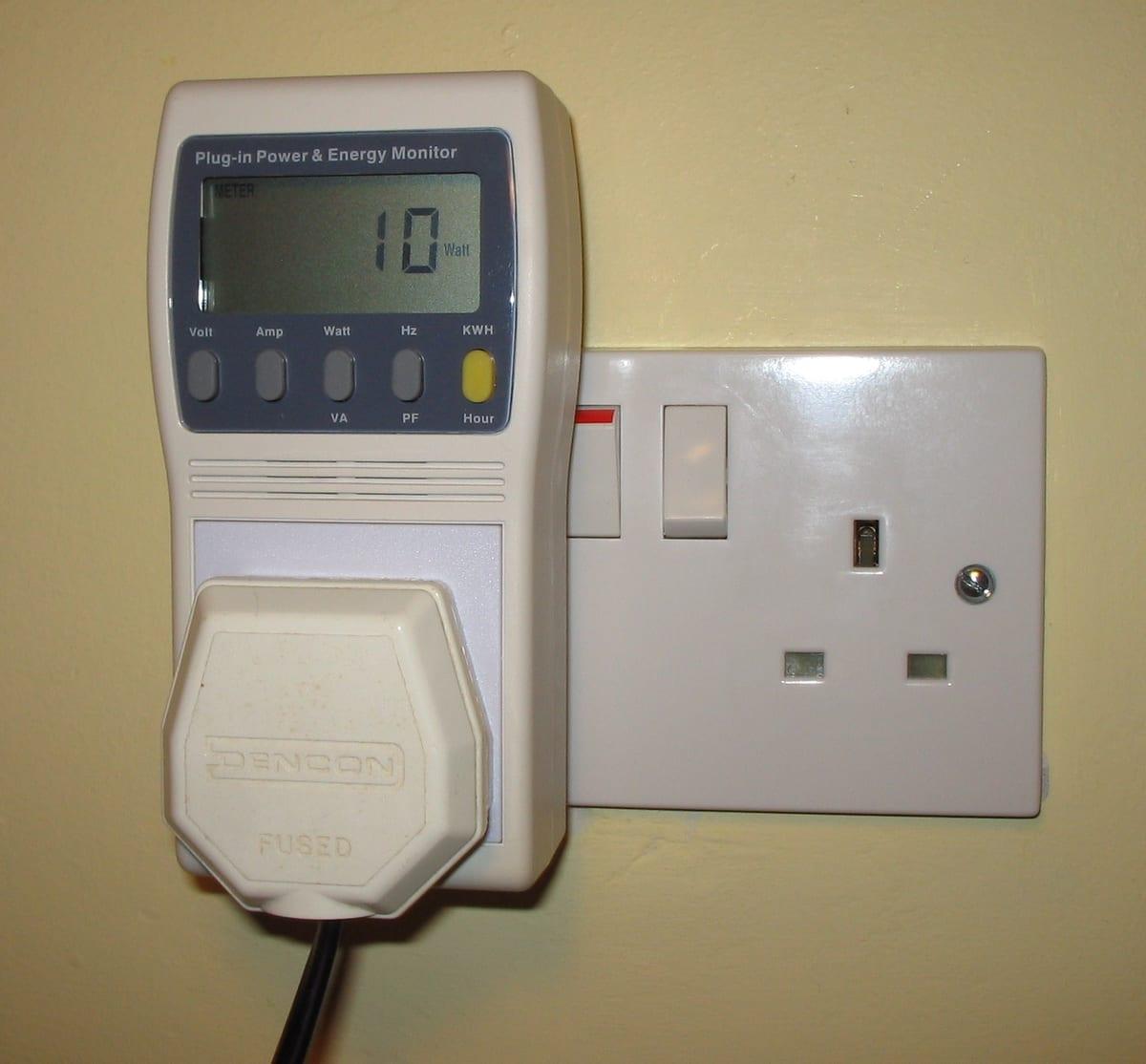
What Does It Cost to Run a 3D Printer?
Every thread about whether to buy a printer eventually reaches somebody worrying about the power bill. It is a reasonable worry and it has an unreasonable answer: a 3D printer costs about as much to run as a laptop, and less than the kettle you used while waiting for it.
The full arithmetic is below, along with the numbers that actually decide what a print costs. If you are pricing jobs for other people, the second half of this post matters more than the first, because the mistake is not overestimating electricity. It is underestimating everything else in an hour of machine time.
How much does it cost to run a 3D printer?
A desktop 3D printer costs about 2 cents per hour to run in electricity: a typical 120-watt machine uses 0.12 kWh an hour, and the US residential average price is roughly $0.18 per kWh. A 10-hour print costs $0.22 in power, against $5.00 of filament and around $30 of machine time. Power is under 1% of a quote.
Last verified: July 2026
Key takeaways
- •A desktop FDM printer with a heated bed averages 70-150 watts while printing, or 1.3-2.7 cents per hour at $0.18/kWh.
- •A 10-hour print costs about $0.22 in electricity — roughly 0.6% of a $35 quote for the same job.
- •The heated bed is the largest single load, drawing 120-220 watts while heating and cycling at 20-40% duty afterwards.
- •Leaving a printer idle year-round at 5 watts costs about $7.88 a year.
- •The true running cost of a desktop printer is roughly $0.33 per hour once depreciation, consumables and maintenance are included. Electricity is about 6% of that.
The Formula, and Nothing Else
Cost = (watts ÷ 1,000) × hours × price per kWh. There is no second step. A 120-watt printer running a 10-hour job uses 120 ÷ 1,000 × 10 = 1.2 kWh. Multiply by $0.18 and you get $0.216.
The two inputs people get wrong are both easy to fix. Your electricity price is on your bill, usually as a per-kWh rate plus a fixed daily standing charge that you pay whether you print or not. The US residential average sits at roughly $0.18 per kWh on US Energy Information Administration data for 2026, with most states between $0.12 and $0.28 and Hawaii and California materially above that. Your printer's wattage is not the number on the power supply label, which is a peak rating and typically two to three times actual draw. A 350W supply on an Ender-class machine averages well under 150W in use.
Average power draw while printing, by printer class
Most desktop FDM printers average 70-150 watts in steady state. Only two classes go meaningfully above 200 watts: enclosed high-temperature machines running ABS or ASA, and large-format printers, which are heating far more bed area.
| klass | Typical low (W) | Typical high (W) |
|---|---|---|
| FDM, no heated bed | 30W | 60W |
| Desktop FDM, heated bed | 70W | 150W |
| Enclosed high-temp FDM | 150W | 350W |
| Large-format FDM | 200W | 400W |
| MSLA resin | 30W | 60W |
Source: Manufacturer-published power ratings and typical measured steady-state draw for common desktop machines, July 2026. Figures are averages over a print, not peak heat-up draw
What a Print Costs in Power
A 40-hour print on a normal desktop printer costs 86 cents in electricity. That is a full-size cosplay helmet, or a large enclosure, or a weekend of continuous running, and it is less than a coffee. Even the worst realistic case, a 100-hour job on an enclosed 300-watt machine printing ABS, comes to $5.40.
Heat-up adds a little at the front. The first five to ten minutes of a print pull 200-400 watts as the bed and nozzle come to temperature, which is about 0.05 kWh, or under a cent. On a 10-hour print that rounds away. On a batch of 20 small parts printed as 20 separate jobs, you pay it 20 times, which is one of several reasons batching is cheaper.
Electricity cost by print duration at $0.18 per kWh
A 20-hour print costs 43 cents on a 120-watt desktop printer and $1.08 on a 300-watt enclosed machine. Print duration would have to reach hundreds of hours before power became a line item worth discussing.
| hours | Desktop FDM (120W) | Enclosed high-temp (300W) |
|---|---|---|
| 1h | $0.02 | $0.05 |
| 5h | $0.11 | $0.27 |
| 10h | $0.22 | $0.54 |
| 20h | $0.43 | $1.08 |
| 40h | $0.86 | $2.16 |
| 100h | $2.16 | $5.4 |
Source: Calculated as (watts ÷ 1,000) × hours × $0.18/kWh, the US residential average published by the US Energy Information Administration for 2026. Compiled August 2026
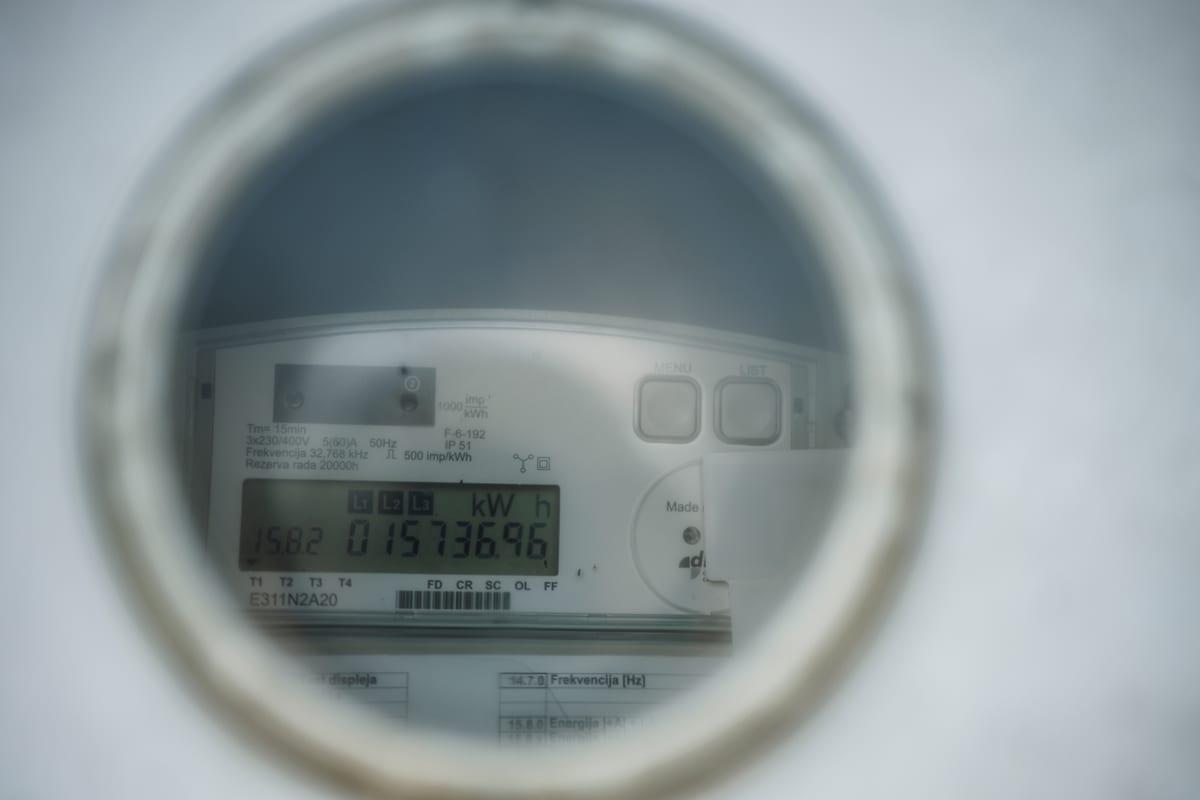
Where the Watts Actually Go
The heated bed is the load. A 220mm bed pulls 120-220 watts while heating, then cycles at roughly 20-40% duty to hold temperature, which is most of a printer's average draw. Everything else is small: the hotend adds 40-60 watts at low duty, and the mainboard, stepper drivers, screen and fans take a fairly constant 20-30 watts whether the printer is moving or not.
Three practical consequences. First, printing PLA with the bed at 55°C instead of 65°C measurably cuts average draw, and printing PLA with the bed off entirely after the first few layers cuts it further if your adhesion allows. Second, an enclosure is worth power as well as print quality, because it reduces how hard the bed has to work. Third, standby draw is real but tiny: a printer idling at 5 watts for a full year uses 43.8 kWh, which is $7.88. Turn it off at the wall if you like, but do not pretend it is a savings plan.
Resin is a different shape of the same answer. An MSLA printer averages 30-60 watts because it has no heated bed and no motion beyond a slow Z axis. What resin costs you is not power, it is IPA, gloves, nitrile, filtration and time. The resin printing cost breakdown covers where that money actually goes.
Electricity Against Everything Else in a Quote
Here is a 10-hour, 200-gram PLA print costed line by line at July 2026 prices. This is the whole argument in one table.
| Cost line | How it is worked out | Amount | Share |
|---|---|---|---|
| Machine time | 10 hours at a $3/hour mid-range rate | $30.00 | 85.2% |
| Filament | 200g of PLA at $0.025/g | $5.00 | 14.2% |
| Electricity | 120W for 10 hours = 1.2 kWh at $0.18/kWh | $0.22 | 0.6% |
| Subtotal before margin | Material plus machine plus power | $35.22 | 100% |
Material and hourly-rate figures are the defaults in the 3D Print Bounty cost calculator ($0.025/g PLA, $3.00/hour mid-range). Electricity priced at the US Energy Information Administration residential average for 2026. Compiled August 2026.
This is exactly why our 3D print cost calculator has no electricity field. It asks for weight, print hours, material and an hourly rate, because those four inputs account for 99.4% of the number and a fifth field would only imply a precision that does not exist. If you want to include power anyway, add two cents per print hour to your hourly rate and you have done it exactly.
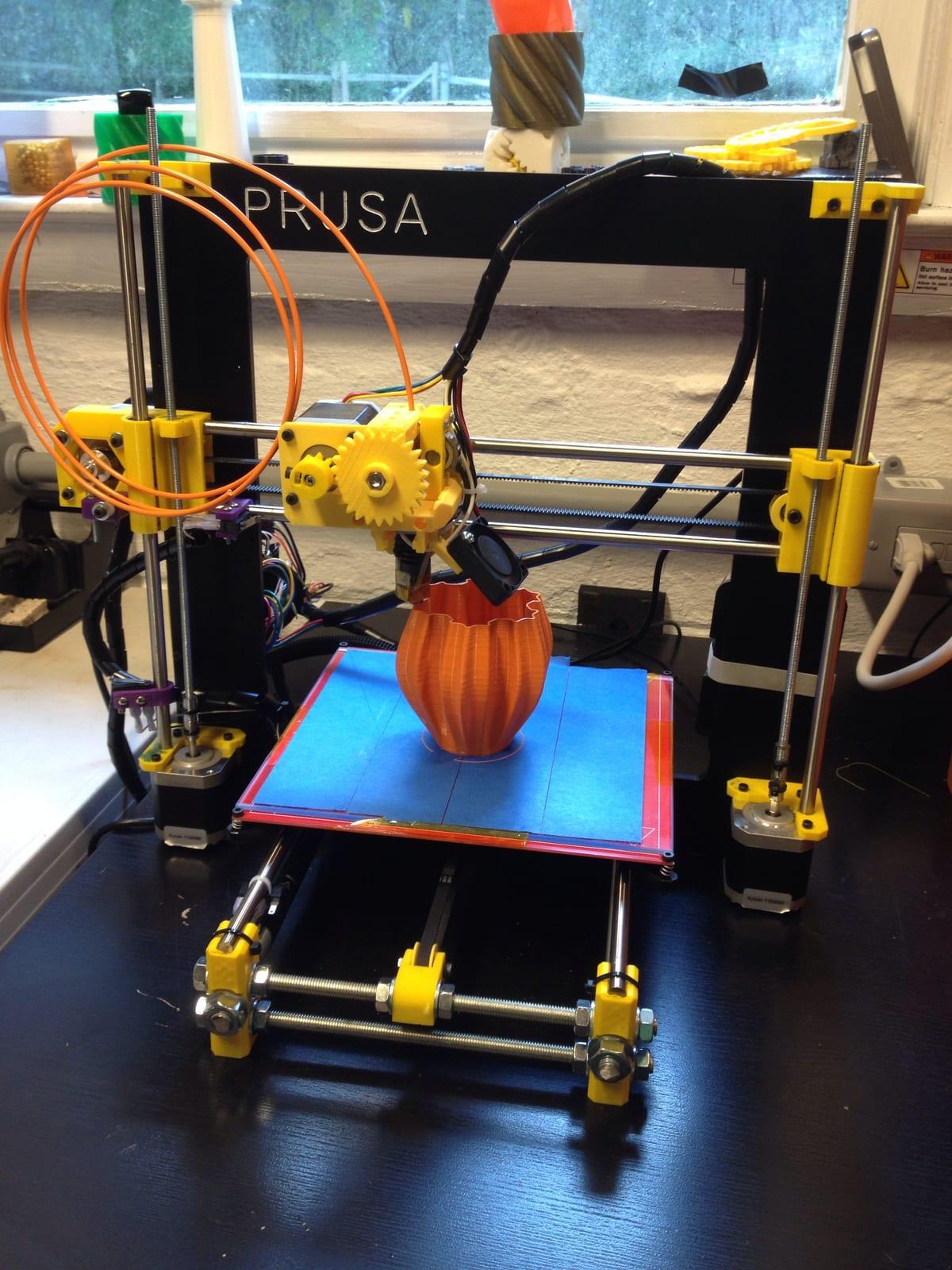
The Real Cost of a Machine Hour
Running a $400 desktop printer costs roughly $0.33 per hour, all in. Electricity is about 6% of that. Here is the stack, based on a machine run 2,000 hours a year over a two-year useful life:
- Depreciation — $400 over 4,000 hours = $0.10/hour.
- Electricity — 120W at $0.18/kWh = $0.02/hour.
- Consumables — nozzles, PTFE, build plates and belts at roughly $120/year = $0.06/hour.
- Maintenance labour — about an hour a month at $25 = $0.15/hour.
So when a maker charges $3 an hour, $0.33 of that is the machine and $2.67 is their time, their risk on failed prints, and their profit. That is not a markup to be embarrassed about; a failed 20-hour print costs the maker 20 hours of capacity and nobody is paying for it. If you want the full picture of how those pieces assemble into a price, the 3D printing cost guide walks through all four components.
When Electricity Does Start to Matter
Three situations, and only three. Print farms: ten printers running 16 hours a day for 300 days is 10 × 0.12 × 16 × 300 = 5,760 kWh, or $1,037 a year at $0.18. That is a real line on a real P&L, and it is why farm operators care about bed insulation and idle scheduling in a way hobbyists never need to.
High electricity prices: at Hawaii-level rates near $0.47 per kWh, the same 10-hour print costs $0.56 rather than $0.22. Still small, but at farm scale the annual number multiplies by roughly two and a half.
Enclosed high-temperature printing: a chamber held at 50-60°C for ABS, ASA or PC runs at the top of that 150-350 watt band continuously. At 350 watts a 40-hour engineering-material print uses 14 kWh and costs $2.52 rather than $0.86. Still not the reason those jobs are quoted higher, which is failure rate and material price, but it is no longer a rounding error.
Outside those cases, the honest advice is to stop thinking about it. If you are deciding whether owning a printer makes financial sense, electricity is not the variable that decides it. Print hours, failure rate and how often you actually have something to print are.
Frequently asked questions
How much electricity does a 3D printer use?
A desktop FDM printer with a heated bed averages 70-150 watts while printing, which is 0.07-0.15 kWh per hour. At the US residential average of about $0.18 per kWh, published by the US Energy Information Administration, that is 1.3 to 2.7 cents an hour. Enclosed high-temperature machines running ABS or ASA average 150-350 watts.
What does a 10-hour 3D print cost in electricity?
About 22 cents. A 120-watt printer running 10 hours uses 1.2 kWh, and at $0.18 per kWh that is $0.22. On the same print, 200 grams of PLA costs $5.00 and 10 hours of machine time at a $3 hourly rate costs $30.00, so power is roughly 0.6% of the total.
Is it expensive to run a 3D printer all day?
No. A printer running 24 hours at 120 watts uses 2.9 kWh, or about $0.52 a day at $0.18 per kWh. Running three printers 16 hours a day for 300 days a year costs roughly $311 in electricity. The cost of running a printer continuously is wear, failed prints and your attention, not power.
Why does our cost calculator not have an electricity field?
Because electricity is roughly 2 cents of a machine hour that most makers price at $1.50 to $7.50. Breaking it out separately implies a precision that does not exist and distracts from the numbers that move a quote. It is folded into the hourly rate along with depreciation, consumables and maintenance.
Does a heated bed use most of the power?
Yes. A 220mm heated bed draws 120-220 watts when heating and cycles at roughly 20-40% duty once it holds temperature, which is the largest single load on the machine. The hotend adds 40-60 watts at low duty and the mainboard, screen and motors take a fairly constant 20-30 watts.
Price the Print, Not the Power
Put your part weight, print hours and material into the calculator and you will have a defensible price in under a minute. If you would rather not run a printer at all, post the job and let makers who already own the machines bid on it.