3D Printed Cosplay Armor: Fit, Materials and Cost
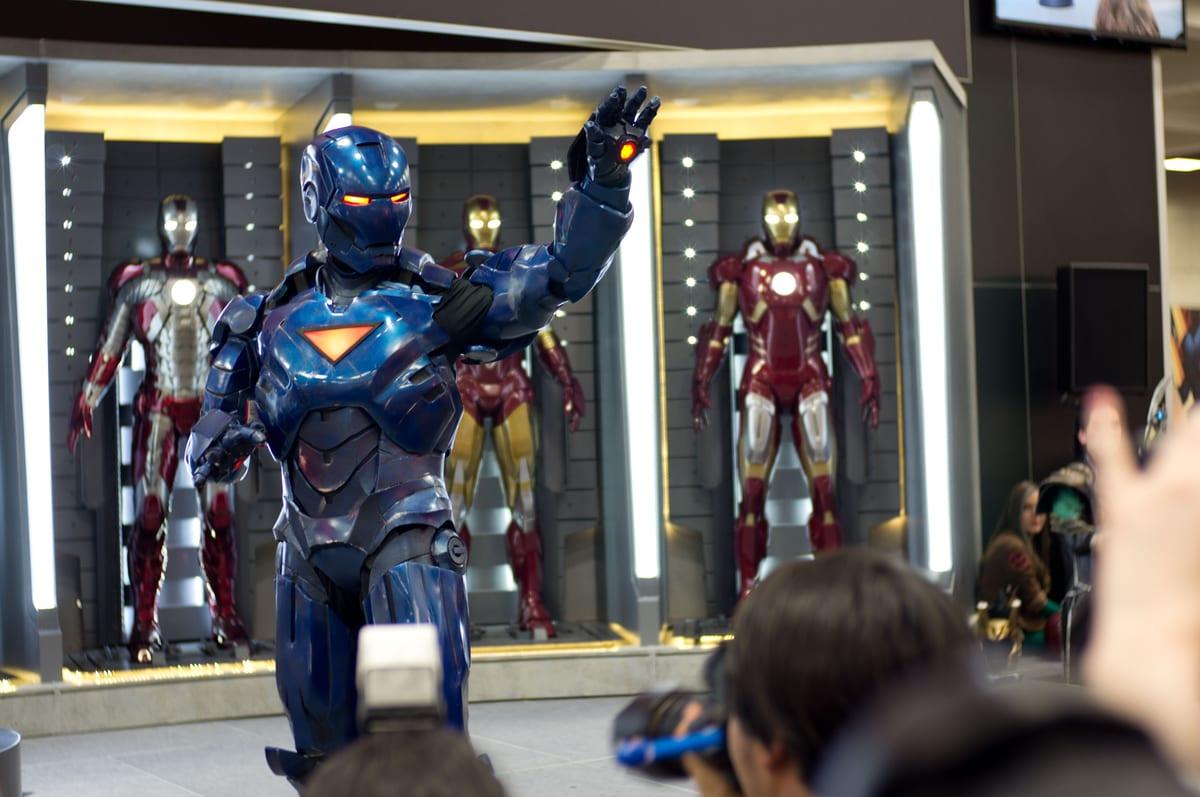
Armor is the point where 3D printed cosplay stops being a printing problem and becomes a tailoring problem. A helmet either goes on your head or it does not. A chest plate has to sit correctly while you walk, sit down, raise your arms to pose, and stand in a queue for four hours without the edge digging into your armpit.
That difference explains most of what follows: why armor commissions cost what they do, why makers ask for twelve measurements instead of your t-shirt size, and why the best builds are frequently not fully printed at all.
This is the deep dive on fit, weight and material choice, and it prices armour finished. If you are earlier than that and want the whole process end to end without owning a printer — where files come from, what raw printing costs, finishing and a convention timeline — start with our complete guide to 3D printed cosplay and come back here when you are choosing materials and sending measurements.
How much does 3D printed cosplay armor cost?
A full 3D printed cosplay armor set costs $1,200-3,000 commissioned and finished, and $450-1,200 for raw printed panels alone. A chest and back plate on its own runs $350-800 finished. Expect 3-6kg of filament, 200-400 hours of printing, and 60-150 hours of sanding, painting and strapping.
Last verified: July 2026
Key takeaways
- •A finished full set of 3D printed cosplay armor costs $1,200-3,000 from independent makers as of July 2026; raw unfinished panels cost $450-1,200.
- •A complete printed set weighs 2.5-4.5kg finished, with the chest and back plate the heaviest single element at 900g-1.6kg.
- •Makers need twelve body measurements, not your height. Torso proportion varies far more between people than height does.
- •PLA is the default; switch to PETG where a panel must flex. Prusa publishes a 6 kJ/m2 notched Charpy figure for Prusament PETG and no notched figure for PLA, so no ratio between the two is available.
- •Allow six to twelve weeks. Print time is 200-400 hours and filler primer needs 24 hours of cure between sanding passes.
Fit Is the Whole Problem
Most disappointing armor builds are dimensionally correct and still wrong, because the model was scaled uniformly from a generic body. Uniform scaling assumes your proportions match the sculptor's reference figure. They do not. Two people who are both 178cm tall can differ by 20cm in chest circumference and 8cm in shoulder width.
Send these measurements with the job, taken over the clothing you will wear underneath:
| Measurement | What it controls |
|---|---|
| Chest circumference and waist | Chest plate wrap and where the side straps land. |
| Shoulder to shoulder, across the back | Pauldron placement. Get this wrong and your arms will not come down. |
| Bicep, forearm and wrist circumference | Bracer taper. A cylinder that fits the forearm will not pass over the elbow. |
| Thigh and calf circumference | Greave and cuisse fit, plus how much articulation is needed to sit down. |
| Knee to ankle, waist to knee | Vertical proportion. This is what uniform scaling gets most wrong. |
| Head circumference and height | Helmet fit and overall silhouette scaling. |
Also state whether you will wear the armor over a padded undersuit. Padding adds 2π times its thickness to a circumference, so a 6mm foam undersuit adds roughly 38mm to your chest measurement. That is enough to turn a snug chest plate into one that will not close.
What Each Piece Costs
Armor is quoted per piece, not per suit, because most people build in stages. The chest and back plate is the expensive structural element; small detail parts are cheap individually and add up fast when a design has forty of them.
Finished cost per armor piece, commissioned
A chest and back plate costs $350-800 finished and a helmet $250-600. A full set of six element groups totals $1,200-3,000 at these ranges.
| piece | Typical low | Typical high |
|---|---|---|
| Chest + back plate | $350 | $800 |
| Helmet | $250 | $600 |
| Pauldrons (pair) | $160 | $400 |
| Bracers (pair) | $140 | $350 |
| Greaves (pair) | $200 | $500 |
| Belt and details | $100 | $350 |
Source: 3D Print Bounty maker quotes and comparable independent cosplay commissions, July 2026
So a $1,600 armor commission contains about $110 of plastic. The other $1,490 is 200-400 hours of machine time on somebody else's printer, plus the 60-150 hours of hands-on filling, sanding, priming, painting and strapping that turn printed panels into something wearable. You can verify the material component of any quote with our 3D printing cost calculator.
One economy worth knowing: many makers will quote a lower rate for a raw or primed-only set, on the understanding that you do the finishing. If you have a garage, a respirator and patience, that is where the largest saving in this whole category lives.
Weight, and Why It Decides Your Day
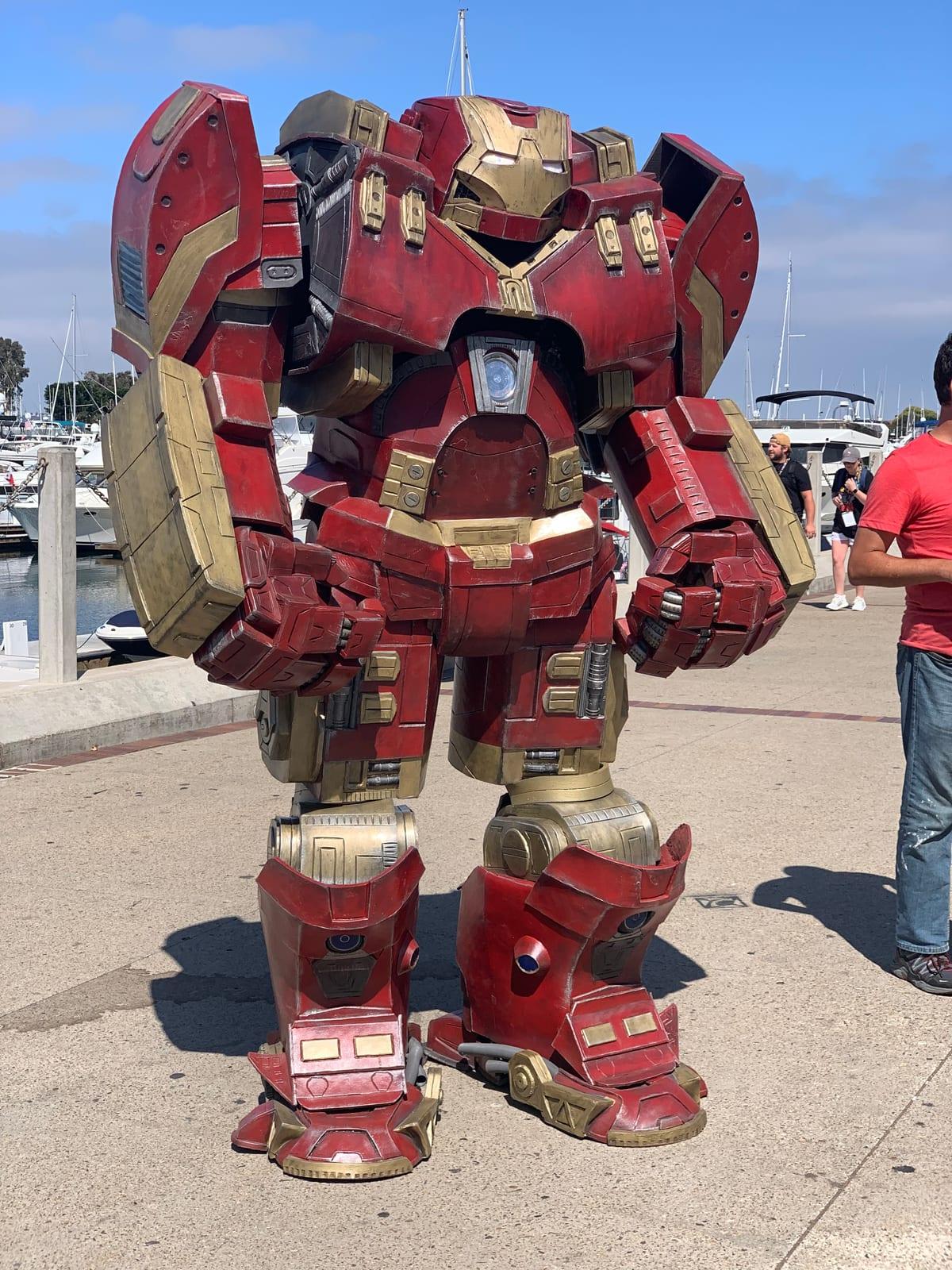
A full printed set weighs 2.5-4.5kg finished. That is less than most people expect and still enough to be miserable if it hangs from the wrong places. PLA has a density of about 1.24 g/cm3, so wall thickness and infill are the levers: three perimeters at 10 percent infill is the usual compromise between rigidity and mass.
Finished weight per armor piece
A complete printed set comes in at 2.45-4.55kg once filler and paint are included. The chest and back plate is the heaviest element at 900g-1.6kg.
| piece | Typical low (g) | Typical high (g) |
|---|---|---|
| Chest + back plate | 900g | 1600g |
| Helmet | 600g | 1100g |
| Greaves (pair) | 400g | 800g |
| Pauldrons (pair) | 300g | 600g |
| Bracers (pair) | 250g | 450g |
Source: 3D Print Bounty maker build logs, PLA at 1.24 g/cm3 with three perimeters and 10 percent infill, July 2026
The comfort variable is not total mass but load path. Chest plates that hang from shoulder straps put every gram on your trapezius; the same plate on a hip belt with shoulder straps only for positioning is dramatically more comfortable after hour three. Ask any maker quoting a full set how the chest piece carries its weight. If the answer is "shoulder straps," ask for a belt.
Bracers and greaves should be strapped with elastic rather than fixed webbing. Your forearm changes circumference as you grip and release, and rigid strapping either pinches or slides.
Which Filament for Which Piece
PLA is the correct default for armor. It is stiff, cheap, dimensionally stable during long prints, and it sands better than the alternatives, which matters because sanding is most of the finishing labour.
Two situations justify switching:
- Panels that flex. Prusa's published ISO 179 data gives Prusament PETG a notched Charpy impact strength of 6 kJ/m2 in the horizontal print direction, while the Prusament PLA data sheet reports notched Charpy as not applicable because the specimens do not behave usefully in that test. There is therefore no published PLA figure to divide into it, and any "PETG is N times tougher than PLA" claim sourced to Prusa data is invented. What the absence itself tells you is the useful part: in practice this is the difference between a bracer edge that bends when you catch it on a doorframe and one that snaps.
- Heat. Prusament PLA lists a heat deflection temperature of 55°C at 0.45 MPa. Prusament ASA lists 93°C at the same load and is UV-stable. If the costume is being worn outdoors in summer, or transported in a car boot, ASA is worth the extra cost on the large plates even if the detail parts stay PLA.
Resin belongs on small detail parts only. It is more brittle than any of the filaments above, and a resin pauldron that takes one knock in a crowded hall is finished.
When Not to Print It
Printing is not automatically the right answer, and saying so is the fastest way to save somebody a thousand dollars.
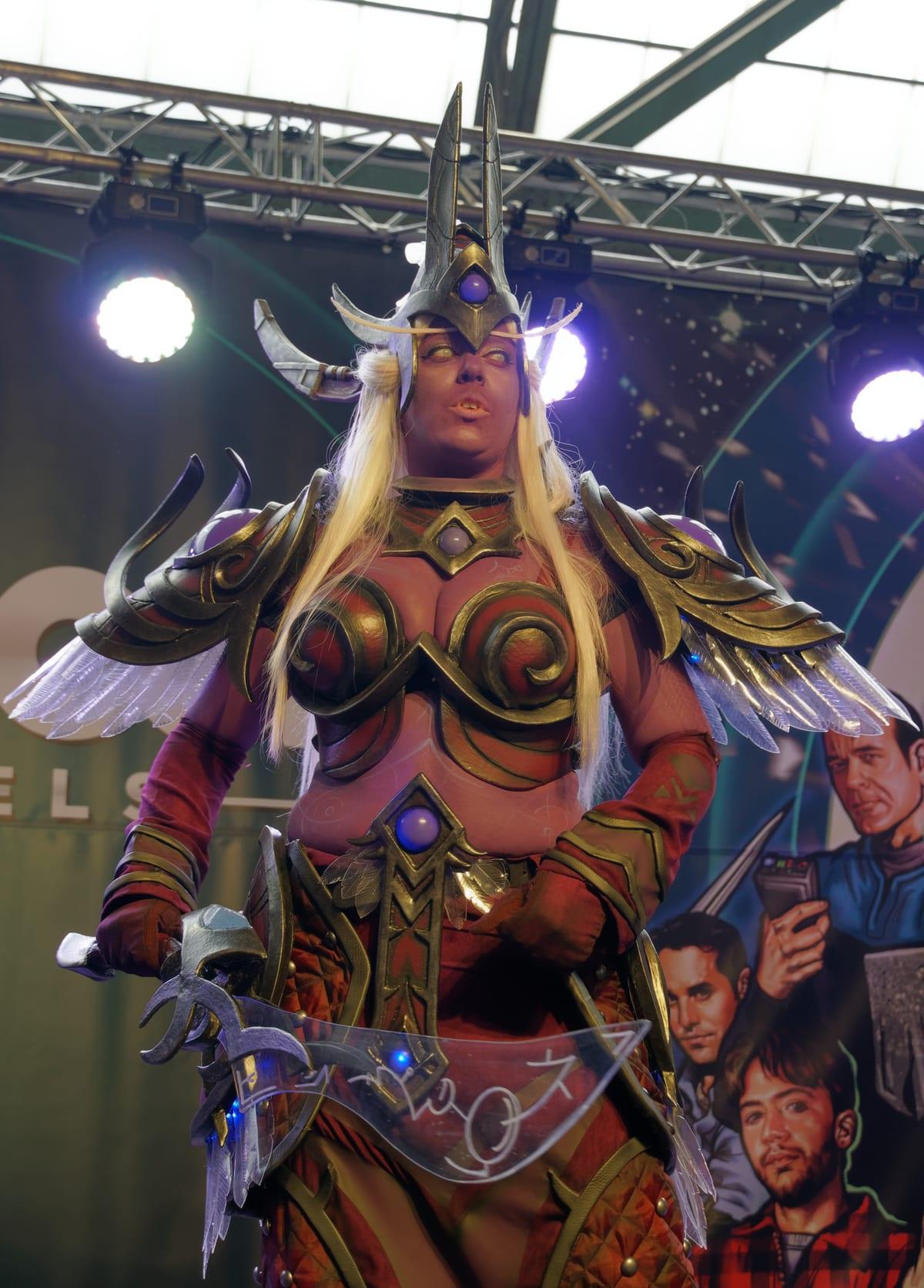
Print hard-edged mechanical designs, anything with repeated fine detail, insignia, crisp bevels or panel lines, and any piece you might need to reproduce identically later. Use EVA foam for large simple curved plates, for anything that must compress or flex with the body, and for full-coverage builds where total weight is the binding constraint. Foam is also far more forgiving of fit errors, because you can heat-form it against yourself.
The strongest builds are usually hybrids: a foam substructure for the large curved volumes with printed detail parts, edging and hardware bonded on top. That combination gets you crisp detail at foam weight, and it is what a lot of competition-level costumers actually do. Our broader guide to 3D printed cosplay props covers the finishing techniques that both approaches share.
Files and Rights
We write about process, fit and cost. We do not host or link to armor models for copyrighted characters, and we are not affiliated with or endorsed by any studio or publisher whose designs get referenced in cosplay.
Practically: many fan-made armor models are released under personal-use licences that permit you to print them yourself and say nothing about commissioning a paid service. When you post a job you attest that you hold the right to have that file printed, and makers are free to decline anything where the licence is unclear. Original designs and licence-clear sculpts are always the safest route, and increasingly the more interesting one.
Frequently asked questions
How much does 3D printed cosplay armor cost?
A full set of finished 3D printed armor costs $1,200-3,000 commissioned from independent makers as of July 2026. Raw printed panels with no finishing cost $450-1,200. A chest and back plate on its own runs $350-800 finished. Filament is only $57-180 of the total; the rest is print time and hand finishing.
How heavy is a full set of 3D printed armor?
A complete printed set weighs 2.5-4.5kg once finished, printed in PLA at three perimeters and 10 percent infill. The chest and back plate is the heaviest single element at 900g-1.6kg. Weight is carried on the shoulders and hips, so strapping design matters more than total mass for comfort.
What measurements does a maker need for armor?
Chest circumference, waist, shoulder-to-shoulder width across the back, bicep, forearm and wrist circumference, thigh and calf circumference, knee-to-ankle and waist-to-knee length, head circumference, and your height. Photographs standing straight from front and side help. Armor scaled from height alone almost never fits, because torso proportions vary far more than height does.
Should cosplay armor be 3D printed or made from EVA foam?
Print hard-edged mechanical designs with panel lines, insignia and crisp bevels. Use EVA foam for large curved plates, anything that has to flex with the body, and full-coverage builds where weight is the limiting factor. Many of the best builds are hybrids: printed detail parts bonded onto foam substructure.
What filament is best for wearable armor?
PLA for most pieces, because it is cheap, stiff and sands well. PETG where a panel needs to flex without snapping: Prusa publishes a notched Charpy impact strength of 6 kJ/m2 for Prusament PETG and no notched figure at all for Prusament PLA, so the two cannot honestly be expressed as a ratio. ASA if the costume will be worn outdoors in heat.
How long does a full armor commission take?
Six to twelve weeks is realistic for a full finished set. Printing alone is 200-400 hours of machine time, and filler primer needs 24 hours between sanding passes, so calendar time is dominated by curing rather than labour. Order at least three months before the convention you are targeting.
Get Your Armor Build Quoted
Post your measurements, the pieces you need and your convention date. Makers who build wearable armor will bid on it, and your payment stays in escrow until you have approved photos of the actual pieces.