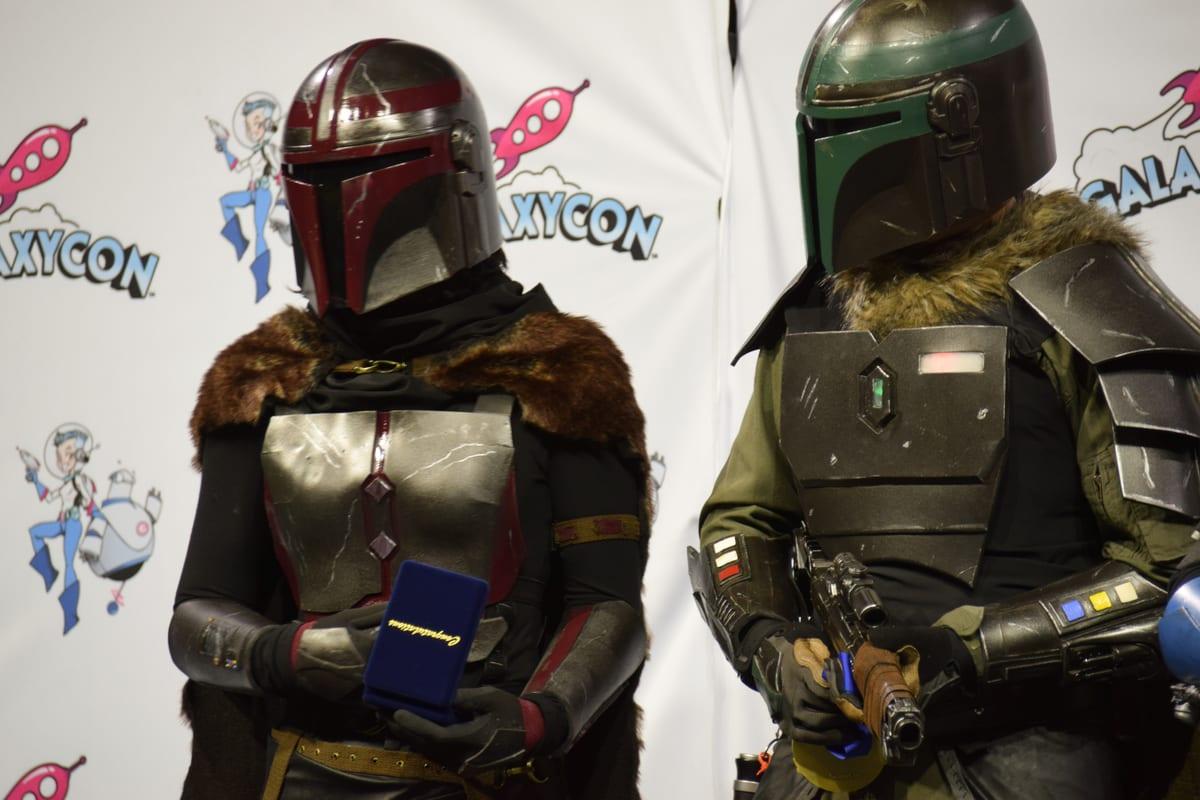
What a 3D Printed Cosplay Helmet Actually Costs
Every con season the same question turns up: someone has found a helmet model they like, they have seen a build video where it looks like a weekend project, and they want to know what it costs to just have one made. The honest answer is that the printing is the cheap part and the sanding is the expensive part, and quotes are priced accordingly.
This is a cost and process breakdown for a full-size wearable helmet, using the kind of Mandalorian-style beskar bucket that dominates this category as the reference build. The numbers apply just as well to a Halo-style helmet, a knight helm or an original design, because the work is the same shape regardless of what the helmet is of.
How much does a 3D printed cosplay helmet cost?
A raw 3D printed helmet costs $120-250 commissioned from an independent maker, and a fully finished one with filler, sanding, paint and padding runs $250-600, rising to $600-1,200 for screen-accurate weathering and full hardware. Filament is only $8.55-27 of that. The finishing work, typically 17-42 hours, is what you are paying for.
Last verified: July 2026
Key takeaways
- •A raw printed helmet shell costs $120-250 from an independent maker as of July 2026; a painted, wearable helmet costs $250-600, and a weathered one with full hardware $600-1,200.
- •Filament is $8.55-27 per helmet. Consumables and hardware — primer, abrasives, paint, visor and padding — are $110-300 at retail for a single build, and hands-on labour is 17-42 hours.
- •An adult helmet takes 30-70 hours of printing and arrives as four to eight pieces, because it does not fit on a 220-256mm build plate whole.
- •PLA softens well below car-interior temperatures: 55°C heat deflection on Prusa’s published data sheet, against dashboard surfaces measured at 69°C in summer sun.
- •Head circumference is the measurement that decides fit. Send it with the job, along with glasses and hairstyle details.
Where the Money Actually Goes
The single most useful thing to understand before you ask for quotes: material is under 10 percent of a finished helmet's price. If two quotes differ by $400, they are not differing on plastic. They are differing on how many hours of sanding, how many coats of filler primer, and whether the seams will still be visible under stage lighting.
One caveat on the consumables below: they are retail prices for buying enough to finish one helmet. A maker working through several builds gets two or three helmets out of the same cans and sheets, so their real per-helmet consumable cost is a fraction of these figures. That amortisation is a large part of why a commission can undercut a first-time DIY attempt on cash alone.
| Line item | Typical cost | Notes |
|---|---|---|
| Filament, 450-900g | $8.55-27 | At $19-30/kg retail for PLA; PETG runs $22-32/kg. Heavier if the design is thick-walled. |
| Print time, 30-70 hours | $60-160 | Unattended, but it occupies the maker's machine for three to five days and carries failure risk. |
| Filler primer, 3-5 cans | $30-70 | High-build automotive filler primer. This is what erases layer lines. |
| Abrasives and body filler | $15-40 | Sheets from 120 to 800 grit, plus spot putty for seams. |
| Paint and clear coat | $30-90 | Rattle can at the low end; airbrushed metallics and weathering at the high end. |
| Visor material | $15-40 | Tinted acrylic or polycarbonate sheet, heat-formed or cut flat. |
| Padding, strap, fans | $20-60 | Closed-cell foam and a chin strap are essential. Small USB fans are the difference between a two-hour helmet and a ten-hour one. |
Commissioned helmet cost by finish level
A raw printed helmet shell costs $120-250. Sanding, priming and painting it to a wearable standard takes the total to $250-600, and screen-accurate weathering with full hardware reaches $600-1,200.
| tier | Typical low | Typical high |
|---|---|---|
| Raw printed shell | $120 | $250 |
| Sanded and primed | $180 | $380 |
| Painted and wearable | $250 | $600 |
| Weathered, full hardware | $600 | $1200 |
Source: 3D Print Bounty maker quotes and comparable independent cosplay commissions, July 2026
You can check the material side of any quote yourself with our 3D printing cost calculator. Put in the estimated shell weight and your filament price, and you will get the same $8.55-27 figure. Anything above that in a quote is time, and time is the honest part of the bill.
Why Your Helmet Arrives in Pieces
A wearable adult helmet is roughly 260-300mm tall and 230-260mm wide. A common desktop printer has a build volume around 220 x 220 x 250mm or 256 x 256 x 256mm, so the helmet has to be cut into four to eight parts and bonded afterwards. This is normal and is not a sign of a cheap job.
What it does mean is that seams exist, and seams are where quality shows. A good build glues the parts, reinforces the joint from the inside, fills the outside seam with body filler, and sands it flat so the panel line disappears. A rushed build glues and paints. Under a con hall's overhead lights, the difference is obvious from three metres away.
Ask two specific questions when comparing quotes: how many parts is the model split into, and are the seams filled or just glued. Those two answers explain most of the price spread in this category.
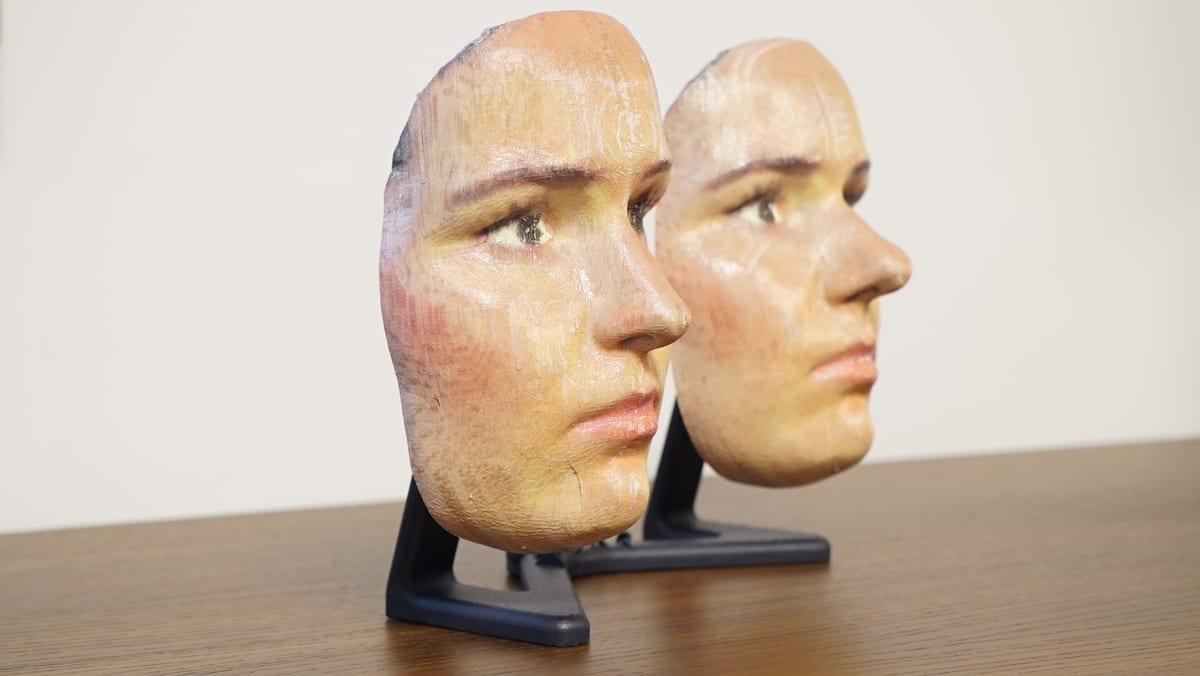
The Finishing Stages, in Hours
Printing is unattended. Everything after it is not. Here is where the hands-on time goes on a helmet finished to a standard that photographs well.
Hands-on hours by finishing stage for one helmet
Filling and sanding is 8-20 hours, close to half the total and more than any other single stage. Total hands-on labour for a painted helmet is 17-42 hours on top of 30-70 hours of unattended printing.
| stage | Typical low (hours) | Typical high (hours) |
|---|---|---|
| Assembly and seam glue | 2 | 5 |
| Filling and sanding | 8 | 20 |
| Priming | 2 | 4 |
| Painting | 4 | 10 |
| Visor, padding, straps | 1 | 3 |
Source: 3D Print Bounty maker time logs and comparable independent cosplay commissions, July 2026
Calendar time is longer than labour time because filler primer wants 24 hours to cure fully before it is sanded, and rushing that step produces a surface that keeps sinking for weeks afterwards. A realistic lead time for a painted helmet is three to six weeks from order to shipping. If your con is in ten days, order the raw shell and finish it yourself, or accept a primed-only finish.
If you want to do the finishing yourself, the process and materials are covered in more depth in our guide to 3D printed cosplay props. This page prices helmets; if your problem is choosing between makers rather than understanding the bill, our guide to finding and vetting a cosplay maker covers what to ask for, what to put in writing and which quotes are warning signs.
Which Filament, and the Hot Car Problem
PLA is the right default. It is cheap, prints accurately at large flat geometries, and sands better than anything else in this price bracket, which matters when sanding is most of the work.
It has one failure mode that ends helmets, and it is worth stating precisely. Prusa's published technical data sheet for Prusament PLA lists a heat deflection temperature of 55°C at 0.45 MPa. Always check the load a published HDT was measured at, because the same material quoted at 1.8 MPa is a materially lower number. A 2018 study by UC San Diego and Arizona State researchers, published in the journal Temperature, measured dashboard surfaces in cars parked in Arizona sun averaging 157°F (69°C) after one hour. A PLA helmet left on a back seat in July can and does sag.
The fixes, in order of cost:
- Do not leave it in the car. Free, and genuinely what most people do.
- PETG. Prusament PETG lists 68°C heat deflection at 0.45 MPa, 13°C of margin over PLA at similar cost. Note that it is still a degree below the 69°C dashboard figure above, so PETG buys you tolerance, not immunity. It is slightly harder to sand.
- ASA. Prusament ASA lists 93°C at 0.45 MPa and is UV-stable, which matters for outdoor photoshoots. It costs more, needs an enclosed printer, and fewer makers stock it.
For a helmet that lives in a case and goes to indoor conventions, PLA is fine and the extra money is better spent on finishing.
Fit: The Measurement Nobody Sends
Send your head circumference. Measure around the widest part, just above the ears and eyebrows, with a soft tape. Most helmet models are sculpted around a generic 57-58cm head, and if yours is 62cm the helmet either will not go on or will not come off. Scaling a helmet up is not uniform: scaling the whole model 8 percent also makes it 8 percent taller, which changes the silhouette.
Three other things worth saying up front, because they all change the interior geometry:
- Glasses. They need 15-25mm of extra clearance at the temples and usually a different visor stand-off.
- Hair. Long hair worn up adds several centimetres of height inside the dome.
- How long you will wear it. Anything over about two hours needs ventilation. Two 40mm fans and a USB battery add roughly $25 and transform the experience.
Weight matters too. A finished adult helmet in PLA at three perimeters and 10 percent infill comes out at 600g to 1.1kg once filler and paint are on it. That is fine with padding and a chin strap and miserable without.
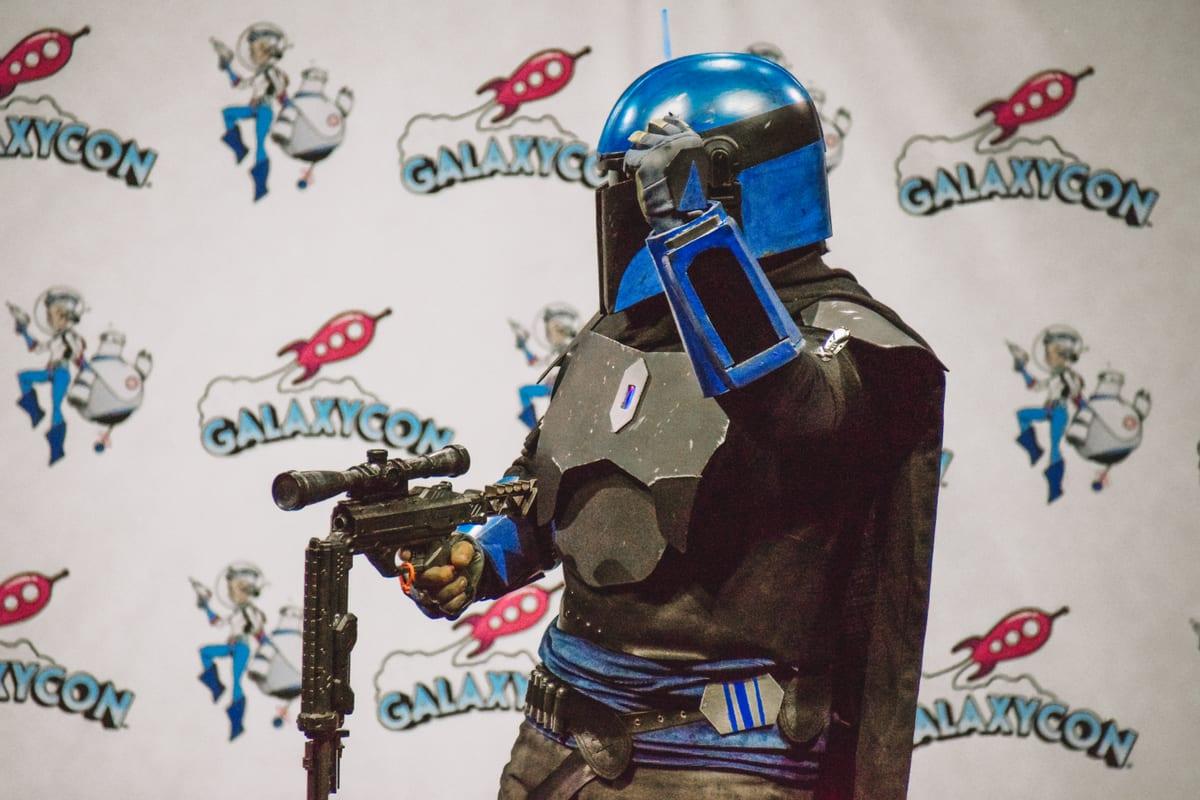
Files, Rights and What We Will and Will Not Print
We write about process and cost here. We do not host, mirror or link to helmet models for copyrighted characters, and we are not affiliated with or endorsed by Lucasfilm, Disney or any studio whose designs get referenced in this hobby.
The practical position for buyers: many fan-made helmet models are distributed under personal-use licences that let you print them yourself and say nothing about paying a commercial service to do it. Some designers explicitly allow print services; some explicitly forbid it. When you post a job, you attest that you hold the right to have that file printed, and makers on the platform can decline anything where the licence is unclear.
The safest ground is an original or licence-clear sculpt, or a design you or your designer produced. That is also, incidentally, where the most interesting cosplay is these days.
When Commissioning Is Not Worth It
Two cases where we would tell you not to bother. First, if a licensed or commercially-produced version of the helmet exists at under about $300 and you want a clean, screen-accurate look, buy it. A commissioned print will cost the same or more and will not be better.
Second, if you are building a full costume and this is the first of many printed pieces, the economics of buying a printer start to work. One helmet does not justify a $180-350 machine plus the learning curve and the finishing supplies you would still have to buy. A helmet, pauldrons, gauntlets, greaves and a chest plate might.
The case where commissioning clearly wins is the common one: you want one good helmet, you want it to look right in photographs, and you would rather not spend twenty hours with a sanding block in a garage.
Frequently asked questions
How much does a 3D printed cosplay helmet cost?
A raw printed helmet shell costs $120-250 commissioned from an independent maker. A finished helmet, sanded smooth, primed, painted and fitted with a visor and padding, costs $250-600. Screen-accurate weathering with full hardware runs $600-1,200. Filament accounts for only $8.55-27 of that. The rest is 30-70 hours of print time and 17-42 hours of hands-on finishing work.
How long does it take to 3D print a helmet?
An adult-sized helmet takes 30-70 hours of printing, split across four to eight separate pieces because a full helmet does not fit on a typical 220-256mm build plate. Add one to three weeks for finishing if you have commissioned a painted helmet, since filler primer and paint need curing time between coats.
What filament should a cosplay helmet be printed in?
PLA for most helmets: it is cheap, dimensionally stable and sands well. If the helmet will sit in a parked car, choose ASA, which holds shape to 93°C on Prusa’s published data sheet. PLA deflects at 55°C and PETG at 68°C, both at 0.45 MPa, and measured summer dashboard surfaces reach 69°C — so PETG is an improvement on PLA, not an answer to a hot car.
Is it cheaper to print a helmet myself?
Only if you already own the printer and enjoy sanding. An entry-level printer is $180-350, filament for one helmet is $8.55-27, and the consumables and hardware itemised above — filler primer, abrasives, paint, visor sheet, padding and a strap — run $110-300 at retail for a single build. That is $299-677 in cash before you have spent 17-42 hours sanding and painting. Commissioning the same helmet finished costs $250-600 and none of those hours.
Can a print service print any helmet STL I send them?
Only if you hold the right to have it printed. Many popular helmet models are fan sculpts of copyrighted characters released under personal-use licences, and some are outright unlicensed. Reputable makers ask, and decline jobs that would reproduce a studio-owned design commercially.
How heavy is a 3D printed helmet to wear?
A finished adult helmet printed in PLA at three perimeters and 10 percent infill weighs 600g-1.1kg once filler, paint and padding are added. That is comfortable for a few hours with proper foam padding and a chin strap, and uncomfortable without them. Ask your maker for the shell weight before finishing.
Get Quotes on Your Helmet Build
Post the model, your head circumference, the finish level you want and the date you need it. Makers who build helmets regularly will bid, and your payment stays in escrow until you approve photos of the finished piece.