Game and Anime Cosplay Prints: Masks, Helms and Armor
Three of the most-requested printed cosplay pieces are a smooth white bug mask from a side-scrolling platformer, a hard-surface drop-trooper helmet from a shooter, and a set of absurdly oversized sci-fi pauldrons. They look like completely different projects. On a printer they are the same job with three different finishing problems.
This is a process-and-cost guide, not a file library. We do not host or link character STL files, and we do not accept print jobs for copyrighted commercial sculpts. What follows is what each shape actually costs, how long it takes, and where each one goes wrong.
What does it cost to 3D print a game or anime character mask, helmet or armour?
Commissioned printing costs roughly $60-140 for a stylised mask, $120-250 for a hard-surface helmet, and $450-1,200 for a full bulky armour set, all in PLA and supplied unfinished. Add $30-120 in finishing supplies. Finishing labour, not printing, is the larger cost: a smooth mask needs 15-20 hours of filler and sanding.
Last verified: July 2026
Key takeaways
- •A stylised character mask costs $60-140 to have printed and 15-20 hours to finish; a hard-surface helmet costs $120-250 and finishes faster because panel lines hide layer lines.
- •Full bulky sci-fi armour is 150-350 hours of print time across 25-60 pieces, which is why it is commissioned rather than printed at home.
- •Smooth surfaces are the expensive ones. Weathered and textured paint schemes cut finishing time by roughly two-thirds.
- •The platform a sculpt is sold on does not set its licence — the sculptor does. Personal-use terms that do not cover commercial printing are common, so check the specific file before you commission.
- •A full helmet needs a fan and a vision check before the convention. Twenty minutes inside one is a very different experience from thirty seconds.
Where the Files Come From, and What Licence You Get
Character props sit in a corner of 3D printing where the technical question is easy and the rights question is not. Almost every popular character has been sculpted by someone in the community and sold on Patreon, Gumroad, Etsy or a marketplace. Those sculpts are the sculptor's original work, and they are sold with a licence attached.
That licence comes from the sculptor, not from Patreon, Gumroad or Etsy, none of which set terms for the models sold through them. It therefore varies file by file. The common shape is personal-use-only: it permits you to print the file on your own machine, for yourself, and does not automatically permit a commercial printing service to print it on your behalf, which is a separate act with a separate commercial character. Some creators sell a higher tier that explicitly allows commissioned printing; many will simply say yes if you ask.
Separately from the sculptor's licence there is the underlying character, which belongs to a game studio or publisher. Building a costume for yourself and wearing it to a convention is fan activity that the entire convention economy is built on. Selling printed character props is a different activity, and it is the one that gets takedown notices. We keep those apart because conflating them is how people end up confidently wrong.
Our own policy is simple and we would rather state it than bury it: we do not accept print jobs for copyrighted commercial sculpts, and we ask customers to confirm they hold print rights for the files they upload. The licensing tiers you are likely to encounter are broken down in our guide to Patreon file licensing, which applies to cosplay sculpts as much as to miniatures. Nothing here should be read as legal advice or as any endorsement by the rights holders named descriptively below.
Archetype 1: The Smooth Stylised Mask
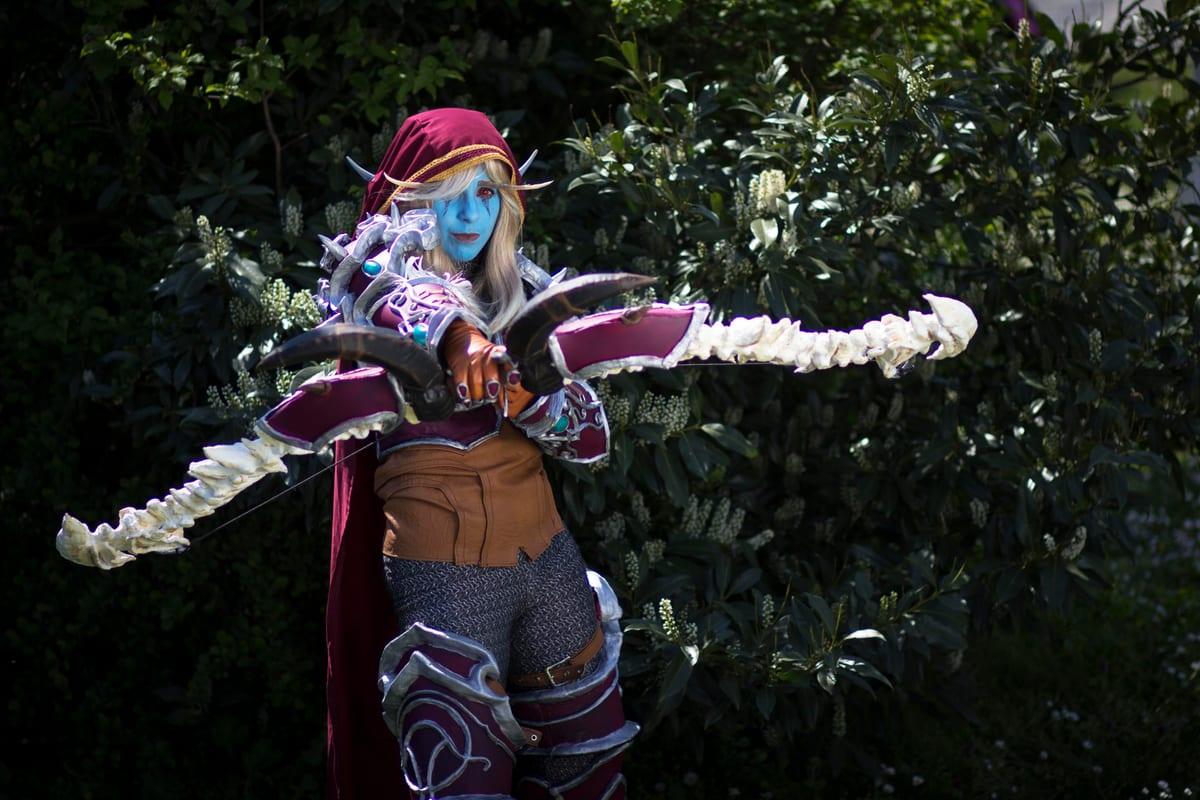
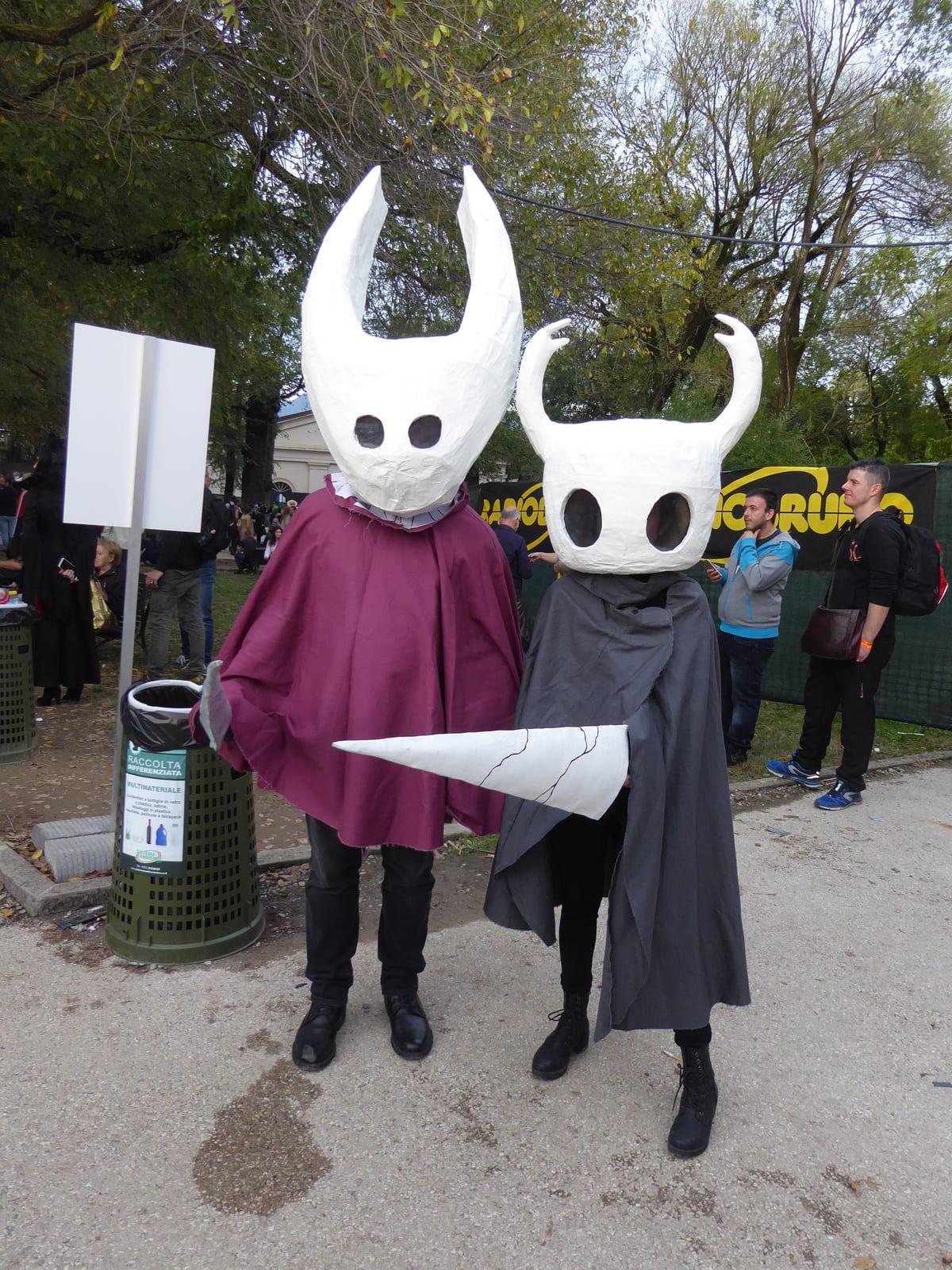
Think of the large curved white shells worn by Hollow Knight cosplayers, or any anime character mask built from a few sweeping surfaces. On the printer this is the easiest piece in cosplay: a hollow shape, usually splittable into two or three chunks, printed at 0.28mm with a few walls and almost no infill. Expect 18-30 hours of print time and 250-450g of PLA.
The whole difficulty is the surface. A smooth, single-colour, unweathered mask is the worst possible canvas for layer lines, because there is no texture and no panel detail to break up the eye. Getting one truly smooth is three or four cycles of high-build filler primer and wet sanding at 220, 400 and 600 grit. That is realistically 15-20 hours of your own time, and it cannot be rushed because primer needs to cure between coats.
Two practical notes. Print the horns or spikes separately and pin them in; printed as part of the shell they will need supports right where the surface is most visible. And decide on the eye holes early, because cutting mesh-backed vision ports into a finished painted mask is a heartbreak.
Typical commissioned print cost by cosplay piece (PLA, unfinished)
Character cosplay pieces are priced by machine hours, so a mask costs a fraction of a full armour set even though both are hollow shells of similar wall thickness.
| piece | Typical low | Typical high |
|---|---|---|
| Stylised mask | $60 | $140 |
| Hard-surface helmet | $120 | $250 |
| Pauldrons (pair) | $110 | $280 |
| Chest + back plate | $150 | $400 |
| Full bulky armour | $450 | $1200 |
Source: 3D Print Bounty maker quotes and comparable independent cosplay print commissions, July 2026. Printing only, excluding finishing, paint and hardware.
Archetype 2: The Hard-Surface Helmet
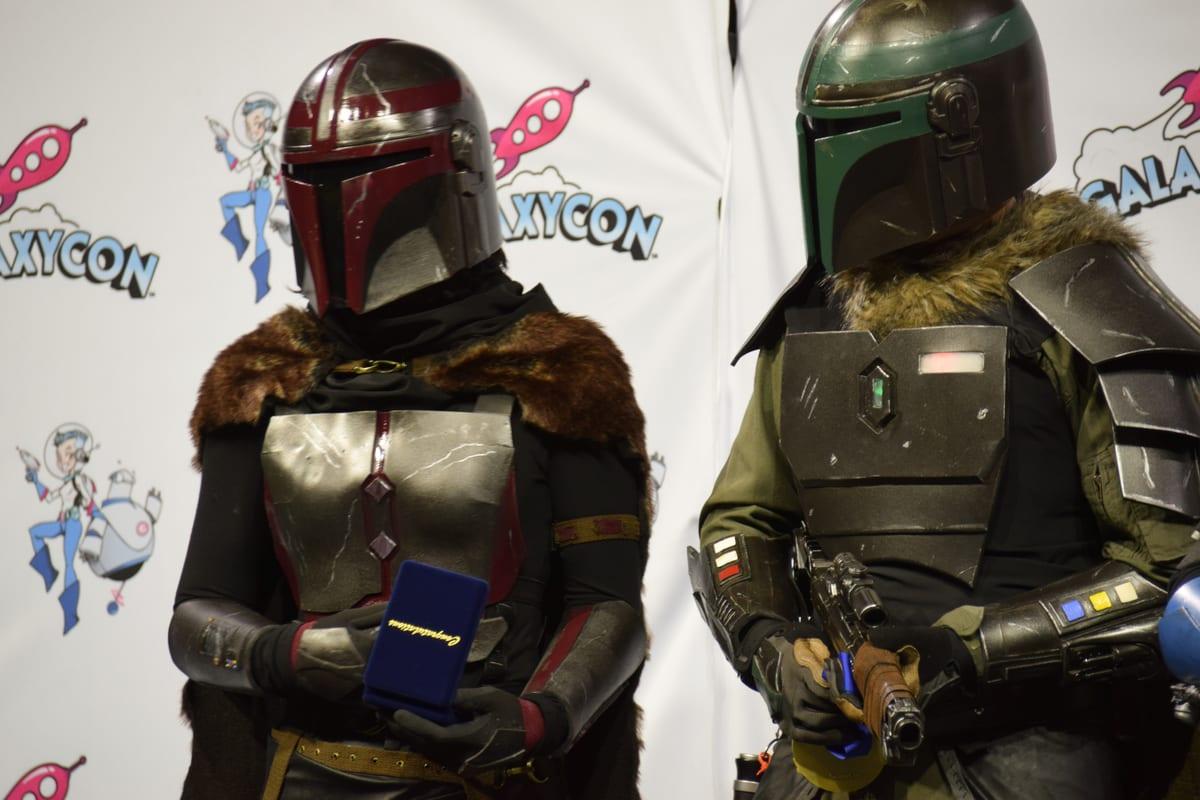
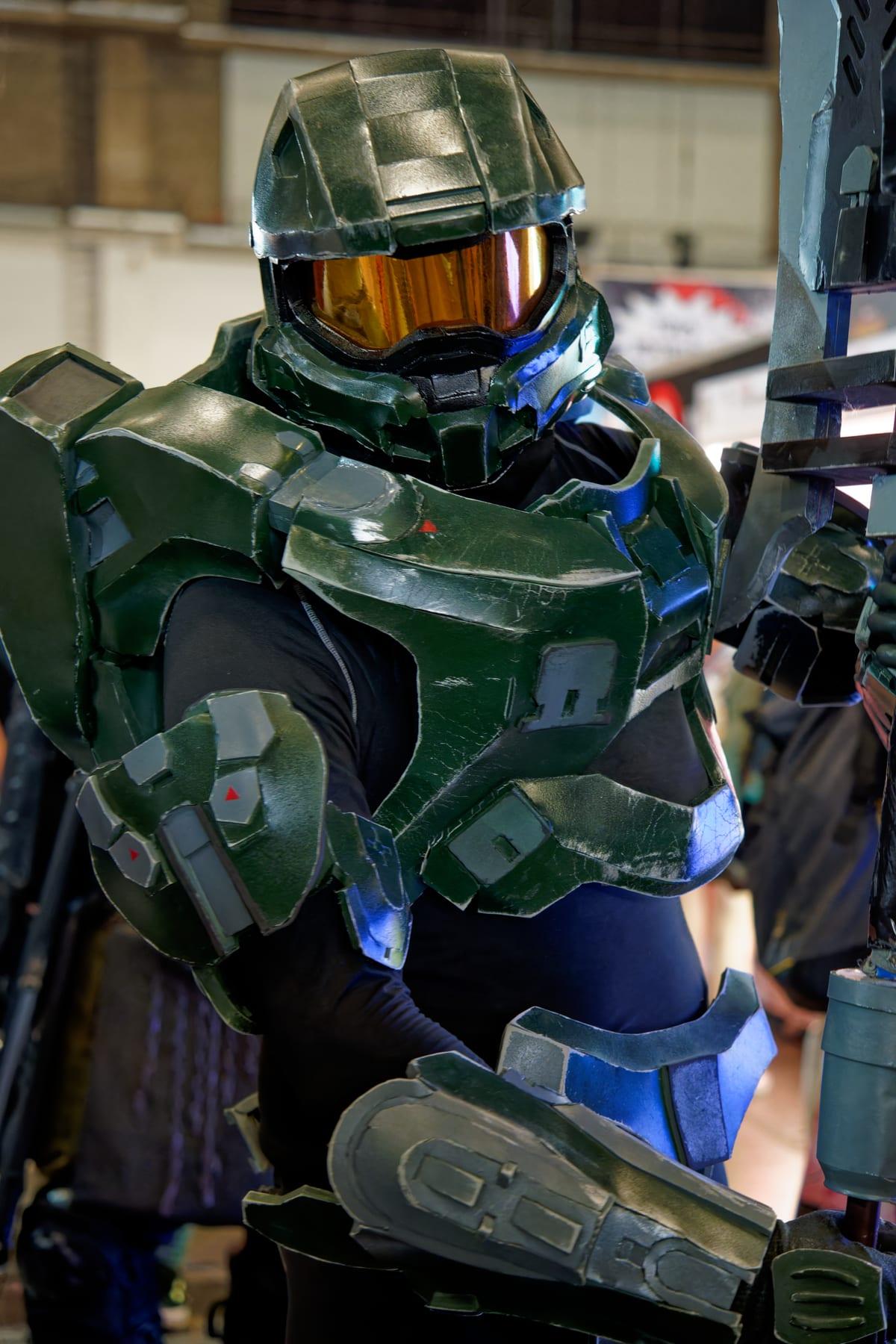
A Halo ODST or Spartan-style helmet is the opposite problem. It is more print time, typically 25-45 hours across four to six pieces and 500-800g of PLA, because the geometry is thicker and the pieces have to be split around undercuts. But the finishing is faster, because panel lines, vents and hard edges break up the surface and hide layer lines that would be glaring on a smooth mask.
The trap in a hard-surface helmet is the opposite of the mask's: over-sanding. Every crisp edge you round off with 220 grit is a detail the sculptor put there deliberately, and rounded edges are what make a printed helmet read as plastic rather than armour. Sand the flats, protect the edges, and use filler primer sparingly on panelled areas.
Practical helmet items that are not optional. A visor: either a vacuum-formed insert, a cut-down motorcycle shield, or tinted acrylic, and buy it before you finalise the visor opening. A fan: a 40mm 5V computer fan and a small USB battery pack, under $20, and it is the single biggest quality-of-life upgrade any full helmet gets. Foam padding: 10-15mm closed-cell foam so the shell sits off your skull, which also fixes most fit issues that a 3% scaling error introduced.
Archetype 3: Bulky Sci-Fi Armour
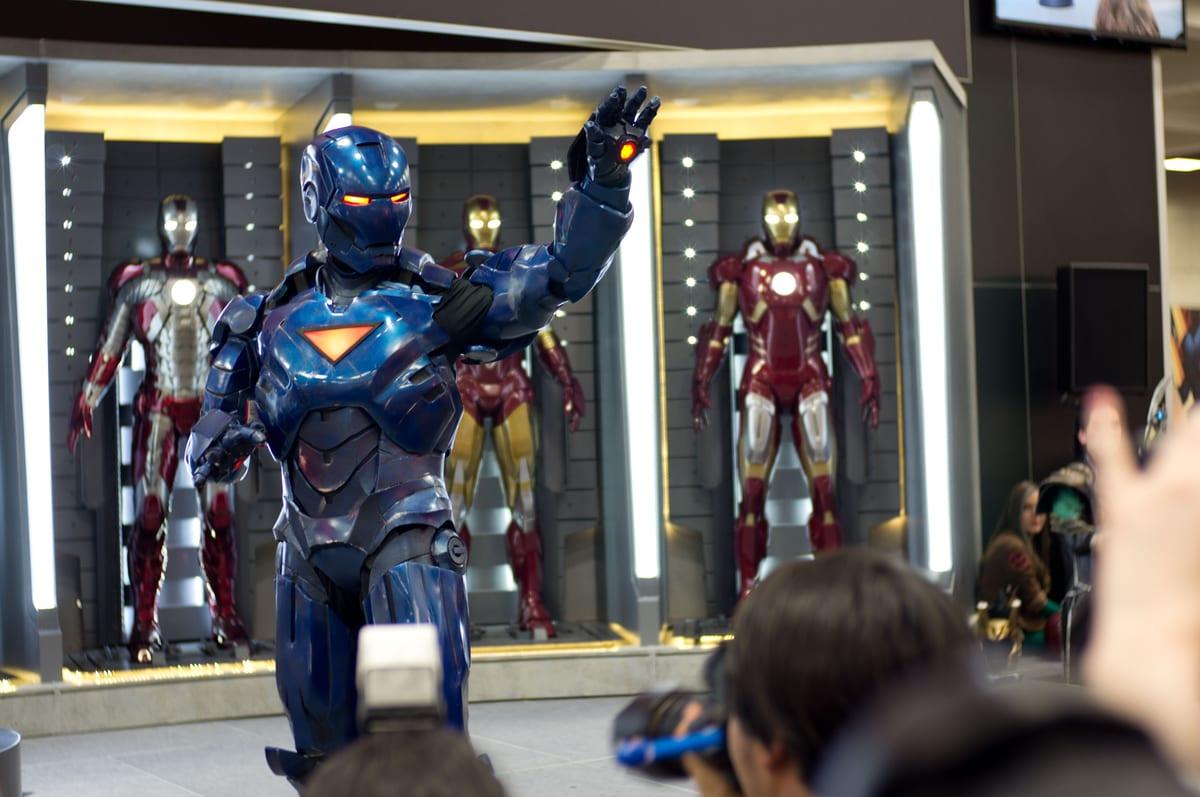
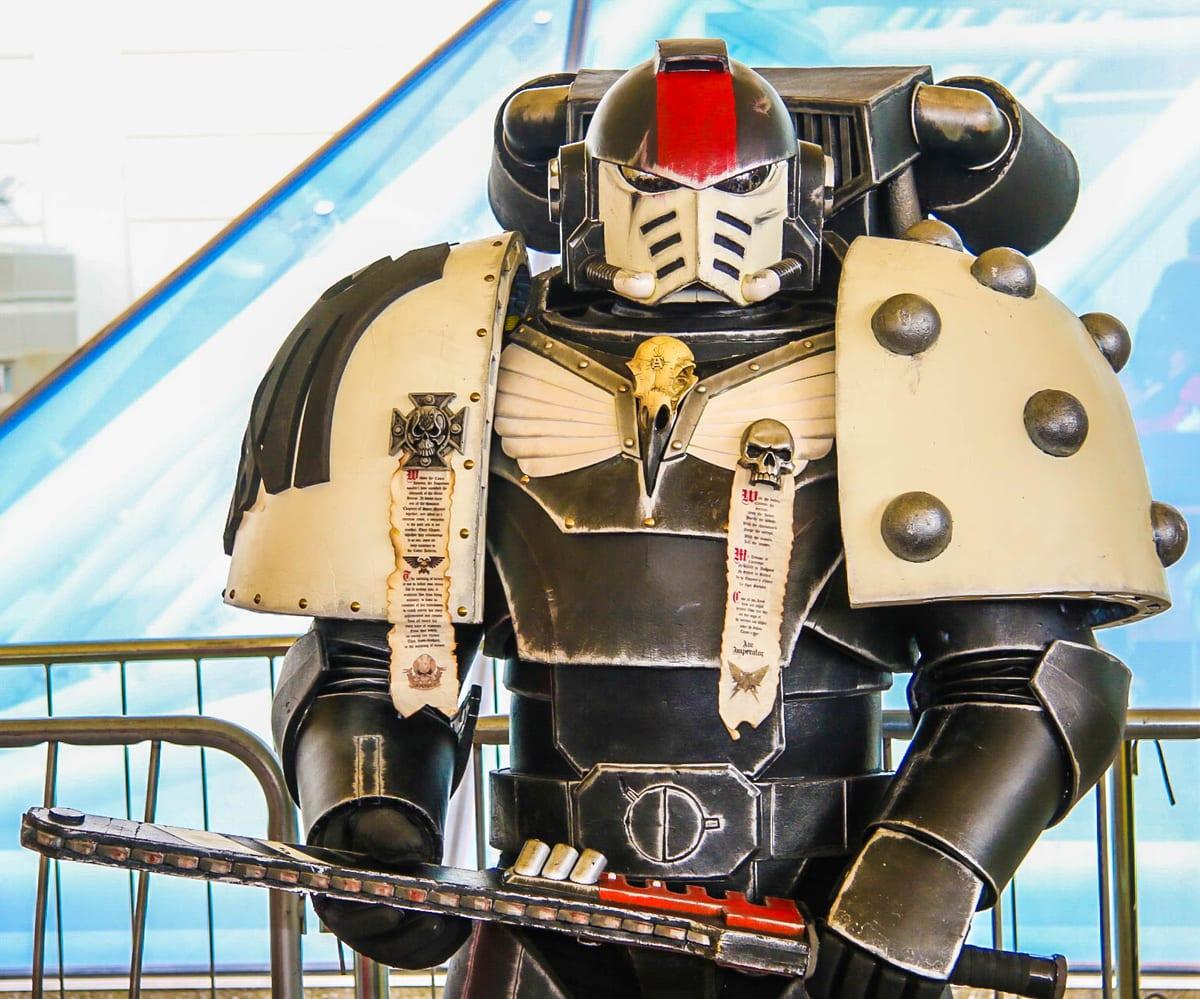
Space marine style armour, with pauldrons wider than your shoulders and a chest plate that changes your silhouette, is a different scale of project: 150-350 hours of print time across 25-60 pieces and typically 3-6kg of filament. This is the category where commissioning the printing stops being a convenience and starts being the only realistic route for anyone with a job.
Three things make or break a build this size, and none of them are printing.
Weight and load path. A set printed from 3-6kg of filament comes in at roughly 3-7kg worn, once filler, paint, padding and harness hardware are on it. Hang it from a harness on your shoulders and hips, not from adjacent panels. Chained glued panels shear apart partway through a convention day, every time.
Scaling to your body. Bulky armour is usually sculpted for an idealised frame. Measure your chest circumference, shoulder width and upper-arm length and give those numbers to the maker before slicing. Most kits tolerate 5-15% uniform scaling. Beyond that the proportions start to look wrong rather than just large.
Doorways and transport. Wide pauldrons do not fit through hotel doors, elevators or airline baggage. Design for pieces that unbolt at a seam, and check your convention's prop and mobility policy before you build a silhouette you cannot get into the hall.
The general build sequence, materials table and con timeline for projects this size are covered in our cosplay props and 3D printing guide.
Finishing Hours Are Decided by the Paint Scheme
The most useful cost lever in character cosplay is not the printer settings. It is whether the finished piece is supposed to look clean or worn. A pristine white mask demands a mirror surface. A scratched, dusty, battle-damaged suit hides layer lines completely, and a good weathering pass takes a fraction of the time that achieving a flawless gloss does.
Typical finishing hours per major piece by surface treatment
A smooth single-colour surface takes roughly three times the finishing hours of a weathered or textured one, because there is nothing to hide layer lines behind.
| surface | Finishing hours |
|---|---|
| Smooth organic mask | 18 |
| Panelled helmet | 12 |
| Weathered armour | 8 |
| Textured / battle-damaged | 5 |
Source: Indicative hours per major piece from independent cosplay commissions and builder logs, July 2026. Excludes paint cure time.
The Three Archetypes Side by Side
| Piece | Print time | Print cost | Your finishing time | Main failure mode |
|---|---|---|---|---|
| Smooth stylised mask | 18-30 hrs | $60-140 | 15-20 hrs | Layer lines visible through paint; not enough primer cycles |
| Hard-surface helmet | 25-45 hrs | $120-250 | 10-15 hrs | Over-sanded edges; visor opening cut after painting |
| Bulky armour set | 150-350 hrs | $450-1,200 | 60-90 hrs | Weight hung from glued panels instead of a harness; pieces too big to transport |
If you already have a file and want a fast sanity check on the printing half before you ask anyone for a bid, drop the piece weight into our 3D printing cost calculator. It will not price the labour, but it tells you immediately whether a quote is in the realm of reasonable or whether someone is charging you for plastic by the gram.
Frequently asked questions
How much does it cost to 3D print a game character mask?
A smooth stylised mask such as a Hollow Knight shell is typically $60-140 to have printed in PLA, plus $30-60 of finishing supplies. It is one of the cheapest printed cosplay pieces because it is a single hollow shape. The expensive part is finishing: a mask that reads as smooth needs 15-20 hours of filler primer and sanding.
Is it legal to 3D print a character helmet or mask for cosplay?
Printing a costume piece for your own personal use is generally treated as fan activity and is what conventions are built around. Selling printed character props, or having a commercial service print files you only hold a personal-use licence for, are different questions with different answers. Check the file licence before you commission anything.
Which is harder to print, a smooth anime mask or a hard-surface game helmet?
Neither is hard to print, but they fail differently in finishing. A smooth organic mask shows every layer line and needs the most filler and sanding. A hard-surface helmet with panel lines hides layer lines in its geometry but punishes any sanding that softens a crisp edge. Budget more hours for the smooth one.
How long does a printed helmet or mask take?
A full-head mask or helmet is typically 18-45 hours of print time across four to six pieces, then 10-20 hours of your own finishing. Bulky armour with pauldrons is 150-350 print hours and 60-90 hours of finishing. Order the printing at least eight weeks before your convention so finishing is not compressed.
Do I need to buy commercial print rights for a character STL?
If a service is printing it for you, usually yes. Patreon, Kickstarter and the model marketplaces do not set licences on the files sold through them — each sculptor does, so terms vary. Personal-use licences covering printing on your own machine only are common, and some creators sell a separate tier that permits commissioned printing. Ask the creator, and tell your maker what the licence says.
Get Your Pieces Printed
Post your files, head or chest measurements and your convention date. Makers who have printed helmets and armour before will bid with a delivery date, and payment stays in escrow until you approve photos. We ask you to confirm you hold print rights for the files you upload.