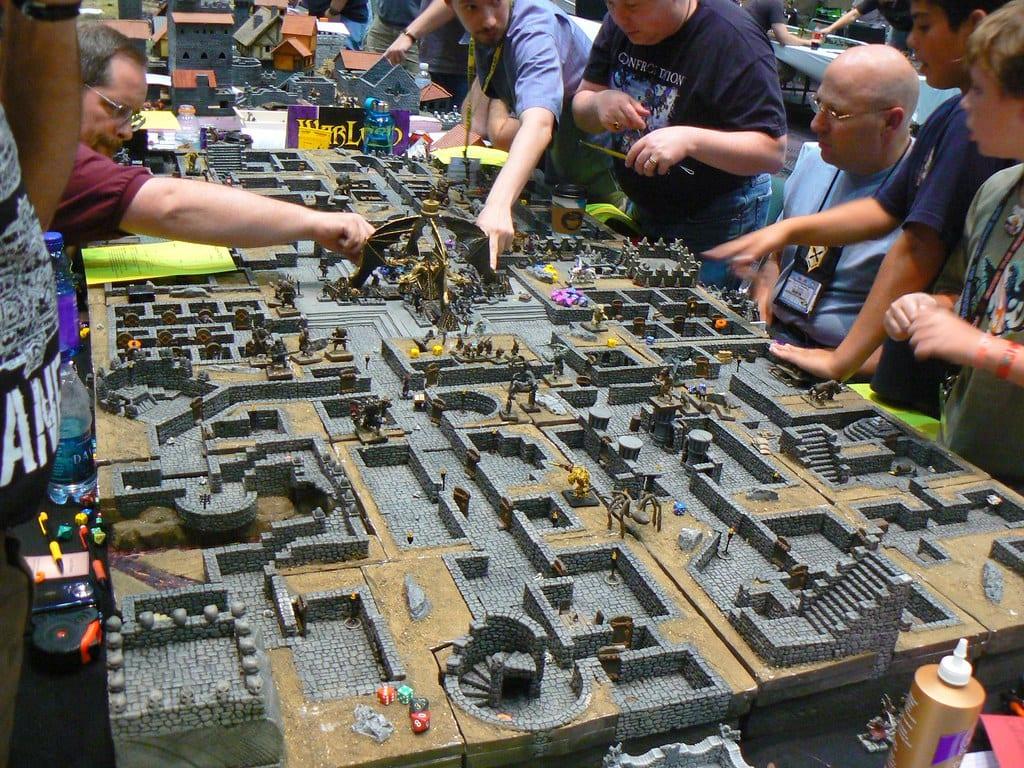
3D Printed D&D Terrain: A Full Campaign Set
The pitch for printed dungeon terrain is that you build the whole set once and never draw a corridor on a wet-erase mat again. The reality is that a full campaign set is roughly eighty separate pieces, three to four kilograms of plastic and two hundred hours of machine time, and most people who start with "I'll print the whole thing" stall a long way short of finishing it.
So this is a costing and sequencing guide rather than a shopping list, and it is specifically about modular interior terrain: clip-together dungeon tiles, walls, doors and stairs that assemble into a different room every session. What a set contains, which clip standard to commit to, what each piece costs in filament and print hours, and the order to build it in so the table is usable after the first weekend rather than the fifth month.
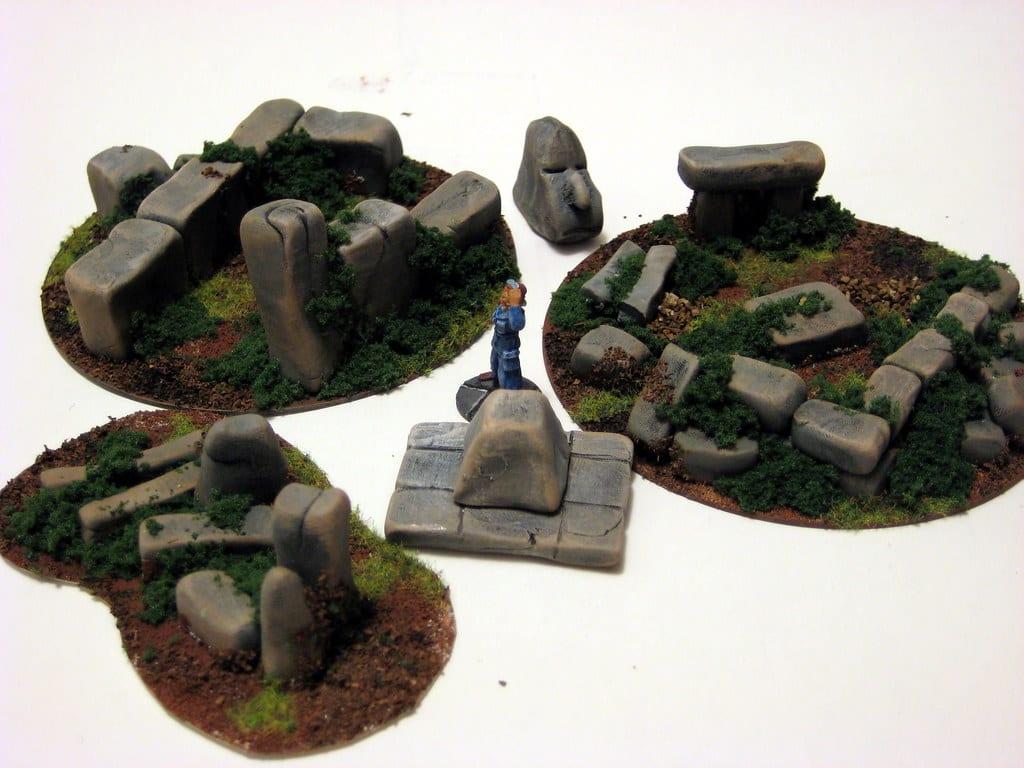
If what you are building is an open battlefield rather than an interior — scatter terrain and ruins spread across a fixed board to a coverage target — that is a different problem with different arithmetic, and it is covered in our guide to 3D printed wargaming terrain and what a 4×4 table costs.
What does a full set of 3D printed D&D terrain cost?
A full 3D printed D&D-compatible campaign set covering a 20 by 20 inch play area costs $65–100 in PLA filament, or $320–560 commissioned unpainted. That is roughly 3–4.6 kg of plastic and 185–320 hours of print time across about 80 pieces. Build it in waves rather than all at once.
Last verified: July 2026
Key takeaways
- •One inch equals five feet on a standard battle grid, so modular tiles are built on 2 by 2 inch and 4 by 4 inch footprints with 2 to 3 inch walls.
- •A campaign set covering a 20 by 20 inch play area is about 80 pieces, 3–4.6 kg of PLA, and 185–320 hours of print time.
- •Filament for that set is $65–100. Commissioned unpainted it is $320–560; painted, $750–1,250.
- •Print tiles and walls in PLA, but print the connecting clips in PETG or TPU. PLA clips snap after a few dozen assembly cycles.
- •OpenLOCK is the common clip standard, and OpenForge is a large terrain set released under a Creative Commons licence that uses it. Committing to one clip standard matters more than which tiles you start with.
- •Wizards of the Coast released the D&D System Reference Document 5.1 under Creative Commons Attribution 4.0 in January 2023. That covers rules text only, not miniature sculpts and not the trademark.
What a Campaign Set Actually Contains
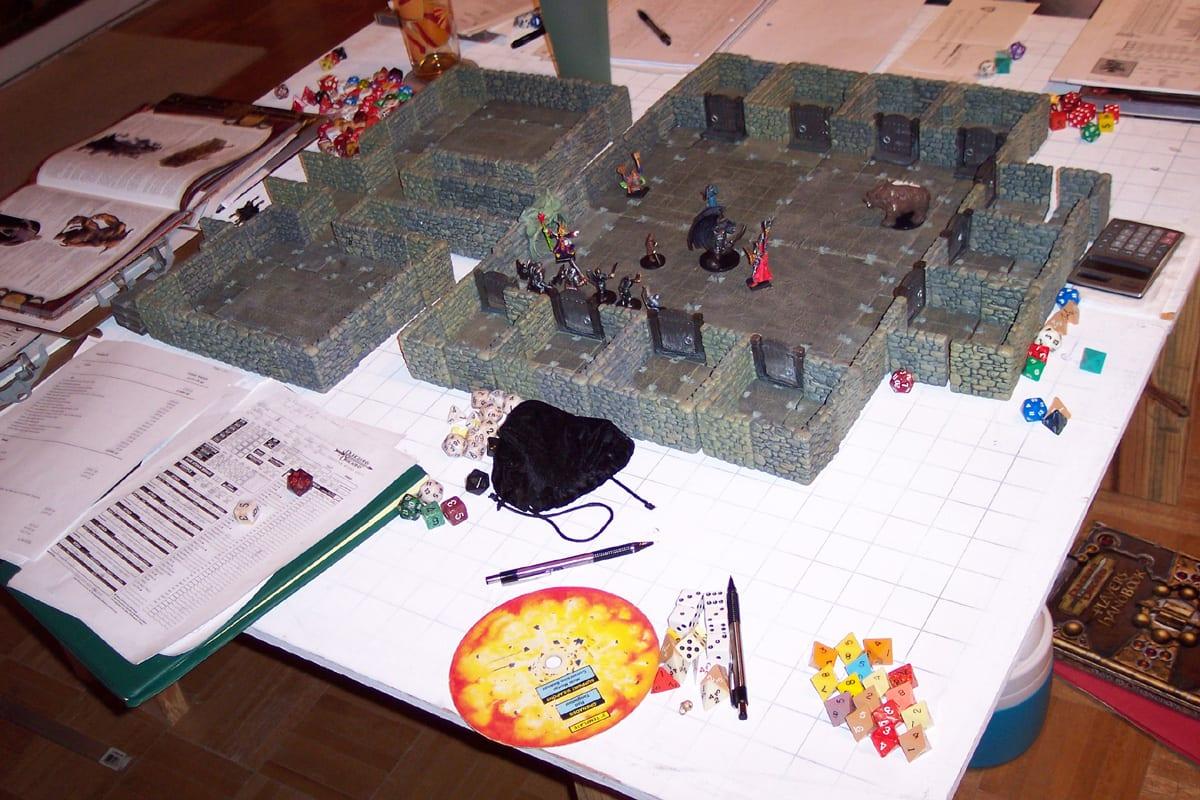
Everything is built on the same grid: one inch equals five feet, which is what published maps and 28mm miniatures both assume. Modular floor tiles come in 2 by 2 inch and 4 by 4 inch footprints so they tile cleanly, and walls are 2 to 3 inches tall. Taller walls look more like architecture and make it impossible to reach the miniatures in the middle of the room, which is why almost every system settles around two inches.
A set that can stage most encounters in a published adventure needs about eighty pieces in five groups.
| Group | Typical count | What it buys you |
|---|---|---|
| Floor tiles | 20–25 | The play surface. Twenty-five 4 by 4 inch tiles cover a 20 by 20 inch area, which is most single encounters. |
| Wall segments | 28–36 | The part that makes it a dungeon rather than a floor. Also the group people most consistently underestimate. |
| Corners, junctions, doors | 10–14 | Doors matter more than they sound. A door is a decision point, and rogues will spend twenty minutes on one. |
| Cavern and natural tiles | 8–12 | Breaks the grid up. A set that is only square corridors gets visually monotonous by session four. |
| Stairs, pillars, features | 6–9 | Elevation. This is the thing a battle mat genuinely cannot do, so it is where the money is best spent. |
Pick a Clip Standard Before You Pick Tiles
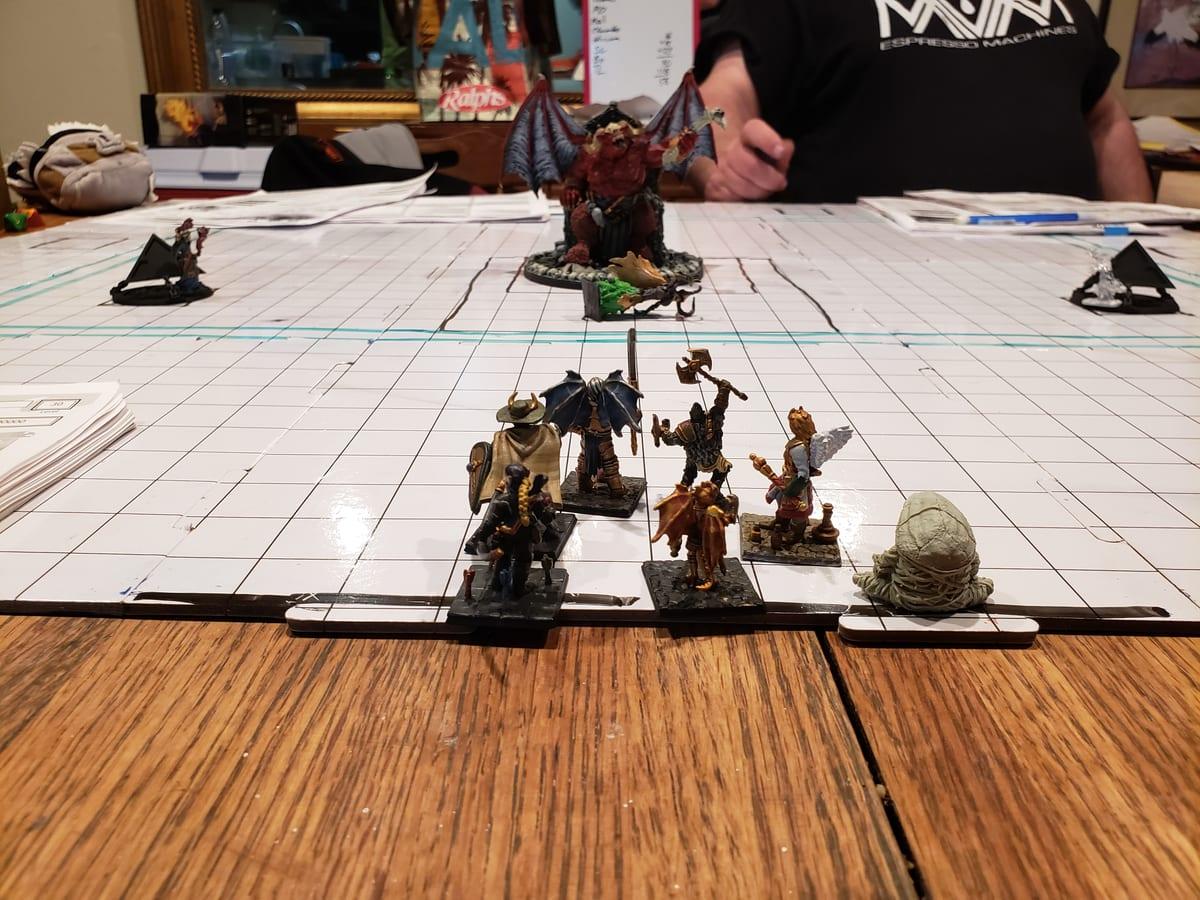
The most consequential decision in a printed terrain set is not which dungeon tiles look best. It is which connector system they use, because that determines whether anything you buy in eighteen months will attach to what you already own.
OpenLOCK, released by Printable Scenery under a Creative Commons licence, is the clip standard most independent designers have converged on: a small dog-bone clip that drops into a recess underneath two adjacent tiles and holds them square. OpenForge is a large open-source terrain library released under a Creative Commons licence that uses the same clips, which makes it the cheapest and most licence-clean place to start a set. Proprietary systems exist and some are excellent, but they lock you to one designer's catalogue.
One specific, load-bearing detail: print the clips in PETG or TPU, not PLA. Clips flex every time you assemble a room. PLA clips are brittle in exactly that mode and start snapping after a few dozen cycles, and a clip that shears off inside a tile recess is genuinely annoying to dig out. At 1–2 g each, a hundred and fifty clips is only 150–300 g of PETG. It is the cheapest reliability upgrade in the whole set.
Cost and Print Time, Piece by Piece
Individually, nothing here is expensive. A floor tile is about $1.50 of PLA. The problem is arithmetic: eighty pieces, running from a few minutes for a clip to four to seven hours for a large floor tile, add up to 185–320 hours — one to two weeks of continuous printing, and that machine time is what a commission is actually buying.
Filament per dungeon terrain piece
A 4 by 4 inch floor tile uses 55–85g of PLA and 4–7 hours of print time. Wall segments are a third of that each, but a set needs 28–36 of them, so walls end up a comparable share of the total.
| piece | Typical low (g) | Typical high (g) |
|---|---|---|
| OpenLOCK clip | 1 g | 2 g |
| Wall segment (2in) | 20 g | 35 g |
| Corner / junction | 25 g | 40 g |
| Door and frame | 30 g | 50 g |
| Floor tile (4x4in) | 55 g | 85 g |
| Cavern floor tile | 70 g | 120 g |
| Staircase | 60 g | 110 g |
Source: 3D Print Bounty cost calculator, sliced at 0.24mm layer height, three perimeters, 12% infill on a 0.4mm nozzle, July 2026
| Scope | Filament | Print time | Commissioned, unpainted | Commissioned, painted |
|---|---|---|---|---|
| Starter (one 12in room set) | 0.8–1.3 kg / $18–30 | 45–80 h | $120–220 | $280–480 |
| Campaign (20in × 20in modular) | 3–4.6 kg / $65–100 | 185–320 h | $320–560 | $750–1,250 |
| Deluxe (dungeon, cavern, tavern, outdoor) | 5–8 kg / $110–175 | 320–520 h | $550–950 | $1,300–2,100 |
Source: 3D Print Bounty cost calculator, costed at $22/kg PLA (US retail $19–30/kg) for material and print time; 3D Print Bounty maker quotes and comparable independent commissions for the commissioned columns. July 2026.
Build It in Waves, Not All at Once
The advice that saves the most money and the most abandoned projects: commission the pieces your next three sessions need, then stop. A single room, a corridor and a door is about $90 commissioned and covers the first two or three encounters. You will discover within a month whether your table actually uses terrain or whether everyone reverts to the mat because assembling it eats into play time.
Building in waves also means your later purchases benefit from what you learned. Printing a full set in one go tends to leave you with too many plain floor tiles and nowhere near enough doors, corners and elevation.
Cumulative cost of building a set in waves
Six waves reach a full campaign set at about $85 in filament or roughly $480 commissioned, landing inside the $65–100 and $320–560 campaign-set ranges above. The first wave, one room and a corridor, is about $90 commissioned and is enough to find out whether your table will actually use terrain.
| wave | Filament only, cumulative | Commissioned, cumulative |
|---|---|---|
| 1. One room + corridor | $12 | $90 |
| 2. + Second room, doors | $24 | $165 |
| 3. + Cavern tiles | $38 | $250 |
| 4. + Stairs, upper level | $52 | $330 |
| 5. + Tavern interior | $68 | $410 |
| 6. + Outdoor / forest | $85 | $480 |
Source: 3D Print Bounty cost calculator, costed at $22/kg PLA (US retail $19–30/kg) for the material line; 3D Print Bounty maker quotes for the commissioned line, unpainted. July 2026
When a Battle Mat Is the Better Buy
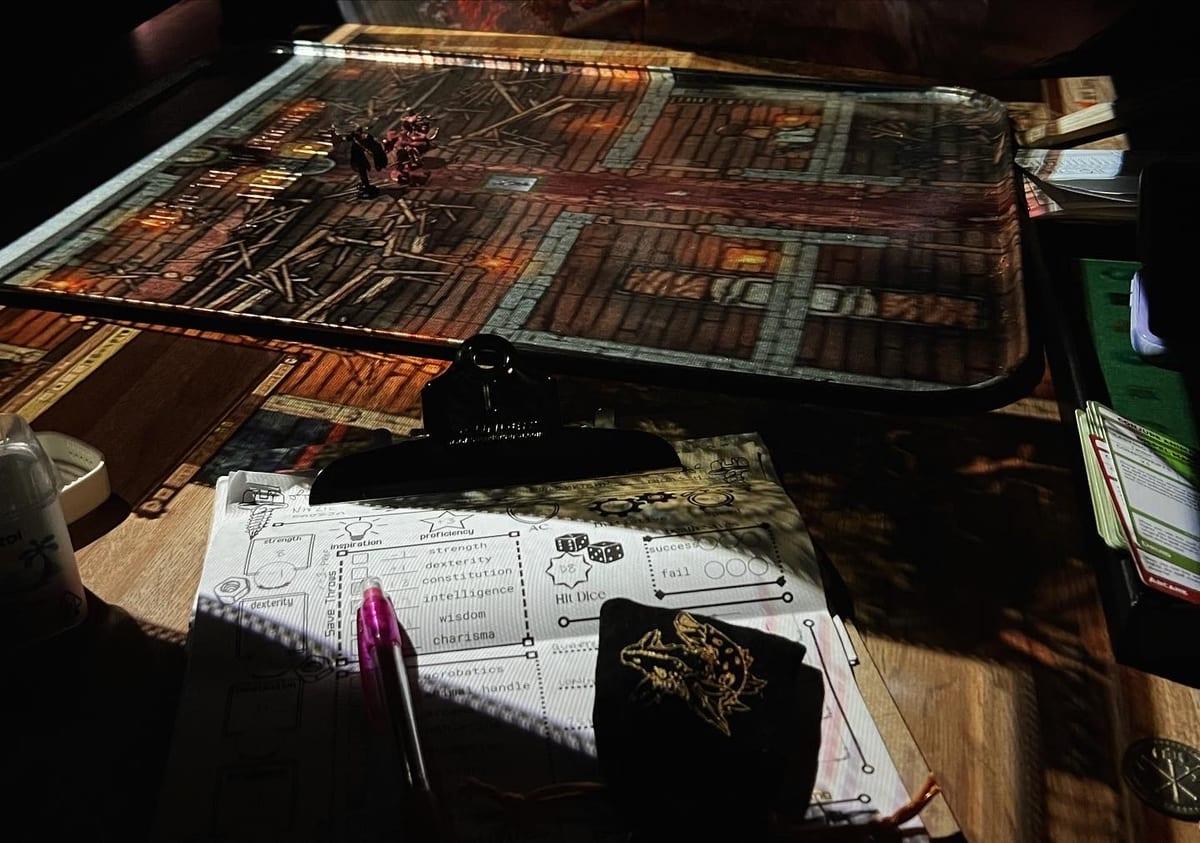
Printed terrain is not automatically the right answer, and the honest comparison is worth making before you spend $500.
| Option | Cost | Best when |
|---|---|---|
| Wet-erase battle mat | $25–40 | You improvise, your maps change every session, or you play somewhere you have to pack down afterwards. |
| Printed modular terrain | $320–560 commissioned | You run a long campaign in a fixed space, and elevation and line of sight matter to how you run combat. |
| Commercial resin dungeon sets | $150–500+ per set | You want it painted, this month, and you are buying finish rather than flexibility. |
Two practical warnings. A campaign set weighs 3–4.6 kg and needs two stackable crates with foam, which is a real furniture decision in a small flat. And if you are also thinking about the figures standing on it, the trade-offs there are completely different: see our guide to custom D&D miniature options, where resin printing wins for exactly the reasons it loses on terrain.
Trademarks, Licences and What We Will Not Print
D&D and Dungeons & Dragons are trademarks of Wizards of the Coast. We use them descriptively here, to say what these tiles are compatible with. Nothing on this page is endorsed by or affiliated with Wizards of the Coast.
The distinction worth understanding, because it gets misreported constantly: Wizards released the D&D System Reference Document 5.1 under a Creative Commons Attribution 4.0 licence in January 2023. That is a genuinely permissive release, and it covers rules text. It does not put miniature sculpts, published adventure artwork or the trademark into the commons, and it has no bearing at all on whether a given terrain STL is licensed for commercial printing.
For terrain specifically the licensing picture is unusually clean. Generic fantasy architecture, dungeon corridors, caverns and tavern interiors are original designs by the people who modelled them, and a great deal of it is released under permissive Creative Commons terms or sold with an explicit print-service tier. Named-character sculpts and adventure-specific commercial models are a different matter.
3D Print Bounty does not accept jobs that reproduce copyrighted commercial sculpts. Original designer files, open-licensed sets and your own models are welcome, and every job stays in escrow until you approve photos of the finished pieces. We would rather decline the work than build a marketplace that a takedown notice could close with your money inside it.
Frequently asked questions
How much does a full set of 3D printed D&D terrain cost?
A campaign set covering a 20 by 20 inch play area costs $65–100 in PLA filament, or $320–560 commissioned unpainted from an independent maker. That is roughly 3–4.6 kg of plastic, 185–320 hours of print time, and about 80 pieces. Painted, the same set runs $750–1,250.
What scale should D&D terrain be printed at?
One inch equals five feet of game space, which is the grid almost every published map uses for 28mm miniatures. Modular tile systems build on that grid in 2 by 2 inch and 4 by 4 inch floor pieces, with wall segments 2 to 3 inches tall so they read as a room without hiding the miniatures inside it.
What is OpenLOCK and do I need it?
OpenLOCK is an open clip standard that lets modular terrain tiles from different designers connect to each other. OpenForge is a large open-source terrain set released under a Creative Commons licence that uses it. Buying into a common clip standard matters more than the individual tiles, because it keeps future purchases compatible.
What filament should dungeon tiles be printed in?
PLA for tiles and walls: rigid, cheap, and stable on the large flat footprints tiles are made of. Print the connecting clips in PETG or TPU instead. PLA clips are brittle and snap after a few dozen assembly cycles, which is the single most common complaint about printed modular terrain.
Is printed terrain better than a battle mat?
Only sometimes. A wet-erase battle mat costs $25–40, draws any map in two minutes, and packs flat. Printed terrain costs ten to twenty times more and takes a crate to store. What it buys is elevation, line of sight you can actually check by eye, and a table people photograph.
Get Your First Wave Printed
Post the tile set you want, how much play area you need, and whether you want it unpainted, primed or painted. Makers with the plate space for modular terrain will bid, and your payment stays in escrow until you approve photos of the finished pieces.