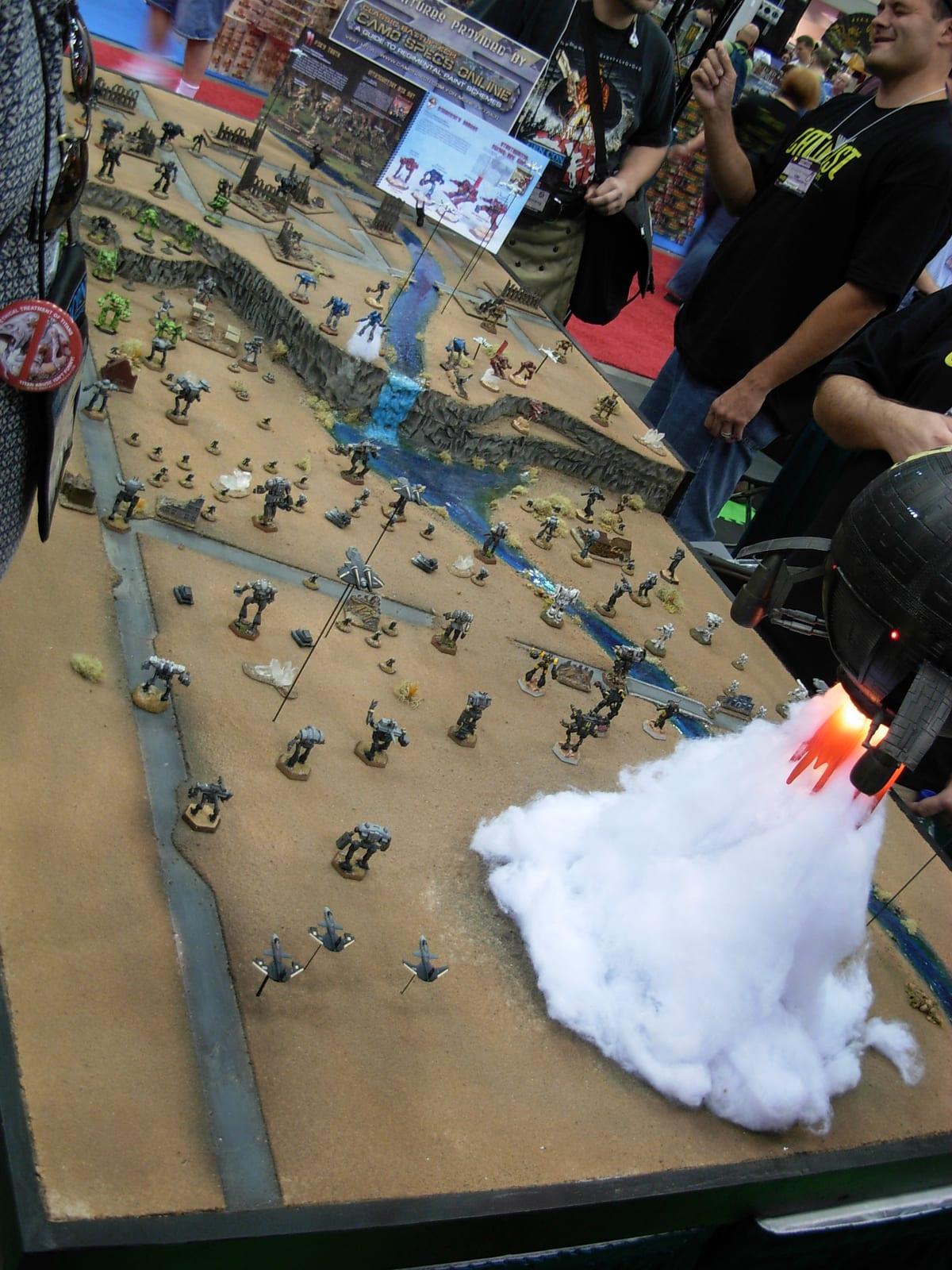
3D Printed Wargaming Terrain: What a 4x4 Table Costs
Terrain is the single best thing to 3D print in this hobby and almost nobody leads with it. It is where the cost saving is largest, where the print quality bar is lowest, and where none of the arguments about sculpts and licences apply, because a generic sci-fi ruin is an original design by whoever modelled it rather than a copy of anyone's miniature line.
What follows is the arithmetic for an open battlefield built to a coverage target: how dense a competition-standard 4×4 board needs to be, how that density converts into piece counts, kilograms of PLA and hours of print time, what an independent maker charges to do it for you, and where buying an MDF kit still beats printing.
If you are building interiors instead — clip-together dungeon rooms, corridors and doors that reconfigure every session — the piece mix and the buying order are different, and that is covered in our guide to 3D printed D&D terrain and modular dungeon tiles.
What does a 4x4 table of 3D printed wargaming terrain cost?
A full 4×4 table of 3D printed wargaming terrain costs $80–140 in filament for a standard 12 to 14 piece set, or $350–600 commissioned and unpainted. Budget 160–280 hours of print time and 3.5–6 kg of PLA. Painting adds $400–600 more. Terrain is the lowest-risk thing to print in the hobby: generic ruins are original designs, not anyone's miniature sculpt.
Last verified: July 2026
Key takeaways
- •A standard 4x4 table of printed terrain is 12–14 pieces, 3.5–6 kg of PLA, 160–280 hours of print time, and $80–140 in filament.
- •Commissioned unpainted, that set runs $350–600. Tabletop-standard painting adds $400–600 because it is 12–20 hours of brush work.
- •Aim for roughly 25–30% of the board footprint covered, with at least four pieces that block line of sight completely.
- •Print terrain in PLA at 0.28mm layers with three perimeters and 10% infill. Resin costs roughly half as much again per gram and is more brittle at terrain sizes.
- •Terrain never has a tournament-legality problem, because events supply their own. That makes it the lowest-friction printing in the entire hobby.
- •MDF kits still beat printing on simple boxy buildings at $15–40 each. Printing wins on ruined, organic and heavily detailed geometry.
Why Terrain Is the Best Thing to Print
Three reasons, and they compound.
The economics are the most favourable in the hobby. A large retail terrain kit is $40–120. The equivalent printed piece is $9–20 of filament. That ratio is better than anything on the miniatures side, because terrain is mostly volume and volume is exactly what a $200 FDM printer is cheap at.
The quality bar is low in the way that suits FDM. Terrain is looked at from two feet away, in bulk, painted, and usually with a model standing in front of it. Layer lines at 0.28mm read as masonry courses and concrete formwork. On a miniature the same layer lines read as a defect. Terrain is the one place where the cheap process is also the right process.
There is no licensing argument to have. Generic sci-fi ruins, industrial containers, fuel silos, barricades and rock outcrops are original designs by the people who modelled them. Dozens of independent terrain designers sell these files, and many explicitly grant commercial or print-service rights, which means handing the file to a maker is unambiguously allowed. That is not true of most miniature files, and it is the reason terrain is where a commissioned print is easiest to arrange.
Terrain Density: How Much a Table Actually Needs
The common design target is 25–30% of the playing surface covered by terrain footprint, with at least four pieces that block line of sight from ground level completely. Below about 20% coverage, shooting-heavy armies win before the third turn and the game stops being interesting. Above about 40%, movement becomes a puzzle and large models cannot be placed legally.
Coverage alone is not the whole rule, though, and this is where home tables usually differ from tournament ones. Three placement conventions do most of the work on a competition-standard board:
- Symmetry between deployment zones. Whatever cover one side gets, the other gets a mirror of it. Asymmetric tables decide games before deployment.
- Something blocking in the centre. A board with an open middle turns every objective into a shooting gallery. One large blocking piece near the centre line changes more about how a table plays than four small ones at the edges.
- No quarter left empty. Split the board into quarters and check each has at least one piece a model can hide fully behind. This is the fastest way to sanity-check a layout, and it is the check that tells you how many largepieces to commission rather than how many pieces in total.
Those three together are why the piece counts below skew towards a handful of big pieces rather than a scattering of small ones: it is blocking footprint, not object count, that a table is actually short of.
Board size matters more than people expect when budgeting. A 4×4 (48in × 48in) board is the standard home table and the size most skirmish games are written for. Competitive play in the current edition of Warhammer 40,000 uses a 44in × 60in board, which is about 15% more area and typically one or two extra pieces. Kill Team plays on 22in × 30in, under a third of the area, and a genuinely cheap first project.
| Board | Area | Typical pieces | Filament |
|---|---|---|---|
| Skirmish (22in × 30in) | 660 sq in | 6–9 | 1.5–2.5 kg |
| Home 4×4 (48in × 48in) | 2,304 sq in | 12–14 | 3.5–6 kg |
| Matched play (44in × 60in) | 2,640 sq in | 14–16 | 4.5–7 kg |
| Dense cityfight 4×4 | 2,304 sq in | 18–24 | 6–10 kg |
Piece counts assume mixed sizes at roughly 25–30% footprint coverage. Filament estimated from the per-piece figures below, sliced at 0.28mm with three perimeters and 10% infill.
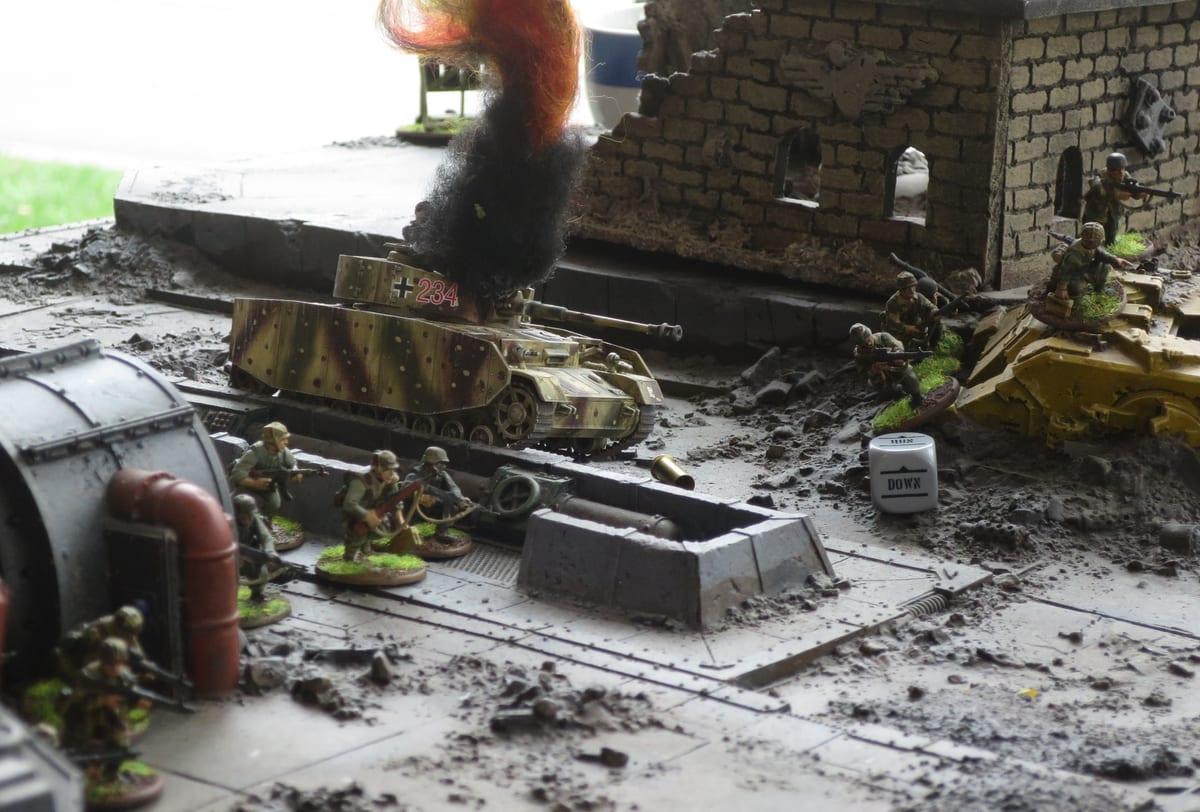
What It Costs, Piece by Piece
Terrain is the rare case where filament is a meaningful share of the total rather than a rounding error, simply because there is so much of it. A large ruin is half a kilogram of plastic and thirty to fifty-five hours on the machine, which is a real cost to whoever runs the printer.
Filament per terrain piece
A large 10-inch ruin uses 500–900g of PLA and 30–55 hours of print time. Barricades and containers use 80-200g each, a quarter to a sixth as much, which is why a sensible table is mostly small pieces with three or four big ones.
| piece | Typical low (g) | Typical high (g) |
|---|---|---|
| Barricade / low wall | 80 g | 150 g |
| Cargo container | 120 g | 200 g |
| Hill / rock outcrop | 200 g | 400 g |
| Medium ruin (6in) | 250 g | 450 g |
| Large ruin (10in+) | 500 g | 900 g |
Source: 3D Print Bounty cost calculator, sliced at 0.28mm layer height, three perimeters, 10% infill on a 0.4mm nozzle, July 2026
| Piece | Print time | Filament cost at $22/kg |
|---|---|---|
| Barricade / low wall | 4–8 h | $1.76–3.30 |
| Cargo container | 7–12 h | $2.64–4.40 |
| Hill / rock outcrop | 12–24 h | $4.40–8.80 |
| Medium ruin (6in footprint) | 14–26 h | $5.50–9.90 |
| Large ruin (10in+ footprint) | 30–55 h | $11.00–19.80 |
Source: 3D Print Bounty cost calculator, costed at $22/kg PLA (US retail $19–30/kg), sliced at 0.28mm, July 2026. Run your own numbers with the cost calculator.
What a full table costs: filament versus commissioned
Material for a standard 12 to 14 piece 4x4 table is $80–140. The same set commissioned unpainted from an independent maker is $350–600, because the maker is absorbing 160–280 hours of machine time and the failed plates.
| build | Typical low | Typical high |
|---|---|---|
| Sparse (8 pcs), material | $45 | $85 |
| Sparse (8 pcs), commissioned | $220 | $380 |
| Standard (12-14), material | $80 | $140 |
| Standard (12-14), commissioned | $350 | $600 |
| Dense city (18-24), material | $135 | $230 |
| Dense city (18-24), commissioned | $600 | $1000 |
Source: 3D Print Bounty cost calculator, costed at $22/kg PLA (US retail $19–30/kg) for the material figures; 3D Print Bounty maker quotes and comparable independent commissions for the commissioned figures. Unpainted. July 2026
Painting is the line item people forget. Tabletop-standard terrain painting is spray primer, one or two base coats, a heavy wash and a drybrush, and it runs 45–90 minutes per medium piece. Across a full table that is 12–20 hours, which is why a painted commission lands $400–600 above an unpainted one. Priming only, as a middle option, adds about $60–120 and makes an enormous visual difference for the money.
Material and Print Settings
PLA, at 0.28mm layers, three perimeters, 10% infill. That is the answer for close to all terrain, and each part of it is doing work. PLA because it is rigid, cheap and warps least on the large flat footprints terrain is built from; ABS and ASA lift at the corners on a 250mm print unless the printer is enclosed and the room is still. 0.28mm because the surface finish is irrelevant and coarser layers cut print time by roughly a third against 0.2mm. Three perimeters because terrain gets knocked off tables, and wall count carries impact strength far better than infill does.
Two settings people get wrong. Vase mode is not strong enough for anything you will pick up by a tower. And supports are usually avoidable if you ask the maker to split the model: most well-designed terrain files ship pre-split into support-free chunks, and a maker who prints them as one lump is adding hours of support removal to your bill for nothing.
Resin is the wrong tool at this scale. A medium ruin is 250–450 g, which is $5.50–9.90 of PLA at $22/kg against roughly $7–20 of resin at $30–50 per litre — and resin terrain chips when a model bag lands on it. Keep resin for crates, barrels, statuary and other small detail pieces where the finish genuinely shows.
When Printing Loses
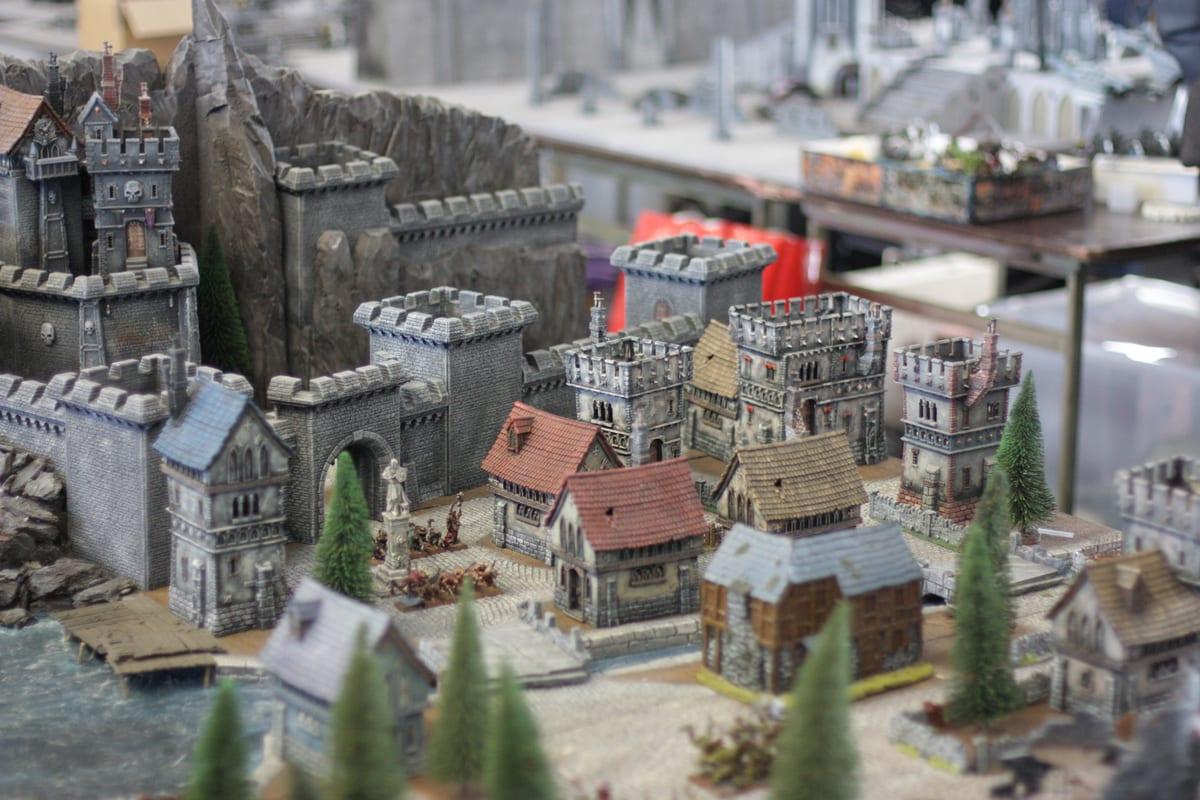
Honest comparison, because printing does not win everywhere. Laser-cut MDF kits are genuinely cheap for boxy buildings, and a flat-pack MDF warehouse at $15–40 costs less than the filament for a printed equivalent and assembles in an evening.
| Option | Per medium piece | Best at |
|---|---|---|
| Printed PLA (own printer) | $5–10 | Ruined, organic and heavily detailed geometry. Anything you want six of. |
| Printed, commissioned | $25–50 | The same, when you do not own a printer or do not want 200 hours of machine time in your living room. |
| Laser-cut MDF kit | $15–40 | Boxy buildings, walls, fences, industrial sheds. Flat surfaces are MDF's home turf. |
| Retail resin or plastic terrain | $40–120 | Set-piece centrepieces where detail carries the table, and you want it now. |
The mixed table is usually the right answer. MDF for the plain warehouses and fences, printed pieces for the ruined and organic geometry, and one bought centrepiece if the table needs a focal point.
One practical warning that has nothing to do with money: a full printed 4×4 weighs 3.5–6 kg and does not stack. Budget a plastic crate and some foam before you print fourteen pieces and discover they live on the floor.
Files, Licences and What We Will Not Print
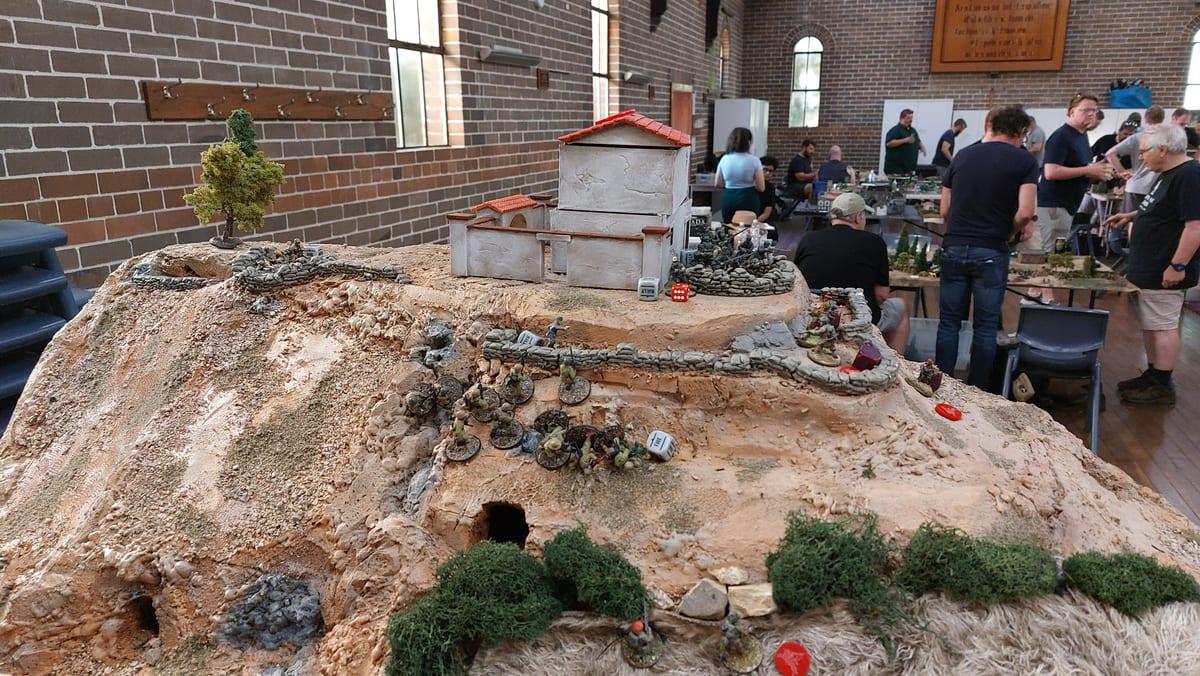
Terrain files come with licences like everything else, but the terms are usually far friendlier. Many independent terrain designers sell a commercial or print-service tier outright, and a good number release older sets under permissive licences. That means a commissioned print is straightforwardly allowed, which is not the case for most miniature files. Check the licence, and if it says personal use only, ask the designer before handing it to a maker.
The line that does exist: a manufacturer's own terrain kits are protected sculpts, exactly like their miniatures. Generic gothic ruins compatible with popular sci-fi wargames are original designs and completely fine. A scan or remodel of a specific commercial terrain kit is not, and the fact that it is scenery rather than a model changes nothing about that.
3D Print Bounty does not accept jobs that reproduce copyrighted commercial sculpts, terrain included. Original designer files, files you hold a print licence for, and your own models are all welcome. We would rather turn work away than run a marketplace that a takedown notice could empty out while your escrowed payment is sitting in it.
Frequently asked questions
How much does a 4x4 table of 3D printed wargaming terrain cost?
A standard 12 to 14 piece set costs $80–140 in PLA filament, or $350–600 commissioned unpainted from an independent maker. Tabletop-standard painting adds $400–600 on top. Expect 3.5–6 kg of filament and 160–280 hours of print time for a set that size.
How much terrain does a wargaming table actually need?
Around 25–30% of the playing surface covered by terrain footprint is the common design target for an infantry-heavy game. On a 4x4 board that is roughly 12–14 pieces of mixed size, with at least four blocking line of sight completely. Less than that and shooting armies dominate every game.
Should wargaming terrain be printed in FDM or resin?
FDM, almost always. Terrain is large, and a piece that costs $9 in PLA at $22/kg would cost roughly $11–18 in resin at $30–50 per litre, while being noticeably more brittle. Layer lines at 0.28mm read as masonry texture at arm's length. Resin is only worth it for small detail pieces such as crates, statuary and barrels.
Is 3D printed terrain allowed at wargaming tournaments?
Terrain is supplied by the event, so it is not a question that comes up. This is the practical difference between terrain and models: an event decides what miniatures you may field, but nobody inspects the provenance of a ruin. Terrain sidesteps the entire debate.
What filament is best for wargaming terrain?
PLA. It is rigid, cheap, dimensionally stable on large flat prints, and warps far less than ABS or ASA at the sizes terrain requires. Its one weakness, softening around 55°C, only matters if you leave a crate of it in a hot car. Print at 0.28mm with three perimeters and 10% infill.
Get Your Table Printed
Post the files, the board size, and whether you want it unpainted, primed or painted. Makers with the plate space to run large terrain will bid, and your payment stays in escrow until you approve photos of every piece.