Heat-Resistant 3D Printing: What Survives Your Temperature
Heat-related print failures nearly all come from the same mistake: somebody designed a part correctly, printed it in PLA because PLA prints beautifully, and then put it somewhere warmer than 55°C. Car dashboards, engine bays, light fittings, dishwashers, attics, greenhouse windows. The part does not melt dramatically. It sags a few millimetres over a week and then stops fitting.
This guide is built from published manufacturer data sheets rather than forum consensus, because the numbers are all publicly available and they settle most arguments. It covers what heat resistance is actually measured as, which materials clear which temperatures, what they cost, and where the published numbers are misleading.
What is the most heat-resistant 3D printing filament?
For desktop printing, polycarbonate is the practical ceiling: Prusament PC Blend holds shape to 113°C at 0.45 MPa load against 93°C for ASA and 55°C for PLA, all on Prusa published ISO 75 data. Carbon-fibre nylons list 186-205°C and PEEK 140°C, but both demand enclosed high-temperature printers.
Last verified: July 2026
Key takeaways
- •Prusament PLA has a published heat deflection temperature of 55°C at 0.45 MPa; PETG 68°C, ASA 93°C and PC Blend 113°C (Prusa ISO 75 data sheets).
- •Car dashboards in summer sun averaged 157°F (69°C) after one hour in a 2018 UC San Diego and Arizona State study, above PLA and marginal for PETG.
- •Carbon-fibre nylons publish 186-205°C HDT but glass transition temperatures of only 68-75°C, so they creep under sustained load long before they slump.
- •Annealing works on grades designed for it: Polymaker HT-PLA goes from 61.4°C to 107.2°C HDT at 0.45 MPa, with no change to in-plane tensile strength.
- •Price scales with heat resistance: PLA $19-30/kg, PETG $22-32, ASA $28-40, PC $40-60, carbon-fibre nylon $60-90, PEEK $590-900.
What "Heat Resistant" Is Actually Measured As
Three numbers get quoted and they mean different things. Getting them straight is most of the work.
- Heat deflection temperature (HDT). The temperature at which a standard test bar bends by a set amount under a set load, per ISO 75 or ASTM D648. Manufacturers publish it at two loads, 0.45 MPa and 1.8 MPa. The 0.45 MPa figure is always higher and is the one marketing quotes. Use the 1.8 MPa figure for anything structural.
- Glass transition temperature (Tg). The temperature at which the amorphous regions of the polymer go from glassy to rubbery. Above Tg a part will creep under sustained load even if it holds shape unloaded. For amorphous polymers like ABS and PC, Tg and HDT are close together. For filled semi-crystalline materials like carbon-fibre nylon they are wildly apart.
- Melting temperature. Effectively irrelevant for design. Nothing useful survives close to it.
One more caveat before the table: these values are measured on injection-moulded or printed test bars in a specific orientation, and a printed part with thin walls and low infill will behave worse than the bar. Treat published HDT as an upper bound, not a guarantee.
The Numbers, From the Data Sheets
Everything below is read off a published manufacturer technical data sheet. Where two manufacturers publish a material, the figures differ, which is itself worth knowing: "PETG" is a family, not a specification.
| Material | HDT 0.45 MPa | HDT 1.8 MPa | Tg | Source data sheet |
|---|---|---|---|---|
| PLA | 55°C | 55°C | - | Prusament PLA v1.1 |
| PLA (second source) | 57°C | 54°C | 60°C | Bambu Lab PLA Basic V3.0 |
| PETG | 68°C | 68°C | - | Prusament PETG v1.1 |
| ASA | 93°C | 86°C | - | Prusament ASA v1.1 |
| ABS | 100°C | 98°C | 101°C | Polymaker PolyLite ABS V5.5 |
| Polycarbonate blend | 113°C | 93°C | - | Prusament PC Blend v1.1 |
| PEEK | 140°C | - | 143°C | 3DXTech ThermaX PEEK Rev 3.0 |
| PEI (ULTEM 9085) | 158°C | - | 186°C | 3DXTech ThermaX PEI Rev 4.0 |
| PA6-CF (carbon-fibre nylon) | 186°C | 164°C | 68°C | Bambu Lab PA6-CF V3.0 |
| PET-CF | 205°C | 182°C | 75°C | Bambu Lab PET-CF V3.0 |
Heat deflection temperature by material, ISO 75 at 0.45 MPa
PLA deflects at 55°C and PETG at 68°C, while ASA reaches 93°C and polycarbonate 113°C. Carbon-fibre nylons publish the highest figures at 186-205°C, but their glass transition temperatures are only 68-75°C.
| material | HDT at 0.45 MPa |
|---|---|
| PLA | 55°C |
| PETG | 68°C |
| ASA | 93°C |
| ABS | 100°C |
| PC Blend | 113°C |
| PEEK | 140°C |
| PA6-CF | 186°C |
| PET-CF | 205°C |
Source: Manufacturer technical data sheets: Prusa Polymers (PLA, PETG, ASA, PC Blend), Polymaker (PolyLite ABS), Bambu Lab (PA6-CF, PET-CF), 3DXTech (ThermaX PEEK), July 2026
Match the Material to the Actual Temperature
The useful question is never "what is the strongest heat resistance" but "how hot does this exact spot get." Measure it if you can. A $12 infrared thermometer aimed at the surface on the hottest afternoon of the year will save you a reprint.
| Where the part lives | Typical peak | What to order |
|---|---|---|
| Indoors, room temperature | Under 30°C | PLA. Nothing else is necessary. |
| Loft or attic in summer | 50-60°C | PETG. PLA is right at its limit here and will creep under load. |
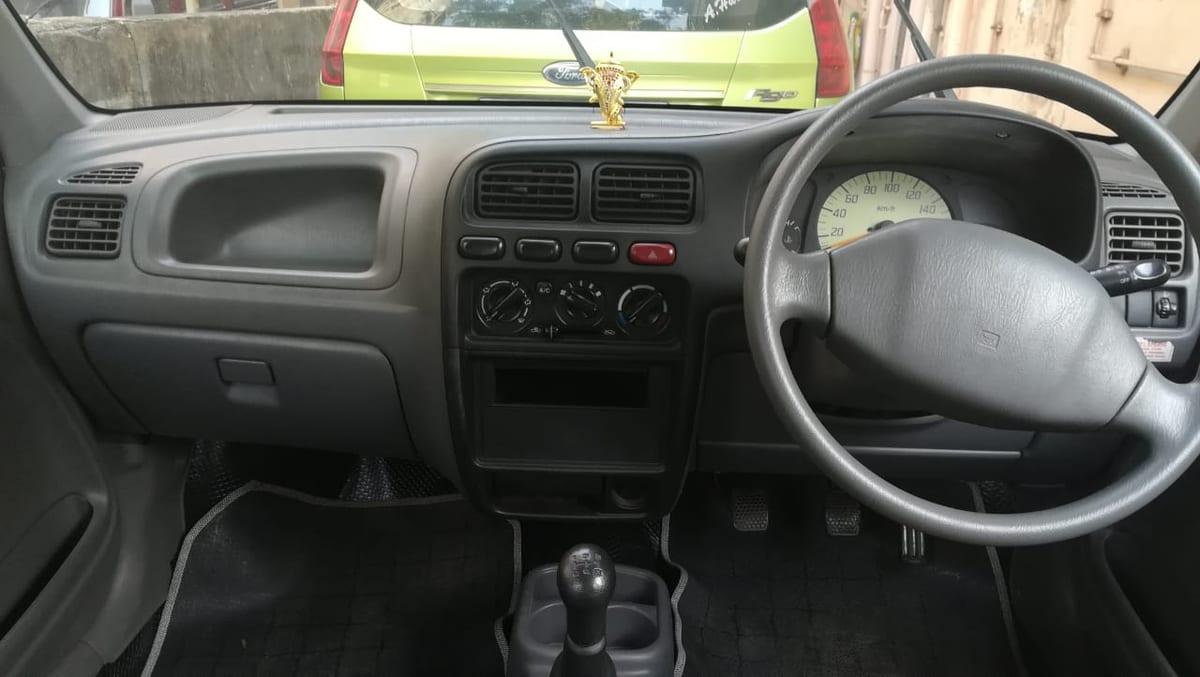
| Car interior, dashboard | 69°C measured | ASA or PC. PETG is marginal, PLA fails. |
| Dishwasher upper rack | 60-75°C | PP or ASA. PETG's 68°C HDT sits inside this band, so use it only for unloaded parts. Also check chemical resistance, not just heat. |
| Enclosed LED fixture or driver housing | 60-90°C | ASA or PC. |
| Under-bonnet, away from the exhaust | 90-120°C | PC at the low end, carbon-fibre nylon above it. Verify with a thermometer. |
| Anything touching an exhaust or heating element | 150°C+ | Not a printed plastic job. Use metal. |
The Glass Transition Trap
Here is the number that catches people out. Bambu Lab's data sheet for PA6-CF lists a heat deflection temperature of 186°C at 0.45 MPa and a glass transition temperature of 68°C. Those look contradictory and they are not.
Carbon fibre reinforcement gives semi-crystalline nylon enormous short-term dimensional stability, which is what the HDT test measures: three minutes of ramping temperature against a fixed load. Sustained load is a different question. Above the glass transition the amorphous phase is rubbery, and a bracket under constant stress will slowly creep over weeks even though it passes a 186°C HDT test.
The practical rule: for a part that carries continuous load, design against the glass transition temperature, not the HDT. For a part that just needs to hold its shape and survive occasional heat spikes, HDT at 0.45 MPa is a reasonable guide.
Nylons have a second complication. Polymaker publishes both dry and moisture-conditioned figures for Fiberon PA6-CF20, and the conditioned tensile strength is roughly half the dry one. Read the conditioning before you use that number: Polymaker's own documentation states its specimens were annealed and then immersed in 60°C water for 48 hours, which is a deliberately aggressive soak rather than anything a part experiences on a shelf. Nylon does take up water and does get weaker and more flexible as it does, but a part left in a workshop lands between those two columns rather than at the bottom. If you order a nylon part, ask whether it will be dried and sealed for shipping.
Annealing: Free Heat Resistance, Sometimes
Heat-treating a printed part after printing increases crystallinity, and for the right polymer that raises the temperature at which it deforms. Polymaker is one of the few manufacturers that publishes before-and-after data, and their HT-PLA sheet is the clearest evidence available:
| Polymaker HT-PLA, TDS V1.1 | As printed | Annealed |
|---|---|---|
| HDT at 0.45 MPa | 61.4°C | 107.2°C |
| HDT at 1.8 MPa | 58.6°C | 71.7°C |
| Tensile strength, X-Y | 42.86 MPa | 42.86 MPa |
| Notched Charpy, X-Y | 4.94 kJ/m2 | 4.67 kJ/m2 |
Read that carefully, because it is the whole story of annealing in one table. Heat resistance rises 45.8°C at low load. Tensile strength does not change at all, and impact strength drops slightly. Annealing is a heat treatment, not a strengthening treatment, and anyone selling it as the latter is overselling.
Two warnings. Standard PLA is not HT-PLA; ordinary grades shrink and warp during annealing, which ruins anything dimensionally critical. And annealing has to be done in a controlled oven at a held temperature, not in a car on a hot day.
What Heat Resistance Costs
Material price is only part of the picture, but it is the part people compare first.
Retail filament price per kilogram by material class
PLA and PETG sit at $19-32 per kilogram. Polycarbonate is $40-60 and carbon-fibre nylon $60-90, so a heat-resistant part typically costs two to three times as much in material alone.
| material | Typical low | Typical high |
|---|---|---|
| PLA | $19 | $30 |
| PETG | $22 | $32 |
| ASA | $28 | $40 |
| PC | $40 | $60 |
| PA6-CF | $60 | $90 |
Source: US retail spool pricing across mainstream filament brands, July 2026. Ranges, not point prices.
The bigger cost is often not the filament. High-temperature materials need an enclosed printer with a heated chamber, a hotend rated above 260°C and, for anything carbon-fibre filled, a hardened steel or ruby nozzle because carbon fibre abrades brass in a few hundred hours. Far fewer makers own that hardware than own a PLA machine, so quotes for PC and nylon jobs carry a scarcity premium on top of material cost.
You can price the material component of your own part with our 3D printing cost calculator, and our full 3D printing cost guide explains how machine time and setup are priced on top of it.
What to Say When You Order
Do not specify the material. Specify the environment and let the maker choose, because they know what their machine can actually run. Include:
- The peak temperature the part will see, measured if possible, and how long it stays there.
- Whether it is under continuous load. This is what decides between designing to HDT and designing to glass transition.
- UV exposure. ABS yellows and goes brittle in sunlight; ASA is the same family formulated to resist it.
- Chemical contact. Cleaning products, fuel and oils rule out some options independently of temperature.
- Dimensional tolerance. ABS, ASA and PC shrink more than PLA, so tight press fits need to be designed with that in mind rather than discovered afterwards.
And be honest about whether you need heat resistance at all. Most parts do not, PLA prints faster and more reliably than anything else here, and paying a polycarbonate premium for a bracket that lives in a spare room is money burned.
Frequently asked questions
What is the most heat-resistant 3D printing filament?
Among materials you can realistically order from an independent maker, polycarbonate is the practical ceiling: Prusament PC Blend lists a heat deflection temperature of 113°C at 0.45 MPa. Carbon-fibre nylons list higher HDT figures still at the same load, 186-205°C, and PEEK reaches 140°C, but both require enclosed high-temperature printers that few makers own.
At what temperature does PLA start to deform?
Prusa publishes a heat deflection temperature of 55°C for Prusament PLA at both 0.45 and 1.8 MPa load, tested to ISO 75. Bambu Lab lists 57°C at 0.45 MPa for PLA Basic. In practice a loaded PLA part starts creeping in the high 40s, and an unloaded one will sag somewhere around 60°C.
Will a PLA part survive in a car?
Not on a dashboard. A 2018 study by UC San Diego and Arizona State researchers published in the journal Temperature measured dashboard surfaces averaging 157°F (69°C) after one hour in Arizona sun. That is above the 55-57°C heat deflection temperature manufacturers publish for PLA. Use ASA or polycarbonate for interior car parts.
Does annealing PLA make it heat resistant?
It can, dramatically, for the right grade. Polymaker publishes side-by-side data for HT-PLA showing heat deflection at 0.45 MPa rising from 61.4°C as printed to 107.2°C annealed. Tensile strength in the print plane is unchanged and notched impact drops slightly, so annealing buys heat resistance and nothing else.
Is HDT the right number to design around?
It is the best single number available, but it is optimistic for filled semi-crystalline materials. Bambu Lab lists 186°C HDT at 0.45 MPa for PA6-CF while also listing a glass transition temperature of 68°C. Above the glass transition a loaded part creeps over time even though it will not visibly slump.
What does heat-resistant filament cost?
PLA costs $19-30 per kilogram at retail and PETG $22-32. ASA runs $28-40, polycarbonate $40-60, and carbon-fibre nylon $60-90. PEEK is in a different bracket entirely at $590-900 per kilogram, which is why almost nothing outside aerospace and medical is printed in it.
Get a Heat-Rated Part Quoted
Post the part, the temperature it has to survive and how it is loaded. Makers with enclosed high-temperature printers will bid, and your payment stays in escrow until you approve photos of the finished part.