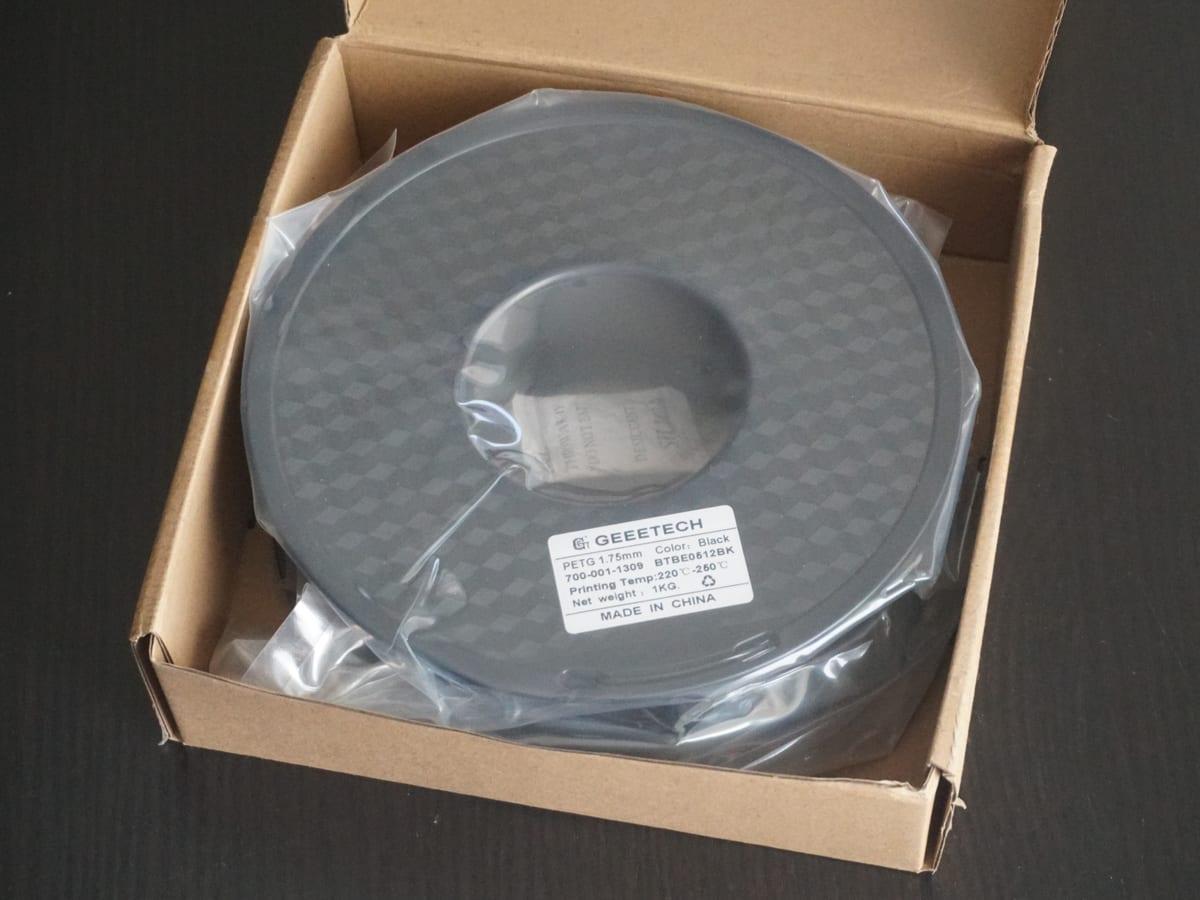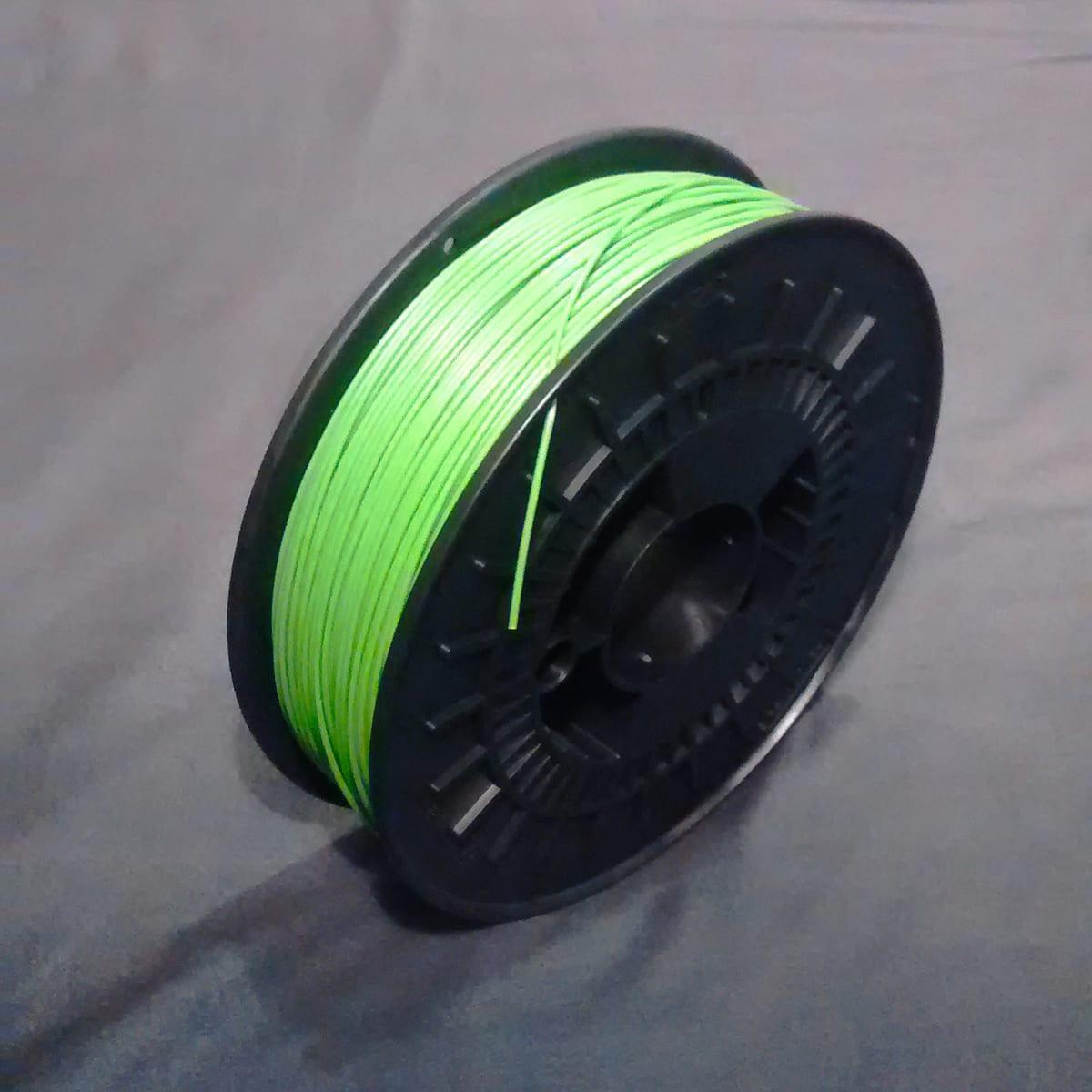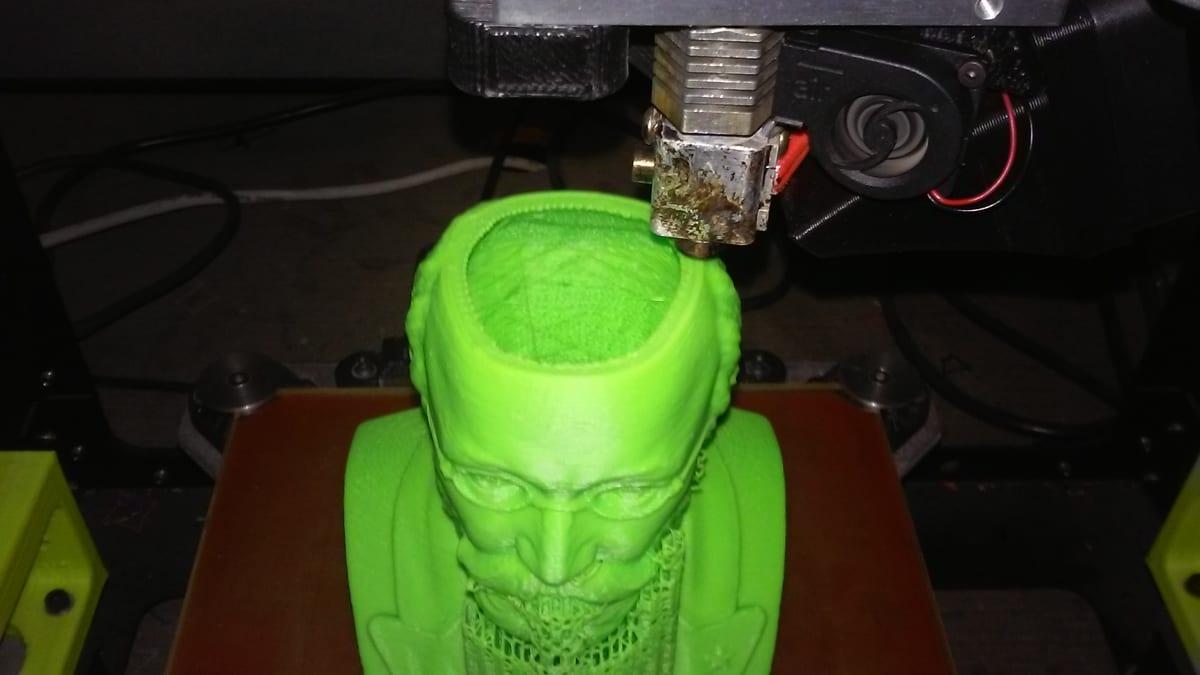
The Strongest 3D Printing Material for Functional Parts
"What is the strongest 3D printing material" is one of those questions that has a confident wrong answer everywhere you look. The confident answers usually pick a single number, quote it out of context, and ignore that the part in front of you will fail in one specific way that number may say nothing about.
Everything below comes from published manufacturer technical data sheets, with the material, test standard and print direction stated. Where the published numbers are misleading, which happens more than you would like, that is called out. The short version: the answer is different depending on whether your part is going to snap, shatter, peel apart along its layers, or slowly sag.
What is the strongest 3D printing material?
Carbon-fibre nylon leads on tensile strength at 102 MPa in the print plane (Bambu Lab PA6-CF), and PAHT-CF leads on impact at 22.8 kJ/m2 notched. Across layers every material is weaker, but by very different amounts: PA6-CF loses 53 percent and PLA Basic only 11. That layer direction is what usually breaks.
Last verified: July 2026
Key takeaways
- •Bambu Lab publishes 102 MPa X-Y tensile for PA6-CF against 35 MPa for PLA Basic, both to ISO 527 on printed specimens.
- •The same PA6-CF drops to 48 MPa in the Z direction, a 53 percent loss. Layer adhesion, not material choice, is the usual limit on a printed part.
- •For impact, the order changes completely: PAHT-CF 22.8 kJ/m2, PA6-CF 13.4, PET-CF 8.6, PLA Basic 7.9, PETG HF 6.2 (ISO 179 notched Charpy, X-Y).
- •Cross-brand comparison is unreliable. Prusa publishes tensile yield, Bambu Lab and Polymaker publish tensile strength, and specimen geometry differs.
- •Nylon loses roughly half its tensile strength when saturated: Polymaker publishes 109.3 MPa dry and 54.7 MPa at 5.3% moisture for Fiberon PA6-CF20.
"Strongest" Is Four Different Questions
Before any numbers are useful, work out which of these describes how your part will fail. Most people can answer it in one sentence once they are asked.
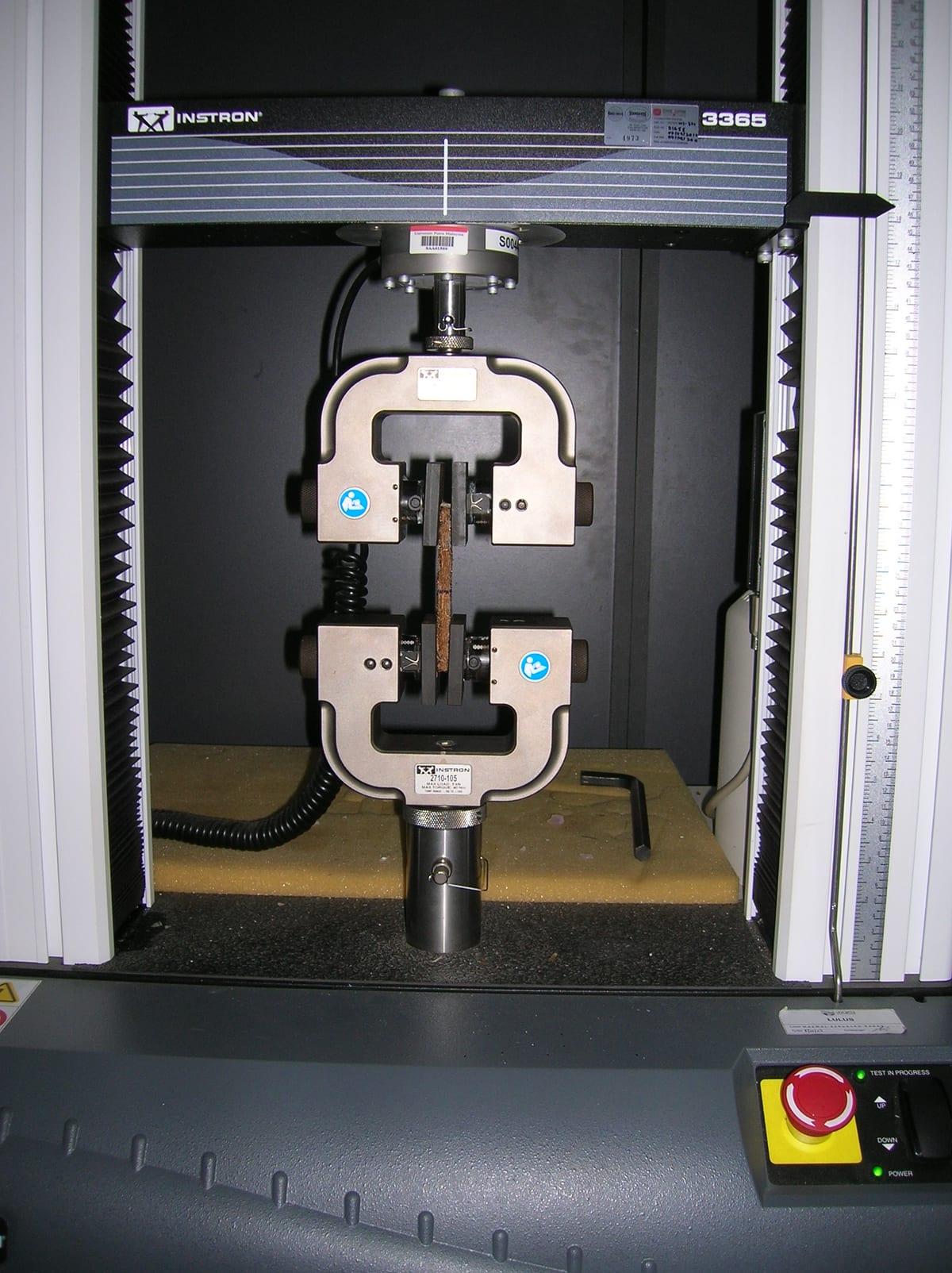
- Tensile strength. How much pull it takes to break the material, measured in megapascals to ISO 527 or ASTM D638. Relevant to brackets under steady load, hooks, and anything that carries weight.
- Impact toughness. How much energy it absorbs before it shatters, measured in kJ/m2 by notched Charpy to ISO 179 or in J/m by Izod to ASTM D256. Relevant to anything that gets dropped, knocked or clipped on and off.
- Layer adhesion. Tensile strength measured in the Z direction, across the layer boundaries. This is the number that decides most real failures and the one least often quoted.
- Heat resistance. Heat deflection temperature. A part that is perfectly strong at 20°C and useless at 70°C has not really failed on strength at all.
Stiffness is a fifth and separate property. PLA is one of the stiffest common filaments and one of the least tough, which is exactly why it feels solid right up to the moment it snaps.
Tensile Strength, and the Z-Axis Penalty
The chart below uses Bambu Lab data exclusively, because a single manufacturer testing to one standard on one specimen geometry is the only way to compare fairly. The pattern it shows is the single most useful thing in this article.
Tensile strength, print plane versus layer direction
Carbon-fibre nylon reaches 102 MPa in the X-Y plane but only 48 MPa in Z, a 53 percent loss. PLA loses just 11 percent. The more a filament is reinforced in-plane, the more anisotropic the printed part becomes.
| material | X-Y (print plane) | Z (across layers) |
|---|---|---|
| PLA Basic | 35 MPa | 31 MPa |
| PETG HF | 34 MPa | 23 MPa |
| PET-CF | 74 MPa | 35 MPa |
| PAHT-CF | 92 MPa | 47 MPa |
| PA6-CF | 102 MPa | 48 MPa |
Source: Bambu Lab published technical data sheets, ISO 527 tensile on printed specimens (PLA Basic V3.0, PETG HF V1.0, PET-CF V3.0, PAHT-CF, PA6-CF V3.0), July 2026
Read the gap between the two bars, not the height of the first one. PLA Basic goes from 35 to 31 MPa, an 11 percent drop. PA6-CF goes from 102 to 48 MPa, a 53 percent drop. PET-CF loses the same 53 percent.
The mechanism is straightforward. Chopped carbon fibre aligns with the extrusion path during printing, so it reinforces along the layer and does nothing across it. You buy enormous in-plane strength and inherit an equally enormous weak axis. A carbon-fibre nylon part loaded across its layers is only about 55 percent stronger than a PLA part in the same orientation (48 MPa against 31 MPa), despite costing roughly three times as much per kilogram ($60–90 against $19–30).
This is why orientation instructions matter more than material selection on most jobs. Tell your maker which direction the load comes from and let them orient the part so the load runs along layers rather than across them. That change is free and routinely worth more than an upgrade from PLA to nylon.
Impact Toughness Reorders Everything
Switch the question from "what breaks under a pull" to "what shatters when dropped" and the ranking changes. This is where a lot of material advice goes wrong, because a stiff high-tensile material can be the worst possible choice for a part that gets handled.
Notched Charpy impact strength, X-Y direction
PAHT-CF absorbs 22.8 kJ/m2 before fracture, nearly three times PLA Basic at 7.9 and over three times PETG HF at 6.2. High tensile strength and high impact toughness are different properties and rarely peak in the same material.
| material | Notched Charpy (kJ/m2) |
|---|---|
| PETG HF | 6.2 |
| PLA Basic | 7.9 |
| PET-CF | 8.6 |
| PA6-CF | 13.4 |
| PAHT-CF | 22.8 |
Source: Bambu Lab published technical data sheets, ISO 179 notched Charpy on printed specimens, X-Y direction, July 2026
Two things worth pulling out of the impact data. First, ABS and polycarbonate remain excellent toughness choices despite modest tensile numbers: Polymaker publishes 18.0 kJ/m2 for PolyLite ABS and 21.3 kJ/m2 for PolyMax PC, both well above any unfilled PLA or PETG. If your part gets dropped, that matters more than tensile strength does.
Second, Prusa does not publish a notched Charpy figure for Prusament PLA at all. Their data sheet records it as not applicable, which is a polite way of saying the specimens do not produce a meaningful result. Treat any source quoting a precise notched impact figure for PLA with suspicion.
The Full Picture, With Sources
Numbers from three manufacturers. They are grouped by vendor deliberately: comparing down a column across vendors is unreliable, comparing within a vendor is not.
| Material and data sheet | Tensile X-Y | Tensile Z | Notched Charpy | HDT 0.45 MPa |
|---|---|---|---|---|
| Prusament PLA (yield) | 51 MPa | 59 MPa | Not published | 55°C |
| Prusament PETG (yield) | 47 MPa | 50 MPa | 6 kJ/m2 | 68°C |
| Prusament ASA (yield) | 42 MPa | 45 MPa | 12 kJ/m2 | 93°C |
| Prusament PC Blend (yield) | 63 MPa | 63 MPa | 12 kJ/m2 | 113°C |
| Polymaker PolyLite ABS | 33.4 MPa | 29.7 MPa | 18.0 kJ/m2 | 100°C |
| Polymaker PolyMax PC | 53.4 MPa | 41.4 MPa | 21.3 kJ/m2 | 114°C |
| Polymaker PolyMide PA6-CF (dry) | 105 MPa | 67.7 MPa | 13.3 kJ/m2 | 215°C |
| Bambu Lab PA6-CF | 102 MPa | 48 MPa | 13.4 kJ/m2 | 186°C |
| Bambu Lab PAHT-CF (dry) | 92 MPa | 47 MPa | 22.8 kJ/m2 | 194°C |
| 3DXTech ThermaX PEEK | 100 MPa | Not published | Not published | 140°C |
Sources: Prusament PLA, PETG, ASA and PC Blend technical data sheets v1.1 (16-02-2022); Polymaker PolyLite ABS V5.5, PolyMax PC V5.4 and PolyMide PA6-CF V5.1; Bambu Lab PA6-CF V3.0 and PAHT-CF technical data sheets; 3DXTech 3DXMAX and ThermaX Rev 3.0. Values read July 2026.
Why You Cannot Just Compare the Big Numbers
Look at the Prusament rows again. Every one of them shows the vertical specimen equal to or stronger than the horizontal one, which would mean layer adhesion is better than in-layer strength. That is not a real material property; it is an artefact of specimen geometry and how yield is defined. Prusa reports tensile yield strength and Bambu Lab and Polymaker report tensile strength at break, and those are different measurements on the same curve.
The practical rules that follow:
- Compare within one manufacturer, never across.
- Check whether a number is yield or ultimate before quoting it.
- Check the print direction. An unlabelled tensile figure is almost always the flattering in-plane one.
- Check the conditioning. Nylon figures are usually published dry, and dry is not how your part will live.
If you want a simpler entry point into the two materials most jobs actually choose between, our PLA vs PETG filament guide covers that comparison without the datasheet archaeology.
The Nylon Asterisk
Carbon-fibre nylon tops the tensile chart, and it comes with the largest caveat in the whole category. Polymaker publishes both dry and conditioned figures for Fiberon PA6-CF20: 109.3 MPa dry, 54.7 MPa saturated in the X-Y plane. Notched impact moves the other way, from 11.0 kJ/m2 dry to 35.6 kJ/m2 saturated.
Read the conditioning before you design against those numbers. Polymaker's "wet" specimens were annealed, then immersed in 60°C water for 48 hours to 5.3 percent moisture content. That is a deliberate worst case; the same data sheet puts equilibrium absorption in air at about 3.3 percent, so a part living in a humid workshop lands somewhere between the two columns rather than at the bottom of them. The direction is what matters: nylon takes up water, and as it does the part gets weaker, tougher and slightly larger. None of that is a defect; it is what polyamide does. But a nylon part specified against a dry data sheet and never dried again is not operating at its dry numbers.
If you order a nylon part, ask three questions: was the filament dried before printing, was the finished part dried and sealed for shipping, and will it be used somewhere humid. If the answer to the last one is yes, design against the saturated numbers.
Geometry Usually Beats Material
Before paying a nylon premium, exhaust the free options. Most printed parts that break do so because of how they were printed, not what they were printed from.
- Orientation. Rotate the part so the principal load runs along layers. On a carbon-fibre nylon part this is worth up to a 2x difference on its own.
- Perimeters, not infill. Four or five perimeters at 20 percent infill is stronger in bending than two perimeters at 60 percent, and uses less material.
- Fillets. Sharp internal corners concentrate stress and are where printed parts crack. A 2mm fillet costs nothing.
- Wall thickness at load points. Screw bosses and clip arms want local thickening, not a global infill increase.
Our 3D printing cost guide explains how these choices feed into what a job is quoted at, which matters because perimeters and material class both push the price in the same direction.
What to Actually Order
| If your part | Order | Because |
|---|---|---|
| Sits on a desk and looks nice | PLA | Stiffest common filament, cheapest, best surface finish. |
| Gets handled, clipped or dropped | PETG or ABS | Bends before breaking. ABS publishes 18.0 kJ/m2 notched against PETG at 6. |
| Carries a steady load | PC blend | 63 MPa yield with 12 kJ/m2 impact and 113°C HDT is the best all-round balance. |
| Is a stiff structural bracket, loaded in-plane | PA6-CF or PET-CF | Highest in-plane tensile available on a desktop machine, if orientation is controlled. |
| Lives outdoors | ASA | UV-stable, 93°C HDT, 12 kJ/m2 impact. ABS in the same role yellows and embrittles. |
| Has to survive above about 120°C under load | Not plastic | Machined aluminium is usually cheaper than PEEK at $590-900 per kilogram. |
Frequently asked questions
What is the strongest 3D printing material?
It depends which kind of strength you mean. For tensile strength in the print plane, carbon-fibre nylon leads among desktop filaments at 102 MPa for Bambu Lab PA6-CF. For impact toughness, PAHT-CF leads at 22.8 kJ/m2 notched Charpy. For heat, the carbon-fibre engineering filaments lead: Polymaker PolyMide PA6-CF publishes 215°C heat deflection at 0.45 MPa and Bambu Lab PET-CF 205°C, though that same PET-CF sheet falls to 182°C at 1.8 MPa, so always check the load. No single material wins all three.
Is PLA stronger than PETG?
In tensile strength, roughly equal: Bambu Lab publishes 35 MPa for PLA Basic and 34 MPa for PETG HF in the X-Y plane. In toughness they diverge in the other direction from what most people expect, with PLA Basic at 7.9 kJ/m2 notched Charpy against PETG HF at 6.2. PLA is stiffer; PETG bends further before it breaks.
Why are 3D printed parts weaker in the Z direction?
Because layers are welded to each other rather than being one continuous solid. Bambu Lab publishes 102 MPa X-Y and 48 MPa Z for PA6-CF, a 53 percent drop. The reinforcing fibres lie in the print plane and cannot bridge between layers, so the more a filament is reinforced, the worse its anisotropy gets.
Does carbon fibre filament make parts stronger?
It makes them stiffer and stronger in tension in the print plane, and it does very little for layer adhesion. Bambu Lab PA6-CF reaches 102 MPa in X-Y against 35 MPa for PLA Basic, but only 48 MPa in Z. Carbon fibre also abrades brass nozzles, so it needs hardened hardware.
Can I compare tensile numbers between filament brands?
Only carefully. Prusa reports tensile yield strength while Bambu Lab and Polymaker report tensile strength, and specimen geometry differs between vendors. Prusa data even shows vertical specimens outperforming horizontal ones, which is a test artefact rather than a claim that Z is stronger. Compare within one manufacturer wherever possible.
Does moisture affect how strong a printed part is?
Substantially, for nylons. Polymaker publishes 109.3 MPa dry and 54.7 MPa saturated for Fiberon PA6-CF20, a 50 percent loss, while notched impact rises from 11.0 to 35.6 kJ/m2. Their saturated figures come from specimens soaked in 60°C water for 48 hours to 5.3 percent moisture, so it is a worst case rather than a shelf. Ask whether nylon parts were dried before printing.
Describe the Load, Not the Material
Post the part with the force it has to take, the direction that force comes from, and the temperature it lives at. Makers will propose a material and an orientation, and your payment stays in escrow until you approve photos of the finished part.