ABS vs ASA: Outdoor Durability and When to Pay More
ABS and ASA are the same polymer with one ingredient swapped. That single swap is the entire decision, and it costs you a few dollars more per kilogram. Everything else you have read comparing them, including most of the strength claims, is noise.
This is written for people ordering a part rather than tuning a printer. The question is not which filament is better in the abstract; it is whether the specific thing you are having made will spend its life in sunlight. If it will, the answer changes. If it will not, ASA is money you do not need to spend.
Should you order a part in ABS or ASA?
Order ASA only if the part lives outdoors. ASA is ABS with the ultraviolet-sensitive butadiene rubber replaced by an acrylate rubber, so it keeps its colour and toughness in sunlight. Mechanically and thermally the two are near identical, and ASA costs $3-8 more per kilogram. Indoors, ABS is the better order.
Last verified: July 2026
Key takeaways
- •ASA is ABS with the butadiene rubber phase replaced by a saturated acrylate rubber, which removes the carbon-carbon double bonds that ultraviolet light attacks.
- •Published data sheets put both materials at roughly 30-45 MPa tensile strength and a glass transition temperature near 105C, so ASA is not meaningfully stronger.
- •ASA spools sell for about $28-40 per kilogram against $22-35 for ABS in the US as of July 2026 — overlapping bands, so read the premium as roughly $3-8 per kilogram rather than a fixed percentage.
- •Unpainted ABS in continuous direct sun typically yellows and chalks within months; painted ABS closes most of that gap and can be the cheaper answer.
- •Both materials need an enclosed printer, which narrows the pool of makers able to bid on the job.
What Actually Differs Between Them
ABS stands for acrylonitrile butadiene styrene. ASA stands for acrylonitrile styrene acrylate. Both are a rigid styrene-acrylonitrile matrix with a soft rubber phase dispersed through it, and the rubber is what stops the material shattering when you drop it. The only difference is which rubber.
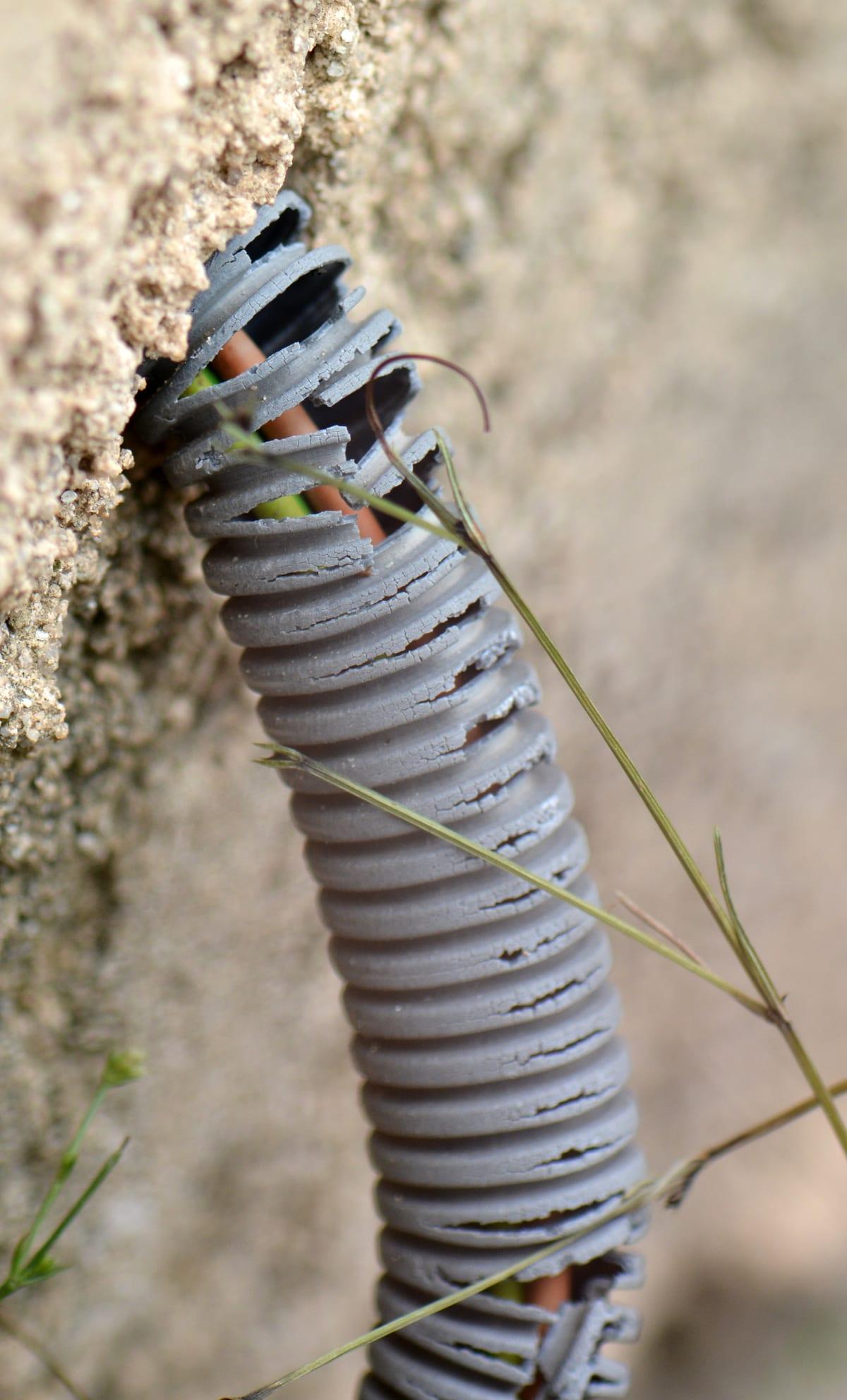
ABS uses polybutadiene, whose backbone contains carbon-carbon double bonds. Those bonds are chemically reactive, and ultraviolet light plus atmospheric oxygen breaks them. As they break, the rubber phase stops doing its job: the surface yellows, then goes chalky, then the part becomes brittle enough to crack under loads it used to shrug off. Anyone who has picked up a twenty-year-old computer case and watched the bezel snap has seen this finish.
ASA uses an acrylic ester rubber instead. It is saturated, meaning no double bonds in the backbone, so the same ultraviolet exposure has nothing convenient to attack. This is the reason ASA is the standard material for exterior automotive trim such as mirror housings and radiator grilles, where a part has to survive a decade of parked afternoons without changing colour.
Because the matrix polymer is the same in both, the mechanical and thermal specs land in the same place. That is the part most comparisons get wrong by quoting one brand of ASA against a different brand of ABS and calling the gap a material difference.
The Specs, Side by Side
Here is the honest comparison. Where a row says the two are equivalent, it means the published ranges overlap so heavily that brand choice matters more than material choice.
| Property | ABS | ASA |
|---|---|---|
| Tensile strength | 30-45 MPa | 30-45 MPa |
| Heat deflection at 0.45 MPa | ~100C | 93C |
| Glass transition | 100-108C | 100-108C |
| Ultraviolet stability | Poor unpainted | Good, the reason to buy it |
| Nozzle / bed temperature | 240-260C / 90-110C | 240-265C / 90-110C |
| Enclosure needed | Yes | Yes |
| Acetone smoothing | Yes | Yes, slightly slower |
| Typical spool price | $22-35 per kg | $28-40 per kg |
Property ranges compiled from filament manufacturer technical data sheets; heat deflection from Polymaker PolyLite ABS V5.5 and Prusament ASA, both at 0.45 MPa to ISO 75; prices from US retail listings for 1kg spools from mainstream brands, July 2026.
Glass transition temperature by filament
ABS and ASA both soften around 105C, roughly 45C above PLA's 60C. The number that decides whether a part holds its shape is heat deflection rather than glass transition, and there they sit lower at 100C and 93C — still clear of the 69C measured on a sunlit car dashboard.
| material | Glass transition (C) |
|---|---|
| PLA | 60 |
| PETG | 80 |
| ABS | 105 |
| ASA | 105 |
Source: Typical glass transition values from filament manufacturer technical data sheets, July 2026. Individual brands vary by several degrees, and Tg is not the same measurement as heat deflection temperature.
How Fast Does ABS Actually Fail Outdoors?
Slower than the marketing implies, and faster than you want. Unpainted ABS in continuous direct sunlight generally shows visible yellowing and a chalky surface bloom within a few months, and loses a measurable share of its impact strength across a year. The surface layer degrades first and then protects what is underneath, so a thick-walled part stays structurally sound long after it stops looking new.
That distinction matters because it changes the honest answer. A bracket bolted under a deck, on a north-facing wall, or inside a vented enclosure sees a fraction of the ultraviolet dose that a roof-mounted part does. Shaded outdoor ABS routinely lasts years.
The other lever is paint. A UV-stable spray primer and topcoat blocks the light before it reaches the polymer, and once a part is painted the ABS-versus-ASA argument largely dissolves. If the part is going to be painted anyway for appearance, do not also pay the ASA premium.
That number is worth sitting with. On a single commissioned part, the material premium is a rounding error next to print time and setup. If there is any chance the part ends up outdoors, ASA is cheap insurance. The premium only becomes a real budget line on large or multi-part jobs, which is where running the numbers in the cost calculator is worth two minutes.
Typical US filament price per kilogram
ASA sells for roughly $28-40 per kilogram against $22-35 for ABS. The bands overlap, so the honest way to state it is a typical $3-8 per kilogram premium, which is under two dollars on a single 200g part.
| material | Typical low | Typical high |
|---|---|---|
| PLA | $19 | $30 |
| PETG | $22 | $32 |
| ABS | $22 | $35 |
| ASA | $28 | $40 |
| Polycarbonate | $40 | $60 |
Source: US retail listings for 1kg spools from mainstream filament brands, surveyed July 2026. Ranges, not point prices.
Which One to Put on Your Order
Choose ASA when the part is permanently outdoors and unpainted: garden and irrigation fittings, roof or gutter brackets, antenna and camera mounts, exterior vehicle trim, non-structural marine fittings such as trim and cover caps, anything on a balcony.
Choose ABS when the part lives indoors or under cover and you want heat resistance and toughness cheaply: enclosures, jigs and fixtures, tool holders, interior automotive clips, RC chassis parts, anything you plan to acetone-smooth or paint. ABS is also the friendlier material if you want the part vapour-smoothed to a glossy finish.
Choose neither more often than you might expect. If the part is outdoors but never gets hot, PETG with a coat of UV-stable paint is cheaper, prints on any machine without an enclosure, and takes moisture better than either. Our PLA vs PETG guide covers where that line sits. If the part must hold shape above 110C, neither ABS nor ASA is enough and you are into polycarbonate or nylon territory, with a corresponding jump in price.
What Changes When You Commission It
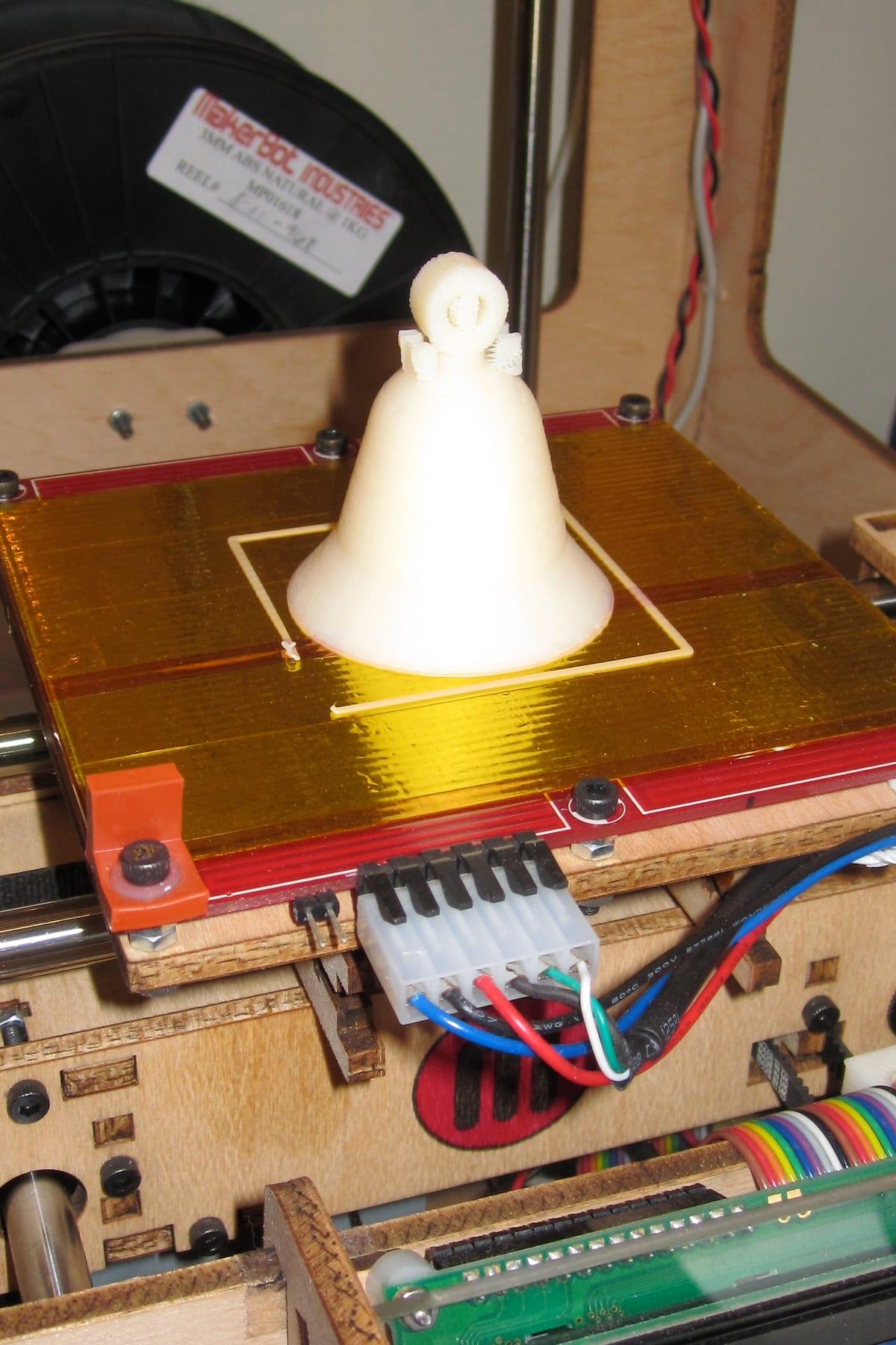
Both materials shrink noticeably as they cool, which is why they need an enclosed printer with a heated chamber. That has three practical effects on a commissioned job.
Fewer makers bid. Plenty of hobby printers are open-frame machines that cannot hold ABS or ASA reliably, so an ABS job draws a smaller field than the same part in PLA. Post the job with enough lead time.
Expect a premium over PLA. Not for the filament, but for the higher failure rate, the slower prints and the machine time tied up in a chamber that has to stay hot. Our 3D printing cost guide breaks down where the rest of a quote goes.
Large flat parts are the risk. Warping scales with footprint. A 40mm bracket in ASA is routine; a 250mm flat panel in ASA is a real engineering exercise, and a maker who quotes it without mentioning brims, chamber temperature or splitting the part is not thinking hard enough. Say upfront which faces have to stay flat.
Frequently asked questions
What is the difference between ABS and ASA?
ASA replaces the butadiene rubber phase in ABS with an acrylate rubber. Butadiene contains carbon-carbon double bonds that ultraviolet light attacks, which is why ABS yellows and turns chalky outdoors. The acrylate rubber in ASA has no such bonds, so ASA holds its colour and impact strength in sunlight. Everything else about the two polymers is close to identical.
Is ASA stronger than ABS?
No, not meaningfully. Published filament data sheets put both in the same band, roughly 30-45 MPa tensile strength with glass transition around 105C and heat deflection near 93-100C at 0.45 MPa. If a part will never see direct sunlight, paying more for ASA buys you nothing measurable. Strength is not the reason to choose ASA; ultraviolet stability is.
How much more does ASA cost than ABS?
Typically $3-8 more per kilogram. As of July 2026, mainstream 1kg ABS spools sell for about $22-35 in the US and ASA for about $28-40, and the bands overlap, so there is no single percentage that holds. On a 200g part the difference is well under two dollars, which is why the material premium matters far less than most people expect when commissioning a single job.
How long does ABS last outdoors before it degrades?
In continuous direct sunlight, unpainted ABS usually shows visible yellowing and surface chalking within a few months and loses a measurable share of its impact strength within a year. In shade or indirect daylight it lasts for years. A UV-stable paint or clear coat closes most of the gap, which is why painted ABS is often a legitimate alternative to ASA.
Can I have ABS or ASA printed without owning an enclosed printer?
Yes, but the maker needs one. Both materials shrink as they cool and will warp or split layers on an open-frame machine, so a job in either material narrows the pool of makers who can bid. Expect a modest premium over the same part in PLA to cover the higher failure rate and longer machine time.
Not Sure Which One Your Part Needs?
Post the job with where the part will live and how hot it gets, and makers with enclosed printers will tell you which material they would use and why. Payment stays in escrow until you approve photos of the finished part.