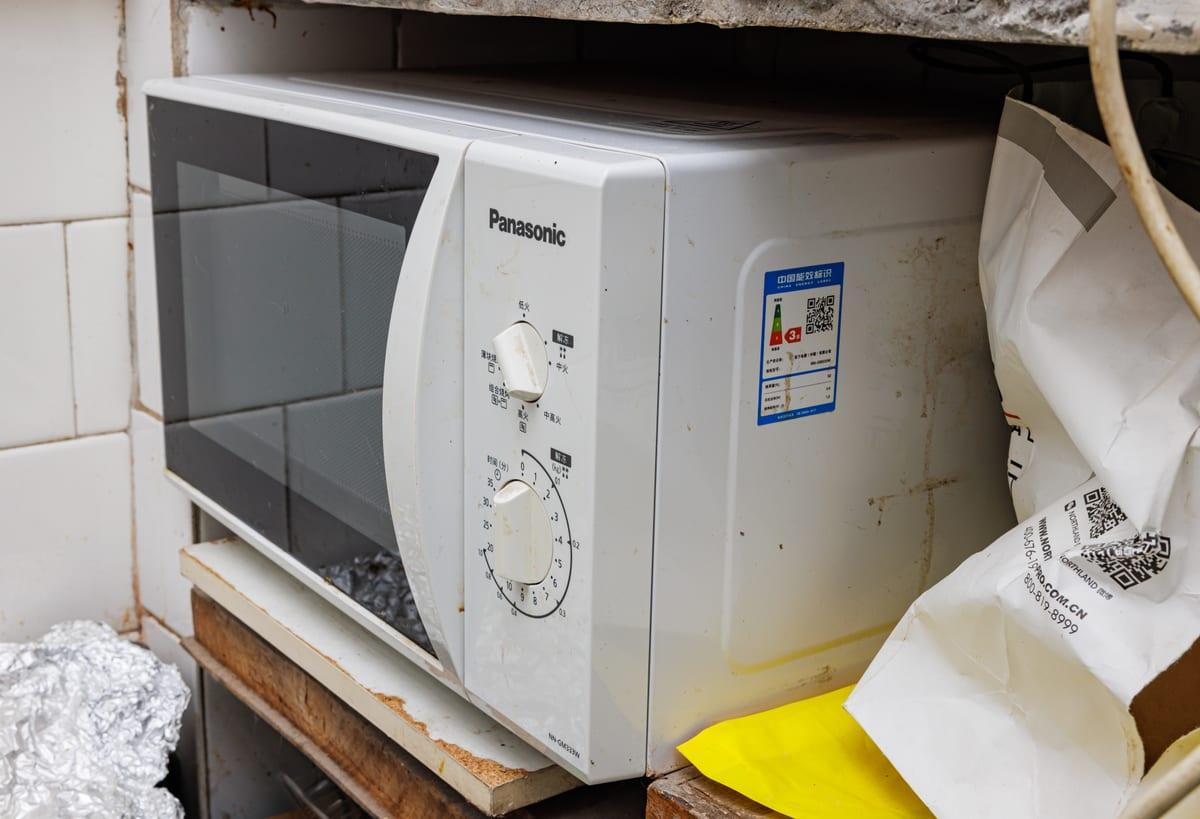
Microwave Door Handle Replacement for Discontinued Models
The handle broke off at one of its two screw bosses, which is where they always break. The microwave still heats, the turntable still turns, the door still latches. You are now opening it by hooking a fingernail under the door edge, and everyone in the house has been told not to yank it.
Then you look up the part and discover the manufacturer sells the door, not the handle, for $140. On an over-the-range unit built into your cabinets, that is still cheaper than the alternative. On a $110 countertop microwave it is absurd. Here is what actually makes sense in each case.
How do you replace a microwave door handle on a discontinued model?
Have the handle copied from the broken original and printed in ABS or ASA for $25–60. Manufacturers usually sell only the complete door assembly at $80–220, and stop listing even that once a model ages out. Replace only the handle: the door latch hooks and interlock parts are safety components and must never be printed or modified.
Last verified: July 2026
Key takeaways
- •A printed microwave door handle costs $25-60 including modelling, against $80-220 for the complete door assembly most manufacturers insist on selling.
- •Repair is worth it on over-the-range, built-in and convection models ($350-700 to replace). On a basic countertop microwave at $70-180 new, replacing the appliance is usually the rational call.
- •Ask for ASA (93 °C) or ABS (about 100 °C). Use a polycarbonate blend at 113 °C on convection or grill combi models. PLA deflects from about 55 °C and is not acceptable here.
- •Only the handle is printable. Latch hooks, interlock switch actuators and the perforated door screen are radiation-containment and interlock parts and must never be improvised.
- •The measurement that decides the fit is the screw centre-to-centre spacing plus the standoff height from the door face. Everything else is styling.
Why the Handle Isn't Sold Separately
Microwave doors are certified assemblies. The screen, the frame, the choke seal and the latch hooks are tested together, and manufacturers overwhelmingly prefer to sell the whole thing rather than let anyone rebuild one from components. That is defensible for the parts that contain radiation. It is not defensible for a handle screwed to the outside of the door, which is what most models actually use.
The commercial effect is that a $6 moulding is only available inside a $140 assembly, and after a few years not even that. Appliance parts distributors carry stock in proportion to demand, and demand for one discontinued model's door collapses well before the appliances themselves stop working.
This is one of the clearest cases in the whole category of 3D printed replacement parts: a working appliance, one broken external moulding, and a parts channel that has no interest in selling it to you.
What You Must Not Print
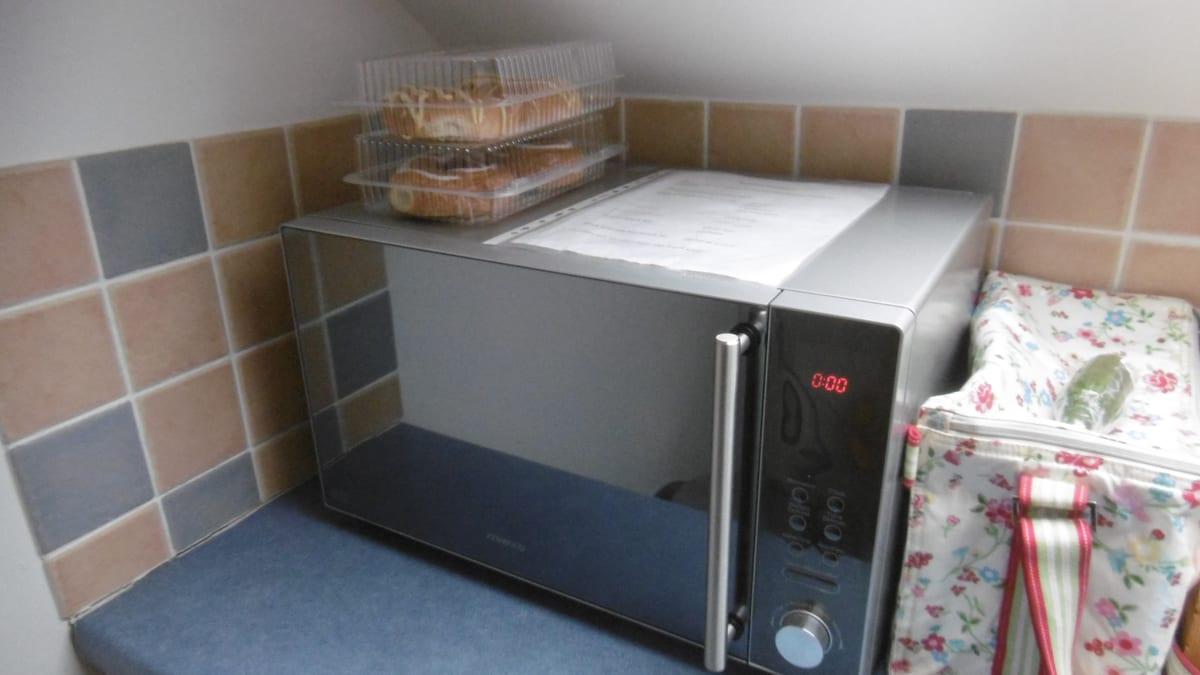
We take jobs for microwave door handles. We decline jobs for microwave door latches, and you should be suspicious of anyone who does not.
Handle: yes. Latch system: never.
- The latch hooks on the door operate two or three interlock switches in sequence. A hook that is a millimetre short can let the magnetron energise before the door is fully closed. Do not print these, and do not file or shim an existing one.
- The interlock switch actuators and monitor switch are part of the safety circuit. If any of these are damaged, the appliance needs a qualified repair or retirement, not a printed part.
- The perforated screen and the door frame form the radiation seal. Do not drill, cut or pack them, and do not fit a handle in a way that requires new holes through the door skin.
- Nothing goes inside the cavity. No printed turntable supports, no printed roller guides. Filament is not certified for that environment and some additives will arc.
If the door no longer closes firmly, or you can feel play in the latch, stop using the oven. A handle is a convenience part; the latch is the safety system, and the two failures need completely different responses.
Repair or Replace? The Numbers
This decision is decided by which kind of microwave you own, not by how attached you are to it. A basic countertop unit is a commodity and printing a handle for one is a marginal call we will happily talk you out of. An over-the-range or built-in unit is a different economic object entirely, because replacing it also means matching a cabinet cutout and, on built-ins, a model-specific trim kit.
Cost of the options for a broken microwave door handle
A printed handle at $25-60 undercuts the complete door assembly manufacturers prefer to sell, and is a fraction of replacing an over-the-range unit at $350-700. Against a $70-180 countertop microwave the margin is thin.
| option | Typical low | Typical high |
|---|---|---|
| OEM handle, if sold alone | $20 | $50 |
| Printed copy of yours | $25 | $60 |
| Complete door assembly | $80 | $220 |
| New countertop microwave | $70 | $180 |
| New over-the-range unit | $350 | $700 |
Source: US appliance parts retail listings for microwave door assemblies and handles, and retail pricing for countertop and over-the-range microwaves, plus 3D Print Bounty maker quotes, July 2026
Material is a trivial part of any of those numbers. A microwave handle is typically 40–80g of filament, so even in polycarbonate the plastic is under $5. You can check that for yourself with our 3D print cost calculator before you evaluate a quote, which makes it obvious how much of the price is design and machine time rather than material.
Material: How Hot Does the Handle Actually Get?
On a plain microwave, not very. Microwaves heat food, not the cavity, and the door skin stays close to room temperature apart from heat conducted from hot food and steam. PETG would survive that. The problem is that plenty of modern units are not plain microwaves.
Convection and grill combination models run the cavity as a small oven, and the door, the vents and the handle all get properly hot. That is where PETG's heat deflection temperature of 68 °C starts to matter, and where ASA, ABS or a polycarbonate blend earn their place. Since the price difference on a 60g part is a couple of dollars, there is no good reason to specify the marginal material.
Heat deflection temperature by candidate filament, 0.45 MPa
ASA holds its shape to 93 °C, ABS to about 100 °C and a polycarbonate blend to 113 °C, all comfortably clear of anything a microwave door reaches. PLA deflects from about 55 °C and should never be used on a cooking appliance.
| material | Heat deflection temp (°C) |
|---|---|
| PLA | 55°C |
| PETG | 68°C |
| ASA | 93°C |
| ABS | 100°C |
| PC blend | 113°C |
Source: Prusament PLA, PETG, ASA and PC Blend technical data sheets and the Polymaker PolyLite ABS TDS V5.5, heat deflection at 0.45 MPa, July 2026
What to Measure Before You Order
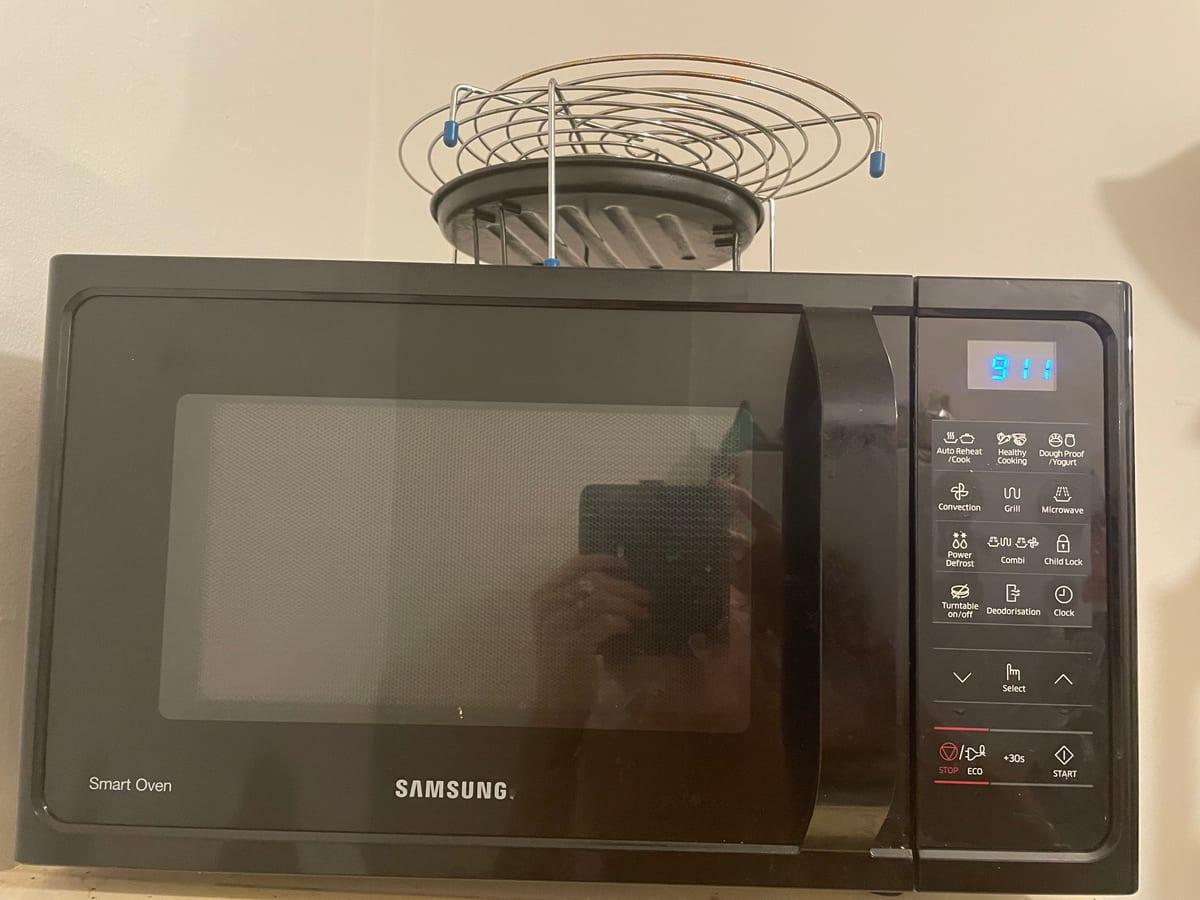
Bar handles are straightforward. Moulded pulls that form part of the door skin are harder, because a maker has to rebuild a section of the door profile rather than a standalone part. Say which you have in the first message.
| Measurement | Why it matters |
|---|---|
| Screw centre-to-centre spacing | The one dimension with no tolerance. Measure between the existing holes in the door frame with calipers, not between the bosses on the broken handle. |
| Standoff height from the door face | Determines whether the handle clears the door edge and how much room your fingers get. Also affects how the door sits against a cabinet. |
| Screw thread size and length | Send the original screws if you still have them. Otherwise state the thread, since the maker has to size a boss or fit a threaded insert. |
| Handle type: bar, moulded pull, or push-button door | Push-button doors have a latch release bar behind the panel. That is a different and more constrained job, and some of it is off limits. |
| Appliance make, model and year | Occasionally a community model already exists, or the maker recognises the door family and can work from a known profile. |
When to Just Buy a New Microwave
If it is a basic countertop unit more than about eight years old, replace it. A $40 printed handle on a $90 appliance nearing the end of its magnetron life is not a good trade, and we would rather say so than take the order.
Repair is clearly right in three cases: over-the-range units, built-in units in a cabinet cutout, and any microwave that is part of a matched appliance suite where a replacement would not match. In all three, the replacement cost is several hundred dollars plus installation, and often plus cabinetry work to make a differently sized unit fit.
Frequently asked questions
Can you buy a replacement microwave door handle on its own?
Often not. Many manufacturers only list the complete door assembly, not the handle, and door assemblies typically run $80–220. Once a model is a few years past discontinuation even that listing usually disappears, which leaves copying your broken handle as the only route that keeps the appliance.
How much does a 3D printed microwave door handle cost?
Typically $25–60 from an independent maker, including modelling the part from your broken original. That compares with $80–220 for a complete door assembly and $350–700 to replace an over-the-range unit. Repeat copies of the same handle cost $12–25.
What material should a microwave door handle be printed in?
ABS or ASA for a standard microwave, and a polycarbonate blend for a convection or grill combination model where the door gets genuinely hot. ASA holds its shape to 93 °C and ABS to about 100 °C, PETG to 68 °C, and PLA to only about 55 °C, which rules PLA out entirely.
Is it safe to 3D print a microwave door handle?
Yes, provided you replace only the handle. The handle is external trim and never enters the cooking cavity. Never print, modify or improvise the door latch hooks, interlock switch actuators or the perforated screen: those form the radiation containment and interlock system, and a mis-shaped latch can let the oven run with the door ajar.
Is repairing the handle worth it, or should I replace the microwave?
Replace a basic countertop microwave, which costs $70–180 new. Repair an over-the-range, built-in or convection model: those cost $350–700 to replace, and a built-in unit also has to match an existing cabinet cutout and trim kit, which frequently forces a cabinetry job on top.
Get Your Microwave Handle Copied
Post photos of the broken handle and the mounting holes with a ruler in frame, plus the appliance model number. Makers bid on the job, and your payment stays in escrow until you approve photos of the finished part.