Refrigerator Shelf Bracket Replacement Made to Order
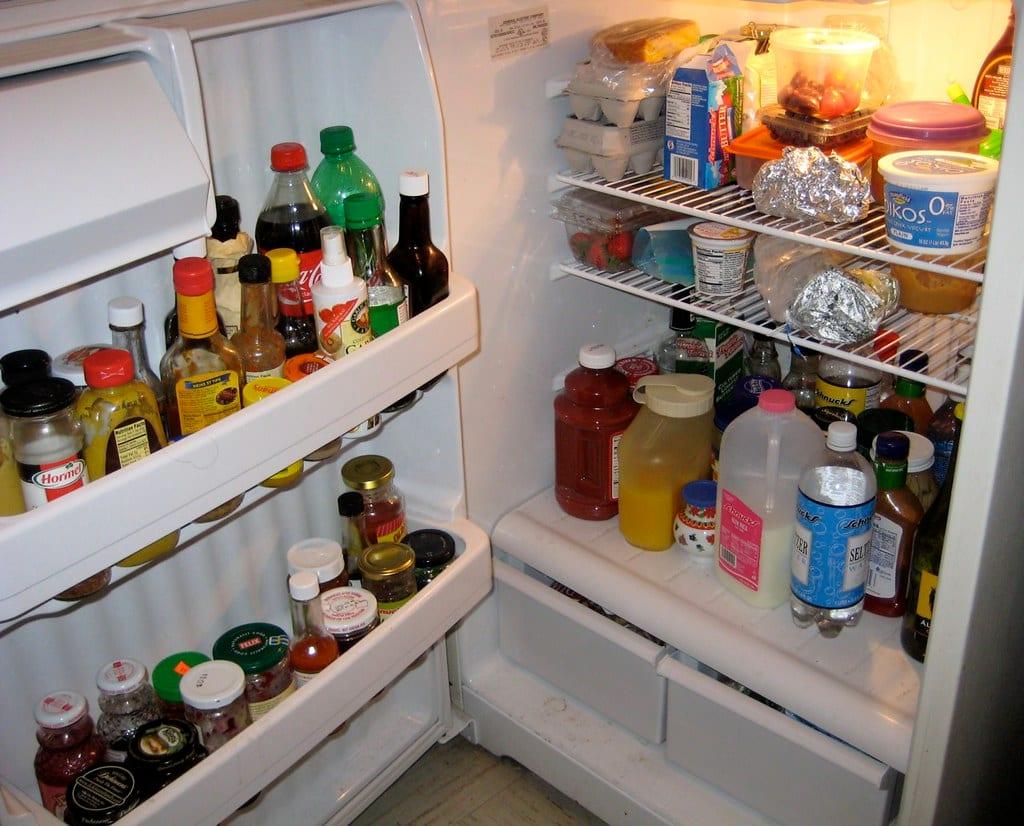
The shelf did not fail while I was standing there. It failed overnight, quietly, and I found out the next morning when I opened the door and a gallon of milk was sitting at a fifteen degree angle. One of the two moulded hooks that hangs the shelf on the rear rail had cracked clean through where it meets the frame.
The fridge is nine years old and runs fine. The shelf assembly is discontinued, and the bracket was never sold separately at all. This post covers what a made-to-order printed bracket costs, whether printed plastic can honestly carry a loaded shelf, and where the line sits between a sensible repair and a bad idea.
Can you get a replacement refrigerator shelf bracket 3D printed?
Yes. A commissioned pair of printed refrigerator shelf brackets costs $30–70 as of July 2026, against $45–160 for a complete OEM shelf assembly where one still exists. A fully loaded shelf carries roughly 10–15 kg, which PETG handles comfortably provided the bracket is printed so the load runs along the layers rather than across them.
Last verified: July 2026
Key takeaways
- •A commissioned pair of printed refrigerator shelf brackets costs $30–70 as of July 2026; a single bracket runs $20–45.
- •A fully loaded refrigerator shelf carries roughly 10–15 kg, dominated by liquids: a US gallon of milk alone is 3.9 kg.
- •Print orientation matters more than infill. Layer adhesion is the weak axis of any FDM part and is where a badly oriented bracket splits.
- •PETG or ABS, not PLA. PLA gets more brittle as temperature drops, and a fridge runs at 1–4°C year round.
- •The most useful thing you can send a maker is a photo of the intact bracket from the other side of the same shelf.
What Actually Breaks, and Why It Is Never Sold Separately
"Refrigerator shelf bracket" covers four different parts, and knowing which one you have changes the quote considerably:
- Cantilever rail hooks moulded into the ends of the shelf frame, which slot into the vertical ladder rails at the back of the cabinet. Most common failure.
- Separate end caps clipped or screwed onto a glass-and-frame shelf. These are the easiest to reproduce because they detach.
- Wall-mounted shelf supports that stay in the cabinet and the shelf rests on. Simple geometry, often the cheapest job.
- Door bin support tabs, which are structurally similar and fail the same way, usually from being loaded with bottles.
None of these are usually sold on their own. Manufacturers sell the complete shelf assembly, because a shelf is one moulding plus glass and separating the SKU would triple their part count. When the assembly is discontinued, there is no fallback, and that is the situation that brings people to our replacement parts service.
How Much Weight Does the Bracket Actually Carry?
More than people assume, and it is almost entirely liquids. A US gallon of milk weighs about 3.9 kg. A twelve-pack of cans is about 4.7 kg. Put two gallons and a twelve-pack on one shelf and you are already past 12 kg, split between two small plastic hooks.
This is the reason a fridge bracket deserves more care than a trim clip. It is a genuinely load-bearing part in an environment where a sudden failure means broken glass and a flooded floor. It is entirely printable, but it has to be printed properly.
What a loaded refrigerator shelf actually weighs
Two gallons of milk and a twelve-pack of cans puts about 12.5 kg on a single shelf, carried by two moulded plastic hooks. Any replacement bracket has to be designed for that load, not for the weight of the shelf itself.
| item | Weight (kg) |
|---|---|
| Gallon of milk | 3.9 kg |
| 12-pack of cans | 4.7 kg |
| 2-litre bottle | 2.1 kg |
| Dozen eggs | 0.7 kg |
| Loaded crisper | 5 kg |
Source: Net weights of standard US grocery packaging including containers, July 2026. A US gallon of milk is approximately 8.6 lb (3.9 kg); a 12-pack of 12 oz cans is approximately 10.4 lb (4.7 kg).
Print Orientation Matters More Than Infill
An FDM part is not equally strong in every direction. Layers bond to each other less firmly than the material bonds to itself within a layer, and published manufacturer data puts the through-layer loss at anywhere from 11% to 53% depending on material and settings. That anisotropy is not a defect, it is how the process works, and it is entirely manageable if the designer accounts for it.
For a shelf hook it means one thing: the part must be oriented so the layer planes contain the load path. The tension face at the root of the hook has to run along a layer, never across a layer boundary. Get that wrong and the part shears along a single layer under a fraction of the weight it should carry; get it right and it is dramatically stronger for free. Which way up that puts the part on the bed depends on the hook geometry, so state the load direction and let the maker choose.
Say this explicitly when you post the job. Any competent maker will already know, but it costs you one sentence and rules out the one mistake that matters.
Print spec worth asking for
- Load running along the layers, not across them. This is the whole ballgame.
- 4–5 perimeters so the load is carried by solid extrusions rather than infill.
- 40% or higher infill in the hook, gyroid or grid.
- A generous fillet where the hook meets the frame. The original almost certainly cracked at a sharp internal corner, and adding a 2–3mm radius there removes the stress riser the moulding had.
Material: PETG or ABS, Never PLA
This is the one place where the usual "just use PLA" advice is actively wrong. A refrigerator runs at 1–4°C and a freezer at around -18°C, and PLA's impact resistance falls as temperature drops. It is already the most brittle of the common filaments at room temperature. Cold makes it worse, and the failure mode is a sudden crack rather than a slow sag.
PETG is the sensible default: tough, cheap, dimensionally stable, and it stays that way cold. ABS is equally good if your maker has an enclosed printer, and has the side benefit of being solvent-weldable if a bracket ever needs a field repair. Nylon works and is overkill for the money.
One caveat worth stating plainly: a shelf bracket is not a food-contact part and shouldn't be treated as one. Food sits on the glass, not on the bracket. If you are asking a maker to reproduce something food actually touches, that is a different conversation about materials and surface finish.
What It Costs
A printed pair usually lands under the price of a complete OEM shelf assembly, and it is available when the assembly is not. Where an OEM bracket genuinely is sold separately and in stock, buy the OEM bracket. Printing is for the far more common case where it is not.
Refrigerator shelf bracket replacement cost by route
A printed pair of brackets costs $30–70, against $45–160 for a complete OEM shelf assembly. The comparison is mostly academic, because separate OEM brackets are rarely sold and complete assemblies for older models are usually discontinued.
| route | Typical low | Typical high |
|---|---|---|
| OEM shelf assembly | $45 | $160 |
| OEM bracket pair | $15 | $60 |
| Salvage / used part | $20 | $70 |
| Printed single bracket | $20 | $45 |
| Printed pair | $30 | $70 |
Source: Ranges compiled from 3D Print Bounty maker quotes and prices commonly listed by US appliance parts retailers, July 2026. Shown as ranges because availability and pricing vary sharply by brand and model age.
What a Maker Needs From You
A shelf bracket is harder to specify than a knob because the geometry is not symmetrical and the mating rail is inside the cabinet. Send this and the job quotes cleanly:
| What to send | Why it matters |
|---|---|
| The intact bracket from the other end | Shelves are mirror-symmetrical. A maker can model the good side and mirror it, which is far more accurate than reconstructing a broken one. Photograph it from three angles. |
| Rail slot dimensions | Height and width of the slot the hook drops into, plus the wall thickness of the rail. This is the fit that has to be right first time. |
| Hook thickness and shelf frame thickness | Calipers, in millimetres. The bracket has to be thick enough to carry load and thin enough to fit the channel it sits in. |
| How the bracket attaches to the shelf | Screwed, clipped, or moulded as one piece with the frame. A moulded-in hook means the maker is reproducing part of the frame too, which changes the price. |
| Brand, model number and year | Lets the maker check whether a model already exists and confirm which of several shelf variants your fridge shipped with. |
When Printing Is the Wrong Call
If the glass is broken, do not print a shelf. Fridge shelves use tempered glass, and no printed panel is a sensible substitute for a 4mm tempered pane carrying 12 kg. A glazier cutting a replacement to your dimensions is cheaper and correct. Print the surround, reuse or replace the glass.
If the cabinet rail is what broke, meaning the ladder moulding on the fridge wall rather than the shelf, look carefully at how it is fixed. Some are foamed into the liner and are not a serviceable part at all.
If a complete OEM shelf is in stock for $50, buy it. A printed pair of brackets is competitive when the OEM route is dead, not when it is alive and cheap. The broader decision framework is in our guide to getting a broken part 3D printed, and you can sanity-check the material side with the cost calculator before you post anything.
Frequently asked questions
How much does a 3D printed refrigerator shelf bracket cost?
A commissioned pair of printed shelf brackets or end caps costs $30–70 as of July 2026, and a single bracket costs $20–45. Filament is about a dollar. Most of the quote is modelling the hook geometry from your photos and measurements, and printing it thick enough and in the right orientation to carry a loaded shelf.
Is a 3D printed shelf bracket strong enough to hold a loaded fridge shelf?
Yes, when it is printed in the right orientation. A fully loaded refrigerator shelf carries roughly 10–15 kg. A printed bracket handles that comfortably in PETG with 4–5 perimeters and 40%+ infill, provided the load runs along the layers rather than across them. Layer adhesion is the weak axis and orientation is not optional.
What material should a refrigerator shelf bracket be printed in?
PETG or ABS. Both stay tough at refrigerator temperatures of 1–4°C and in a freezer at -18°C. PLA is the wrong choice: it becomes measurably more brittle as it gets colder, and a brittle bracket carrying 12 kg of groceries fails suddenly rather than gradually.
Can you print a whole refrigerator shelf, not just the bracket?
The plastic frame yes, the glass no. Most fridge shelves are a tempered glass panel captured in a moulded plastic surround. A maker can reproduce the surround, the end caps and the rail hooks, and you reuse the original glass. If the glass itself is broken, a glazier cutting tempered replacement is the cheaper route.
What do I need to send to get a fridge shelf bracket quoted?
Photographs of the broken part from three angles, a photo of the matching intact bracket on the other side of the shelf, caliper measurements of the hook thickness and the rail slot it engages, and your fridge brand, model number and approximate year. The intact opposite-side bracket is the single most useful thing you can send.
Get Your Shelf Bracket Quoted
Post photos of the broken bracket and the intact one from the opposite end, plus your fridge model number. Makers who have done appliance parts before will bid, and payment stays in escrow until you have confirmed the shelf hangs straight and holds.