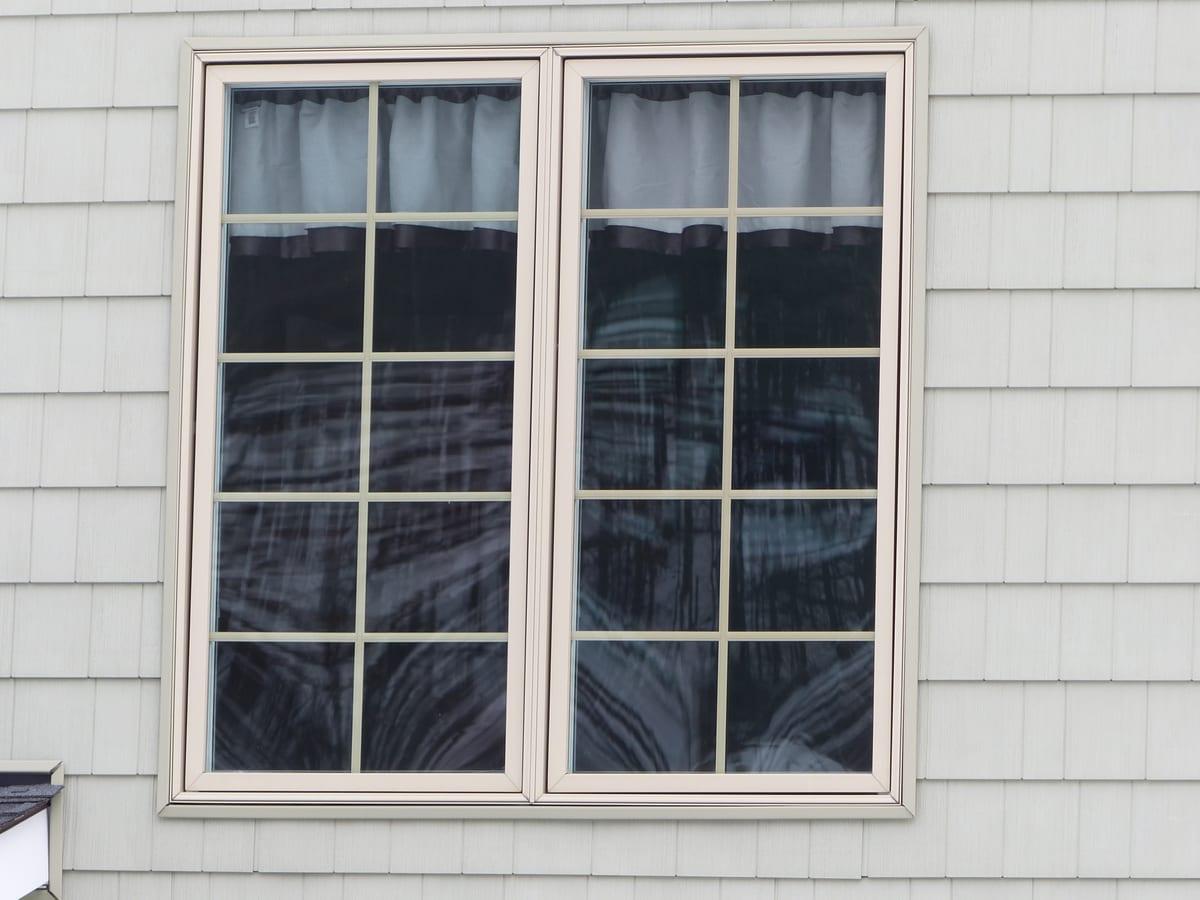
Window Crank Handle Replacement for Old Window Brands
The crank handle on the kitchen casement came off in your hand, or worse, it now spins freely because the splines inside it have worn round. The window itself is fine. The gearbox behind it is fine. A piece of zinc alloy the size of a matchbox has taken a window out of service.
Then you find out the window brand stopped trading decades ago, the "universal" handle at the hardware store fits a spline pattern yours does not use, and the only exact matches on the resale market are used handles in the wrong finish. This is one of the most reliably printable parts in a house.
How do you replace a window crank handle when the window brand is gone?
Have the handle copied from the broken one. A maker measures the spline count and spindle diameter, then prints a replacement in nylon with a press-fit metal insert for $20–55. That is the reliable route when a universal handle at $8–20 does not match your spline, and it avoids replacing an operator or a window that is still working.
Last verified: July 2026
Key takeaways
- •A printed window crank handle costs $20-55 including modelling and a metal insert, against $450-1,200 to replace a window that has nothing else wrong with it.
- •Casement and awning operators came from a small number of hardware suppliers, but handles were brand-specific trim, which is why the gearbox is still available and the handle is not.
- •The only dimension that must be exact is the spline: count the teeth on the spindle and measure the outside diameter across the tips.
- •If the handle turns through its full sweep and the sash does not move, the operator gears have stripped. Replacement operators cost $25-70 and are not a printing job.
- •Ask for nylon or PA6-CF with a press-fit metal insert at the spline. Plastic teeth against a steel spindle round out; metal against metal does not.
Why the Handle Is Unobtainable and the Window Is Fine
Window companies did not make their own operators. They bought them from specialist hardware manufacturers who supplied the whole industry, which is why generic replacement operators are still easy to find decades later. What each window brand did specify was the handle: its shape, its length, its finish, and the spline that mated it to that particular operator.
Handles are therefore the part with the shortest support life and the widest variety. A single manufacturer might have used four different spline patterns across its product range in one decade, and matched each to a handle moulded only for that line. When the line ended, the tooling went.
The result is a house full of perfectly serviceable windows held hostage by a trim part. It is the same story that runs through household replacement parts generally: the durable component survives, the cosmetic interface fails, and nobody stocks the cosmetic interface.

Handle, Operator, or Sash? Diagnose First
Three different faults present identically to someone standing at the window. Spend two minutes separating them before you order anything, because only one of the three is a printing job.
| Symptom | Cause | Fix |
|---|---|---|
| Handle snapped off at the arm | Fatigue in the casting or the plastic body | Print a copy. Ask for a thicker root than the original had. |
| Handle spins on the spindle | Splines in the handle rounded out, or the set screw stripped | Print a copy with a metal insert. Check the spindle teeth are still sharp first. |
| Handle turns fully, sash does not move | Operator gears stripped, or the arm has jumped its track | Replace the operator, $25–70. Generic patterns are widely available. |
| Very stiff but working | Dirt in the hinge track, or dried grease in the operator | Clean the track and grease the gear. Forcing a stiff window is how handles break in the first place. |
| Handle fouls the blind or insect screen | Non-folding handle fitted where a folding one belongs | Print a folding-style handle. This is a common upgrade request, not just a repair. |
What Each Option Costs
Try a universal handle first. They are cheap, they arrive tomorrow, and if your spindle happens to use a common pattern the problem is solved for under $20. The moment you discover it does not fit, printing becomes the cheapest remaining route, and the only one that keeps your existing operator and matches the finish of the handles beside it.
Cost of the options for a broken window crank handle
A printed handle copied from your original costs $20-55: just above a universal handle at $8-20, roughly level with a replacement operator at $25-70, and a small fraction of a $150-400 sash repair or a $450-1,200 replacement window.
| option | Typical low | Typical high |
|---|---|---|
| Universal handle | $8 | $20 |
| Printed copy of yours | $20 | $55 |
| Replacement operator | $25 | $70 |
| Sash repair by a glazier | $150 | $400 |
| New window, installed | $450 | $1200 |
Source: US retail listings for window operator hardware, typical glazier repair rates, and installed replacement window pricing, plus 3D Print Bounty maker quotes, July 2026
Most houses have more than one casement, and handles that were fitted at the same time fail at the same time. If you have six windows on the same hardware, commission the set. The modelling is charged once and each additional handle is only print time, so a set of six typically lands well under six times the price of one. You can sanity-check the material side of any quote with our 3D print cost calculator.
The Spline Is the Only Dimension That Must Be Exact
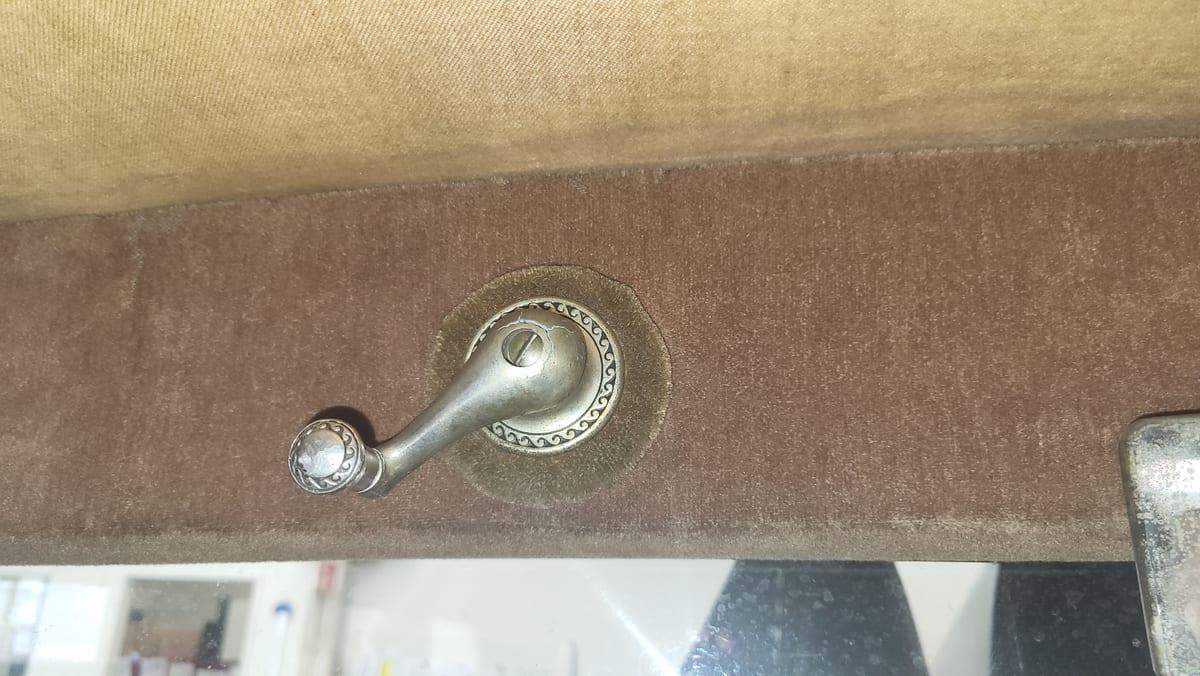
Everything else about a crank handle is adjustable. The arm can be longer for more leverage, the knob can be bigger, the finish is whatever filament colour you pick. The socket that engages the spindle is the one feature that has no tolerance to give.
| Send this | How |
|---|---|
| Spline tooth count | Photograph the spindle end-on, square to the camera, and count the teeth. Say if the end is square or D-shaped instead. |
| Spindle diameter across the tooth tips | Digital calipers, to 0.05mm. Measure the spindle on the window, never the worn hole in the old handle. |
| How far the spindle protrudes | Sets how deep the socket must be. Too shallow and the handle sits proud; too deep and it bottoms out before the set screw lines up. |
| Set screw size and thread | Usually a small grub screw. Say the size, or send the screw with the part, so the maker can size the threaded boss or fit a brass insert. |
| Clearance to blinds or screens | Measure from the operator cover to whatever sits in front of the window. This decides whether you need a folding handle or a fixed one. |
Material and the One Design Detail to Insist On
Ask for nylon, or carbon-filled nylon if the sash is large and stiff. A crank handle is loaded in torsion at a small radius, which is precisely the loading case where PLA fails: it will feel solid on the bench and round out the spline socket within a season.
The detail worth insisting on is a press-fit metal insert at the spline. The failure mode of nearly every original handle is the drive surface wearing round, so a printed handle that repeats plastic-on-steel repeats the fault. A brass or steel insert costs a maker very little and turns the handle into a part that outlives the original.
If the handle is on an exterior-facing operator that gets direct sun, ask for ASA instead, which is formulated for UV stability. Most casement handles sit on the inside, where UV is not the deciding factor and nylon's toughness wins.
When replacing the operator is the better call
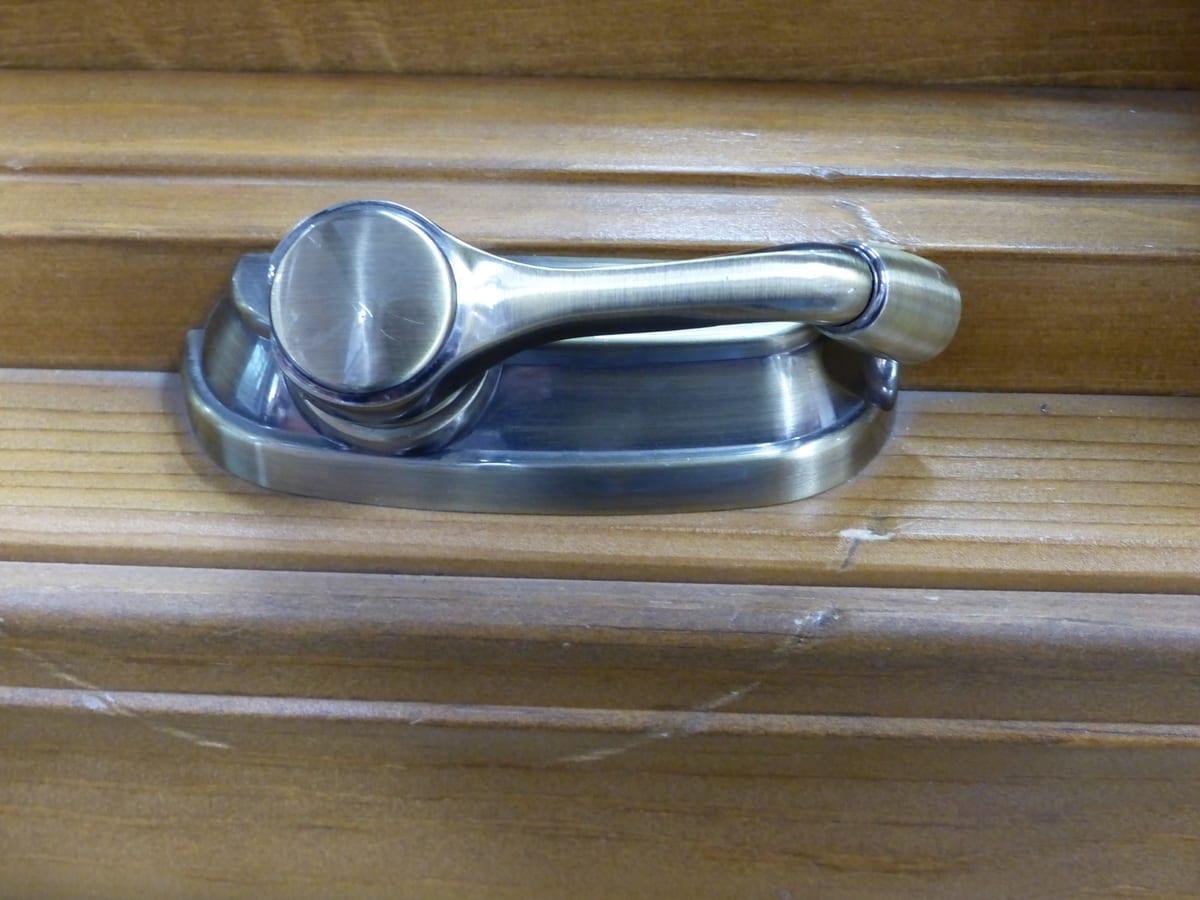
If the spindle teeth themselves are worn, or the operator feels gritty and stiff even after cleaning, buy a generic replacement operator for $25–70. It arrives with a handle that matches its own spline, and you have solved both problems at once. Printing a handle onto a worn spindle just transfers the wear to the new part.
Frequently asked questions
Where do you get a window crank handle for a brand that no longer exists?
Have the handle copied from your broken one. Casement and awning operators were supplied to window brands by a handful of hardware manufacturers, but the handle was brand-specific trim and disappears from stock within a few years of a window line ending. A printed copy costs $20–55 and matches the spline exactly.
How much does a 3D printed window crank handle cost?
Typically $20–55 from an independent maker, including modelling from your original and a press-fit metal insert at the spline. A universal handle costs $8–20 but only fits the two or three most common spindle patterns. Replacing the whole operator costs $25–70 and comes with a handle.
What do I need to measure on a window crank spindle?
Count the splines on the spindle and measure its outside diameter across the tooth tips with digital calipers. Note whether the end is splined, square or D-shaped, and how far the spindle stands proud of the operator cover. Those four facts identify the fitting; the rest of the handle is styling.
My crank turns but the window does not move. Will a new handle fix it?
No. If the handle rotates through its full sweep and the sash stays put, the gears inside the operator have stripped or the arm has come off its track. Operators are still manufactured in generic patterns for roughly $25–70 and should be replaced rather than printed.
Is a printed crank handle strong enough for a large casement window?
Yes, if it is printed in nylon or carbon-filled nylon with a metal insert at the spline. A geared operator multiplies torque, so the force at the knob is modest even on a large sash, and the failure mode to design against is wear at the drive socket rather than the arm snapping. Printed PLA handles are not strong enough and will round out at the spline.
Get Your Window Crank Handle Copied
Post an end-on photo of the spindle, the tooth count, the diameter across the tips, and how many handles you need. Makers bid on the job, and your payment stays in escrow until you approve photos of the finished parts.