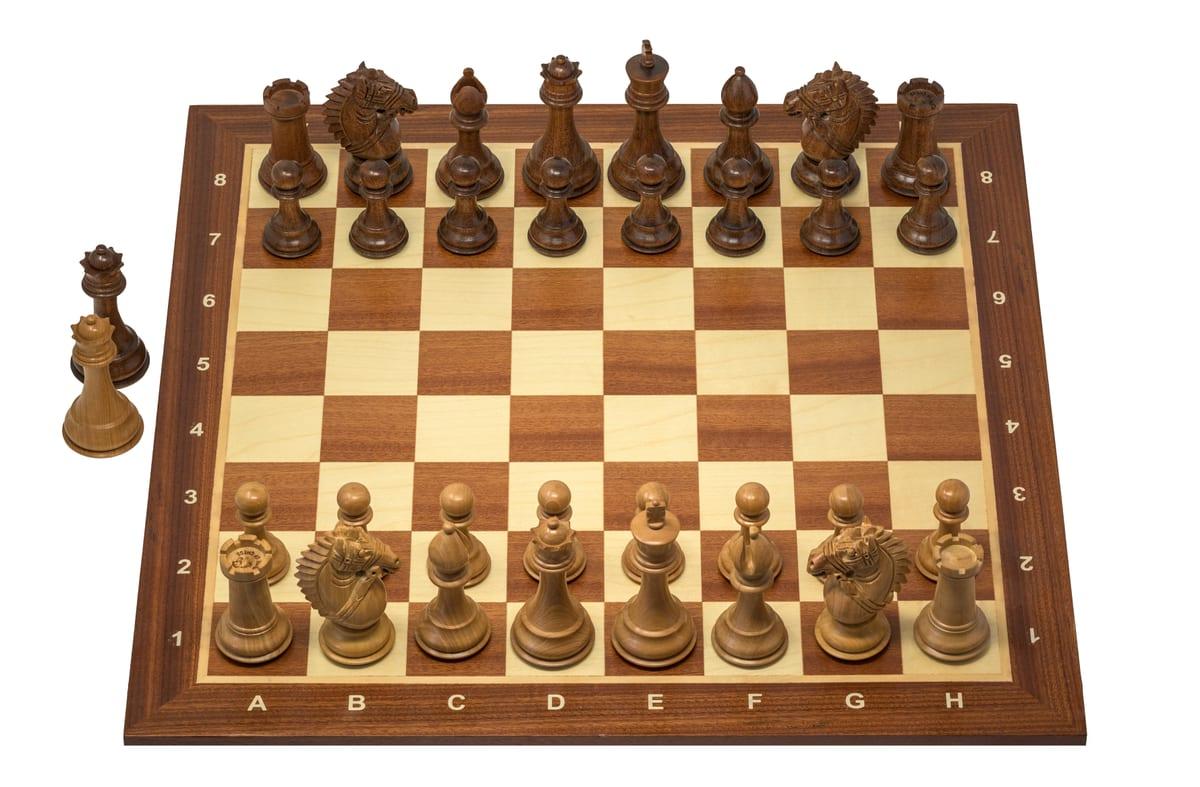
3D Printed Chess Sets: What a Full 32-Piece Set Costs
Thirty-two pieces is a lot of printing. That is the fact that reframes everything else about commissioning a chess set: it is not one object, it is six distinct models printed twice over in two colours across several plates, and the quote reflects hours rather than grams.
The good news is that the target dimensions are published, so there is no guesswork about what size anything should be. The less good news is that a printed set has two specific weaknesses, weight and the knight, and both are solvable only if you ask for the solution before anyone starts printing. Here is what a set costs, what to specify, and the one part you should not print at all.
What does a full 3D printed chess set cost?
A commissioned 32-piece 3D printed chess set costs $45-90 at club size and $70-140 at tournament size with a 95mm king. Filament accounts for only $6-10 of that, since a tournament set uses roughly 250-450g. The rest is 20-40 hours of print time across two colours.
Last verified: July 2026
Key takeaways
- •A commissioned 32-piece printed set costs $45-90 at club size and $70-140 at tournament size as of July 2026.
- •The FIDE Handbook recommends a 95mm king, 85mm queen, 70mm bishop, 60mm knight, 55mm rook and 50mm pawn, with the king base 40-50% of its height.
- •A tournament-size set uses roughly 250-450g of filament, about $6-10 of material at $22 per kilogram.
- •Printed pieces weigh roughly a fifth to a third of wooden ones. Ask for a base cavity for steel shot and a felt pad, designed in before printing.
- •Do not print the board. A FIDE-legal board is 400-480mm across, larger than most printer beds, and tiled boards never sit flat.
The Dimensions Are Already Decided For You
Chess is unusual among tabletop hobbies in having a published equipment standard. The FIDE Handbook sets out recommended piece heights and the relationship between a king's height and its base diameter, and it sets square size at 50-60mm. Any maker working to those numbers produces a set that will feel right to anyone who has played with a club set.
The base ratio is the part people miss. FIDE puts the king's base diameter at 40-50% of its height, so a 95mm king wants a base of roughly 38-48mm. Get that wrong and the set looks subtly off even when the heights are correct, because the proportions carry more of the visual identity than the absolute size does.
FIDE recommended chess piece heights
The FIDE Handbook recommends a 95mm king, 85mm queen, 70mm bishop, 60mm knight, 55mm rook and 50mm pawn, with the king base diameter at 40-50% of its height.
| piece | Height (mm) |
|---|---|
| King | 95mm |
| Queen | 85mm |
| Bishop | 70mm |
| Knight | 60mm |
| Rook | 55mm |
| Pawn | 50mm |
Source: FIDE Handbook C.02, Standards of Chess Equipment, as published July 2026
One practical caveat. If you already own a board, measure its squares before ordering anything. The convention is that a square should be about 1.25 to 1.3 times the base diameter of the king, so a board with 45mm squares wants a smaller king than the tournament figure. A gorgeous set that crowds its own board is a common and avoidable disappointment.
What a Set Costs to Commission
Material scales with the cube of piece height, which is why a tournament set costs noticeably more than a club set rather than marginally more. Doubling the king height from 50mm to 100mm multiplies the material by roughly eight.
Commissioned 32-piece chess set cost by size
A club-size printed chess set costs $45-90 to commission and a tournament-size set $70-140, with detailed resin themed sets running $130-300.
| set | Typical low | Typical high |
|---|---|---|
| Travel (50mm king) | $30 | $55 |
| Club (76mm king) | $45 | $90 |
| Tournament (95mm king) | $70 | $140 |
| Detailed themed, resin | $130 | $300 |
Source: 3D Print Bounty maker quotes and comparable independent commissions, July 2026. Ranges, not point prices.
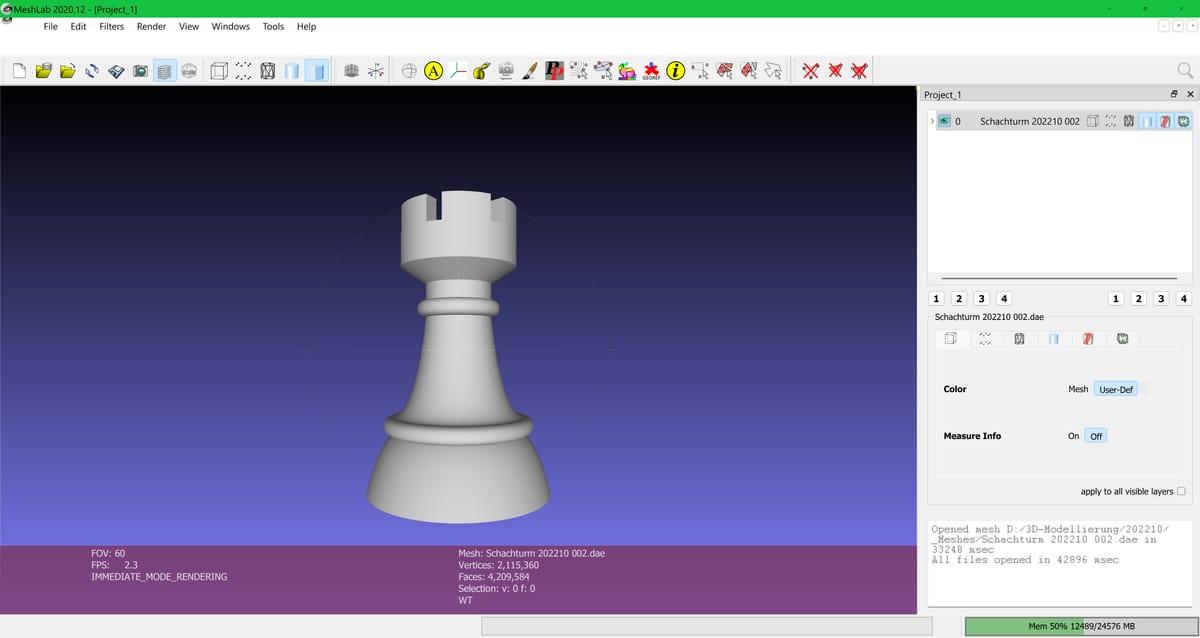
That is $6-10 of plastic against a quote that starts at $45, and the gap is entirely time. Six distinct models have to be sliced, arranged and printed twice over in two colours, which means at minimum two separate plate runs and usually four. Add supports and clean-up on the knights. You can check the material half of any quote with our 3D print cost calculator.
One genuine saving: ask for a coarser layer height on the rotationally symmetric pieces. Rooks and pawns look fine at 0.2mm and print noticeably faster than at 0.12mm. Spend the fine layers on the knights and the queen's crown, where they show.
The Weight Problem, and How to Fix It
This is the complaint that comes up in every review of a printed set, and it is real. A wooden tournament king weighs somewhere around 60-100g depending on whether it is weighted. A hollow printed one at 15% infill weighs about 20g. The difference is immediately obvious in the hand, pieces slide when you brush the board, and taller pieces tip over.
The fix has to be designed in. Ask for a cavity in the base of each piece, sized to take steel shot, lead-free shot, a stack of coins or two-part epoxy putty, and a recess for a self-adhesive felt pad to close it. Roughly 35-50g of shot in a king and 10-16g in a pawn brings a set close to the feel of a weighted wooden one.
Two things worth saying to the maker: keep the cavity opening large enough to pour through, and print the base solid for the first 2-3mm so the shot cannot work its way into the infill. Retrofitting weight into pieces printed without a cavity means drilling them out, which risks cracking the piece and is the reason to specify it up front.
| Piece | Printed, unweighted | With shot added |
|---|---|---|
| King (95mm) | ~20g | 55-70g |
| Queen (85mm) | ~17g | 45-60g |
| Rook (55mm) | ~8g | 25-35g |
| Pawn (50mm) | ~4g | 14-20g |
Unweighted figures from the 3D Print Bounty cost calculator for PLA at 15% infill with 3 perimeters; weighted figures assume a base cavity filled with steel shot. July 2026.
The Knight Decides Whether the Set Looks Good
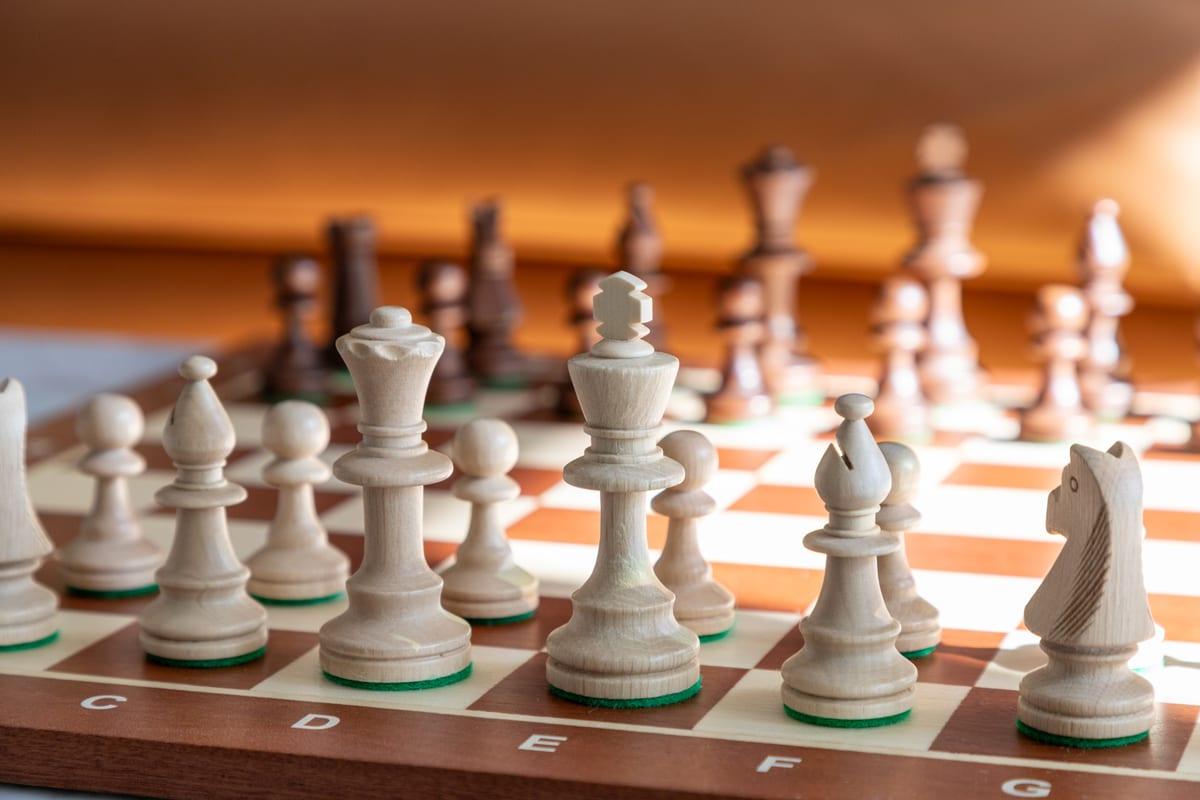
Every other piece is rotationally symmetric, which is the easiest possible geometry for an FDM printer. No supports, no overhangs, seams hidden in the profile. The knight is a sculpted head with a mane, a muzzle and an undercut jaw, and it is the only piece that demands supports.
That gives you a genuine choice. On FDM, ask for the knights to be printed at a finer layer height with tree supports and a bit of hand clean-up, and accept that the mane will show layer stepping. On resin, the knights come out looking like a moulded piece and the rest of the set follows for free, at the cost of a higher quote and more brittleness.
A reasonable middle path some makers will offer: FDM for the 28 simple pieces, resin for the four knights, matched in colour. It is more coordination but it puts the money where the detail is.
Do Not Print the Board
A board with FIDE-standard 50-60mm squares measures 400-480mm across the playing area before any border. Common desktop printer beds are 220mm, 256mm or 350mm square, so the board has to be split into four, nine or more tiles.
Tiled boards have three problems that no amount of design effort fully solves. The tiles warp slightly and the joints telegraph. Pieces catch on seams when slid. And the colour-change lines between light and dark squares never look as clean as printed or veneered ones. You will spend $40-80 in print time to produce something worse than a $25 folding wooden board.
Print the pieces, buy the board. A roll-up vinyl tournament mat costs $10-20 and packs flat, which is also the right answer for a travel set. The only case for printing a board is a themed display piece that will never actually be played on.
Themed Sets and Who Owns the Sculpts
The Staunton pattern dates to 1849 and is long out of copyright, which is part of why so many free and paid Staunton-style models exist. Themed sets are a different matter.
Sets built around characters from films, games or comics are derivative works of copyrighted designs, and a print service is not the right party to be reproducing them. We do not accept jobs for copyrighted commercial character sculpts. Original sculpts, public-domain historical patterns, and commissioned designs are all fine, and so are themed sets built from original geometry such as architectural, botanical or abstract pieces.
If you have bought a paid model from a designer, check what the licence permits. Patreon sets no licence of its own — the terms are whatever the individual designer wrote, and some allow printing on your own machine but not commissioned printing by a third party. Paste the relevant licence line into your project description so makers can see it before they bid.
What to Put in the Job Post
Five lines get you a firm quote instead of a conversation: the king height you want, the square size of the board the set has to work with, whether you need weighted bases, the two colours, and whether you already have files or need the design sourced.
Ask for the knights to be shown in the progress photos specifically. That is the piece where quality varies most between makers, and seeing one printed tells you more than any amount of description.
If you are equipping a whole games shelf rather than just buying a chess set, it is worth quoting a fitted storage tray at the same time. Our post on 3D printed board game inserts covers what those cost and what measurements they need.
Frequently asked questions
How much does a 3D printed chess set cost?
A commissioned 32-piece 3D printed chess set typically costs $45-90 at club size and $70-140 at tournament size with a 95mm king, as of July 2026. A highly detailed themed set printed in resin runs $130-300. Filament is only $6-10 of any of those figures; the rest is 20-40 hours of print time.
How much filament does a full 32-piece chess set use?
Roughly 250-450g for a tournament-size set with a 95mm king, depending on infill. At a typical $22 per kilogram for PLA that is about $6-10 of material. Travel sets with a 50mm king use closer to 36-66g, because material scales with the cube of the piece height and a 50mm king is only about a seventh the volume of a 95mm one.
What size should the pieces be?
The FIDE Handbook recommends a 95mm king, 85mm queen, 70mm bishop, 60mm knight, 55mm rook and 50mm pawn, with the king base diameter measuring 40-50% of its height. Squares should be 50-60mm. If you want your set to work with a board you already own, measure the squares first.
Why do 3D printed chess pieces feel wrong to play with?
Because they are too light. A wooden tournament king weighs roughly 60-100g and a hollow printed one weighs about 20g, so pieces skate across the board and tip over. The fix is a base cavity filled with steel shot or coins and closed with a felt pad, which has to be designed in before printing.
Should I print the board too?
Usually not. A FIDE-legal board with 50-60mm squares is 400-480mm across, larger than almost every desktop printer bed, so it has to be split into four or more tiles that never sit perfectly flat. A folding wooden board or a roll-up vinyl mat costs $10-40 and is better in every way.
Get a Set Printed to Your Board
Post your king height, square size and whether you want weighted bases, and makers who have printed chess sets before will bid. Payment stays in escrow until you have approved photos of all 32 pieces.