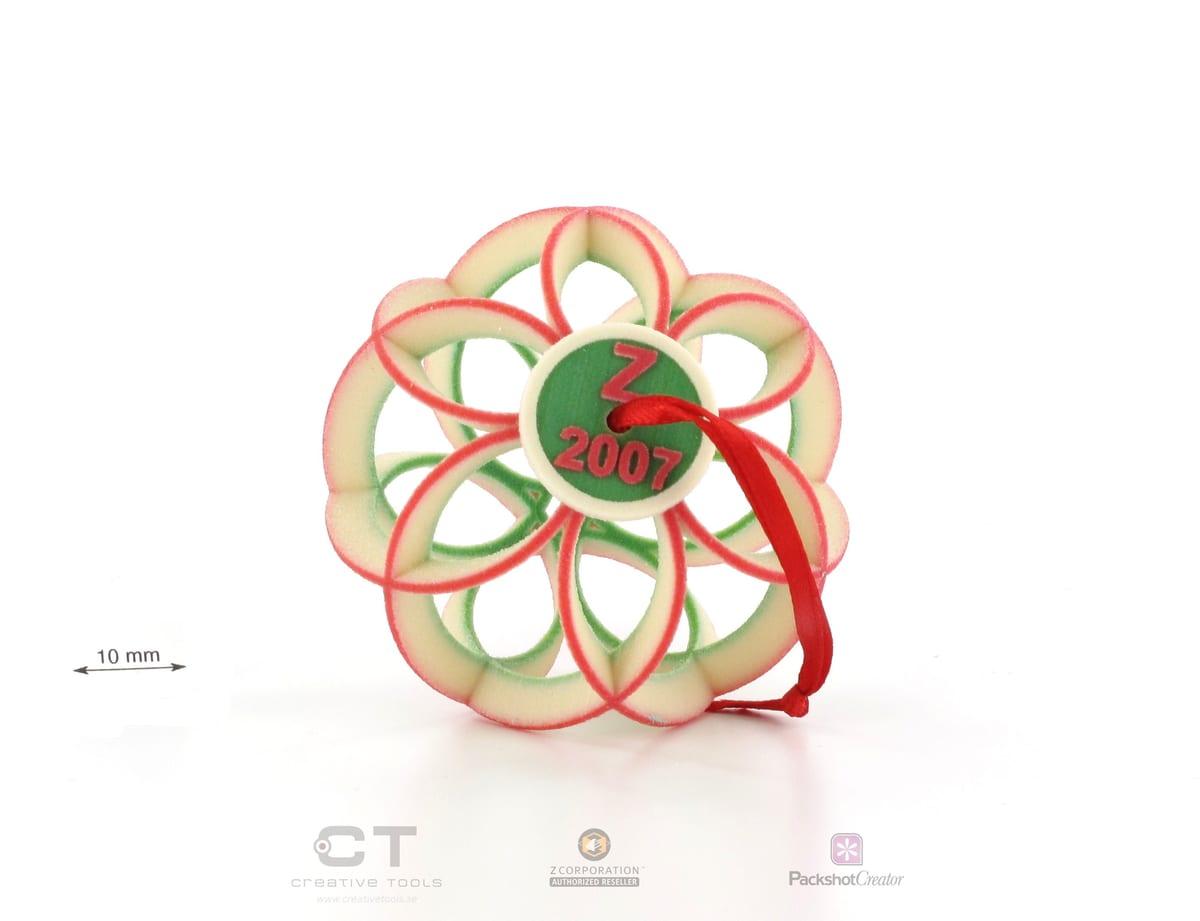
Custom 3D Printed Christmas Ornaments: Order Early
It is the middle of summer and you are reading about Christmas ornaments, which means you are already ahead of roughly everyone who will want the same thing in November. That is not a joke about organisation. Custom printing is one of the few gift categories where ordering five months early genuinely changes both the price and whether you get the thing at all.
This covers what custom 3D printed ornaments cost at each batch size, the calendar that decides whether they arrive, and what to send a maker so the first sample comes back right.
What do custom 3D printed Christmas ornaments cost, and when should you order?
Custom 3D printed Christmas ornaments cost roughly $12-25 for a single piece and $3.50-6 each in a batch of 25, falling toward $2.25-4 at 100 units. Order by the end of September for large batches and end of October for small ones. Maker lead times roughly quadruple between August and December.
Last verified: July 2026
Key takeaways
- •Custom printed ornaments cost $12-25 as a one-off and $3.50-6 each at 25 units; filament is only $0.11-0.42 per ornament, so the price is design time and print hours.
- •Maker lead times roughly quadruple between August and December. Ordering in summer buys both a lower price and a real choice of makers.
- •PLA is the correct material. Keep printed ornaments away from incandescent bulbs, which run hot enough to soften it; LED strings are fine.
- •A flat 70mm ornament is 35-60 minutes of print time and about nine fit on one 220mm bed, so a batch of 50 is roughly 29-50 print hours across six plates.
- •Send exact spellings, a hanger preference and a colour list in writing. Misspelled names on a finished batch are a reprint, not a fix.
Why Ordering in July Is Not Absurd
Independent makers are individuals with one to four printers. Their capacity does not expand in November, but the demand for seasonal work climbs sharply, and the visible effect is lead time rather than price lists. A job that takes three days in August takes two weeks in November and may simply be declined in December.
There is a second, sharper deadline behind that one. US ground shipping cutoffs for pre-Christmas delivery land around 17-18 December in a typical year, and most makers stop taking new work a week or more before that. Work backwards: two weeks of printing plus a week of buffer plus shipping means a November order for 50 ornaments is already tight.
The upside of a summer order is real. You get to request a single sample first, look at it, change the design, and then commit to the batch. Nobody does that in December.
Typical maker turnaround in days, by the month you order
Turnaround on a 25-50 unit ornament batch roughly quadruples between August and December as independent makers fill their queues, which is the practical reason to order in summer.
| month | Fastest typical | Slowest typical |
|---|---|---|
| Order in Aug | 3 | 7 |
| Order in Sep | 4 | 9 |
| Order in Oct | 5 | 12 |
| Order in Nov | 8 | 20 |
| Order in Dec | 12 | 30 |
Source: Indicative turnaround ranges from independent maker quotes across the seasonal cycle, compiled July 2026. Excludes shipping transit time.
What They Actually Cost
A 70mm flat ornament printed at 0.2mm layers uses roughly 6-14g of PLA. At $19-30 per kilogram that is 11 to 42 cents of plastic. Nobody is selling you plastic.
What you are buying is the design work, which is a fixed cost spread across however many you order, plus print time, plus the fiddly manual bits: swapping filament colours, removing brims, threading ribbon or fitting hanger caps, and packing several dozen small objects so they arrive unbroken.
Typical commissioned price per ornament by batch size
A single custom ornament costs three and a half to four times what the same design costs in a batch of 25, because design time is a fixed cost divided by quantity.
| batch | Typical low | Typical high |
|---|---|---|
| 1 ornament | $12 | $25 |
| 10 | $5 | $9 |
| 25 | $3.5 | $6 |
| 50 | $2.75 | $5 |
| 100 | $2.25 | $4 |
Source: 3D Print Bounty maker quotes and comparable independent commissions for custom PLA ornaments, July 2026.
If you want to check a quote before you accept it, run the material side through our 3D printing cost calculator with your ornament's weight. Anything within a few dollars per unit of a sensible labour rate on top of that is a fair number.
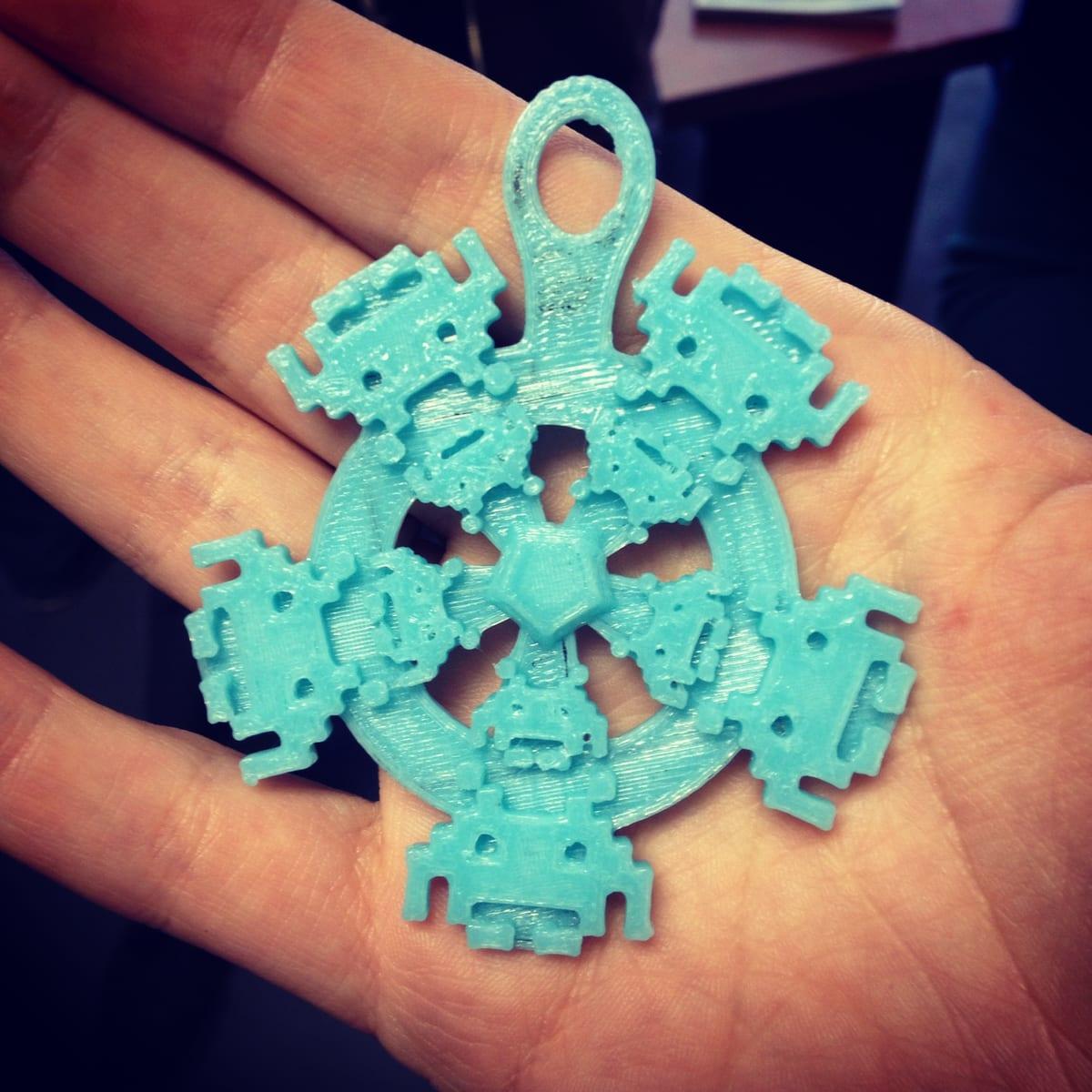
Which Ornament Designs Print Well
Ornaments are one of the easiest things to 3D print, with a couple of geometry rules that separate a good result from a fragile one.
| Design type | Prints well? | Notes |
|---|---|---|
| Flat silhouette or monogram | Excellent | Fastest and cheapest. Keep any bridge or arm at least 2.5mm thick or it snaps in a box of decorations |
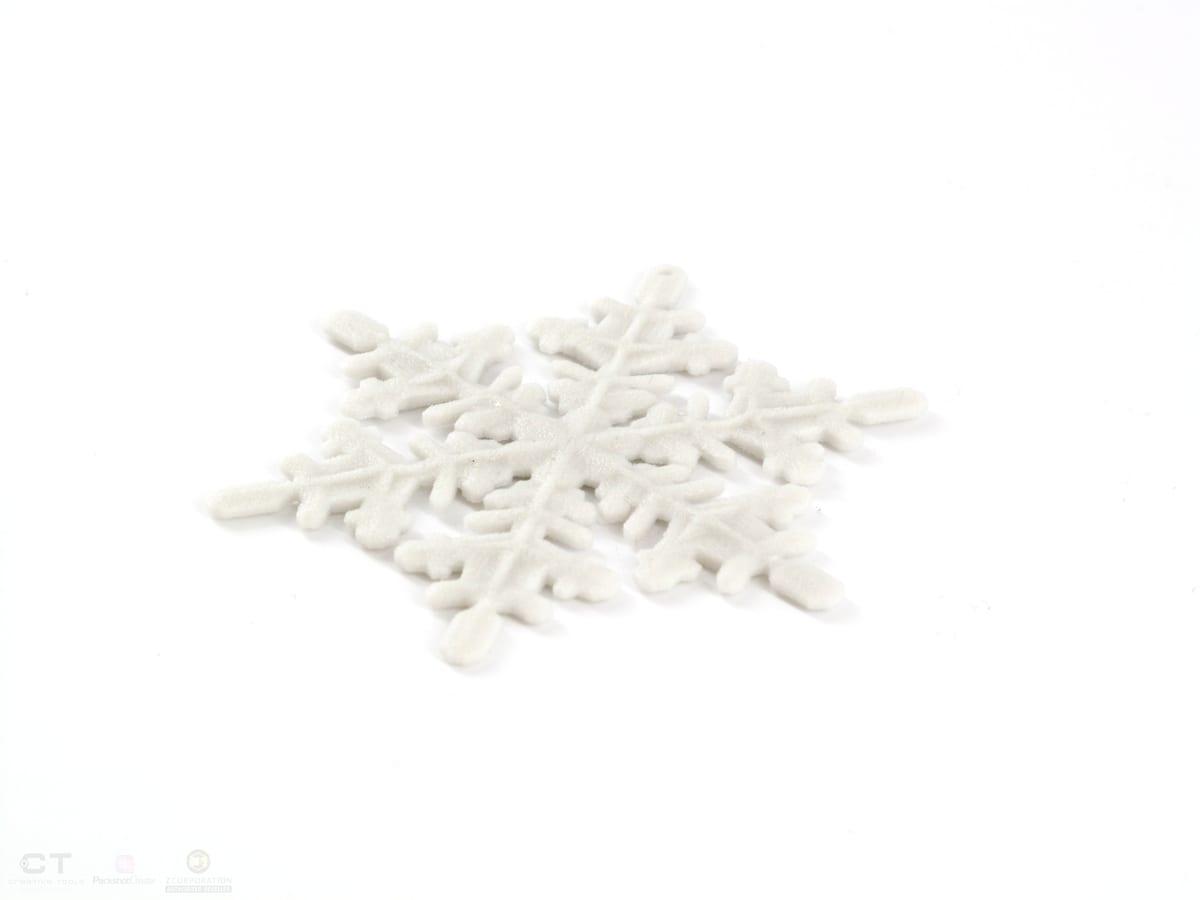
| Openwork snowflake | Excellent | Prints flat with no supports. The classic ornament shape for a reason |
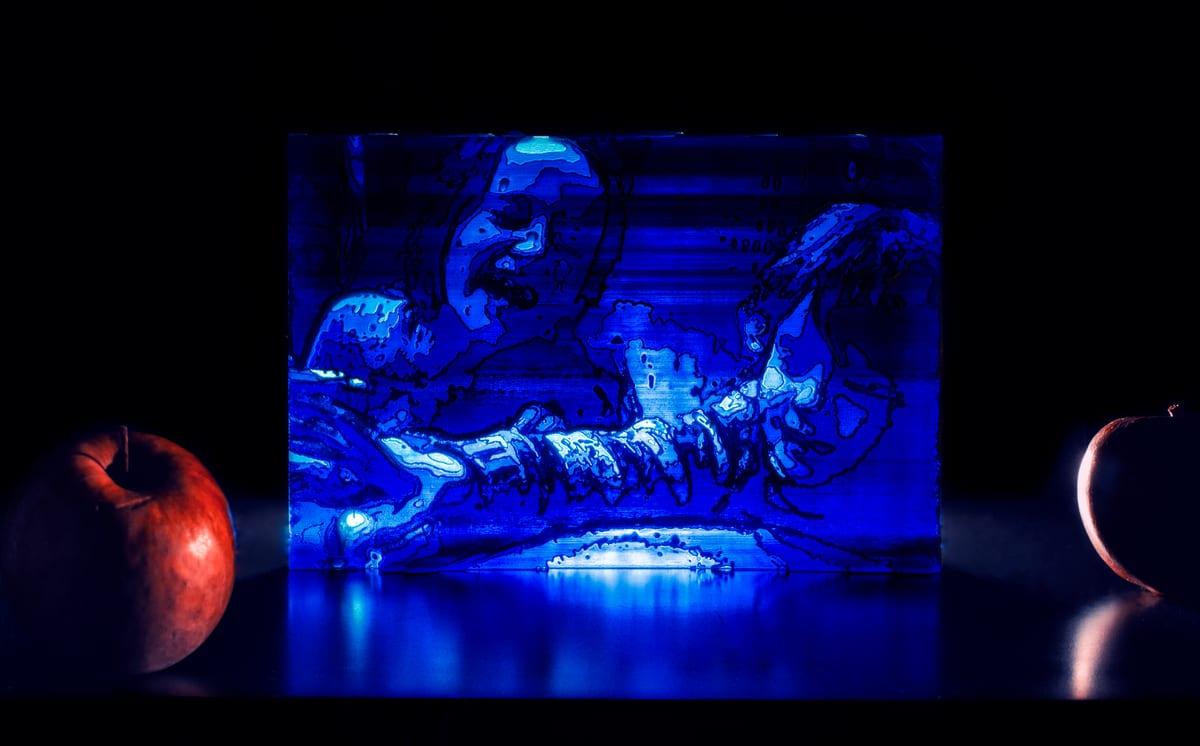
| Lithophane disc (photo in light) | Very good | Needs a slow print and white filament, so budget more per unit. Best hung near a light rather than on it |
| Hollow sphere bauble | Good with care | Print in two halves or in vase mode. A one-piece sphere needs supports inside it, which nobody wants to remove |
| Multi-colour figure | Depends | Manual colour changes are cheap on flat layered designs and expensive on anything where colours interleave vertically. Ask before you specify five colours |
One design detail that matters more than it should: the hanger. A printed loop moulded into the ornament is free and never falls off. A drilled hole plus a metal cap hook looks more retail but adds a per-unit assembly step. Decide which you want before the batch runs, because retrofitting 50 of them is an afternoon.
Material, and the One Real Safety Note
PLA is the right answer. It is cheap, it holds fine detail, it does not warp on small flat parts, and it comes in silk, metallic, matte, glitter and glow-in-the-dark finishes that all look better on a tree than plain plastic does.
The caution is heat. PLA begins to soften around 55°C. Incandescent and older mini-bulb string lights can reach or exceed that at the bulb, so a printed ornament resting directly on one can deform over an evening. Modern LED strings run cool and are a non-issue. If your tree still uses hot bulbs, ask for PETG instead, which softens around 68°C, and hang ornaments beside bulbs rather than against them.
Do not use printed ornaments as candle holders, and treat glow-in-the-dark filament as decorative rather than reliable; it needs a strong light source to charge and fades within an hour.
What to Send a Maker
Batch ornament jobs go wrong in exactly one way: a detail was assumed rather than written down. Send all six of these and the quote comes back firm.
Quantity and any variants. "40 ornaments, 12 with the name 'Nguyen', 28 with 'Okafor'" is a different job from 40 identical ones. Say so up front.
Exact spellings, typed out. Not in a photo, not verbally. A misspelled name discovered after printing is a reprint at somebody's cost.
Size and thickness. 70-90mm diameter and 3-4mm thick is the sweet spot for a flat ornament. Thinner looks cheap and breaks; thicker doubles the print time for no visual gain.
Colours, with a fallback. Filament colours are not Pantone. Name a colour and say what you would accept instead, or you will be waiting while someone sources an exact shade.
Hanger preference. Printed loop, drilled hole, or metal cap.
The date you need them in hand. Not the date of the party. The date they must be physically with you, which is where shipping transit gets accounted for.
If you are shopping for gifts more broadly and ornaments are just one option on the list, our custom 3D printed gifts guide covers what else prints well at gift budgets and what does not.
Frequently asked questions
How much does a custom 3D printed Christmas ornament cost?
A single custom ornament typically costs $12-25 commissioned, because you are paying for design time on one item. In a batch of 25 the price falls to roughly $3.50-6 each, and at 100 units to $2.25-4. Filament is only $0.11-0.42 per ornament, so almost all of the price is design time, print hours and handling.
When should I order custom Christmas ornaments to get them in time?
Post the job by the end of September for batches over 50, and by the end of October for anything smaller. Independent makers book up through November, and US ground shipping cutoffs land around 17-18 December. Ordering in July or August means you get first pick of makers and the lowest prices of the year.
What material should 3D printed ornaments be made of?
PLA for almost every ornament: it is cheap, rigid, prints fine detail well and comes in metallic, silk and glow-in-the-dark finishes. The one real caution is heat. PLA softens around 55 degrees Celsius, so keep printed ornaments away from incandescent bulbs. Modern LED string lights run cool enough to be a non-issue.
Can you 3D print personalised ornaments with names and dates?
Yes, and it is the most common request. Embossed or debossed names, years and short messages are straightforward to add to a flat ornament and add very little print time. Supply exact spellings in writing, because a misspelled name is a reprint, not an edit, once 40 of them have been printed.
How long does it take to print a batch of ornaments?
A flat 70mm ornament takes roughly 35-60 minutes each at 0.2mm layers, and a typical 220mm bed fits about nine of them per plate. A batch of 50 is therefore around 29-50 hours of print time across six plates, plus colour changes. Budget three to seven days of maker turnaround on top of that.
Book Your Ornaments Before the Rush
Post your design, quantity and the names or dates you want on them. Makers bid with a delivery date, you can ask for a single sample before committing to the batch, and your payment stays in escrow until you approve photos.