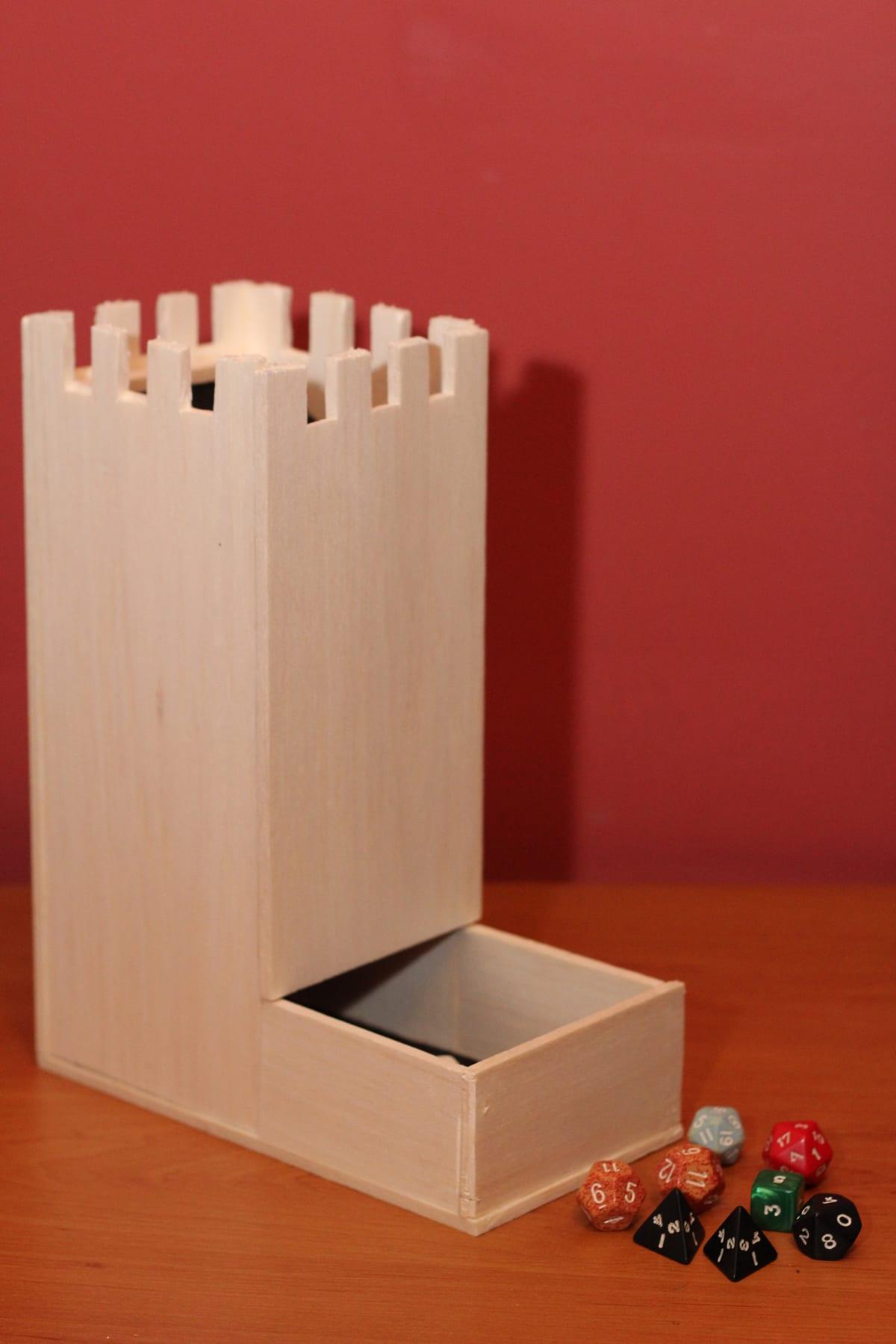
3D Printed Dice Towers: Designs, Costs and How to Order
A dice tower is among the most-printed objects on the internet. There are thousands of free designs, most of them fine, and if you own a printer this is a Saturday afternoon rather than a purchase. So the honest first question is not which tower to get, it is whether you should be commissioning one at all.
Two answers hold up. You do not own a printer and do not want to buy one to solve a dice problem. Or you want a tower that does not exist yet: sized around chunky metal dice, themed to a specific campaign, collapsible for a bag, or quiet enough to use in the same room as a sleeping child. This covers what those cost, how the design decisions change the quote, and what to send a maker.
What does a 3D printed dice tower cost to have made?
A commissioned 3D printed dice tower costs $22-90 for most designs, and $80-160 for a large multi-part themed build. Filament is only $2-8 of that; the balance is 8-20 hours of print time plus assembly. Expect to specify your dice size, because a tower built for 16mm dice will jam on 25mm ones.
Last verified: July 2026
Key takeaways
- •A commissioned 3D printed dice tower costs $22-90 for most designs as of July 2026, with $2-8 of that being filament.
- •Print time is 8-20 hours for a typical tower and 25-40 hours for a large multi-part themed build.
- •Chute width should be about 1.5 times the widest dimension of your largest die: 30mm covers standard 16mm and 20mm dice, 40mm covers chunky 25mm sets.
- •Noise is the most common complaint. Felt or foam on the baffles and tray floor, walls of 2.5mm or more, and rubber feet fix it.
- •A tower does not make dice more random than a good hand roll; it makes rolls harder to manipulate and keeps dice off the floor.
What a Dice Tower Actually Does
A tower makes rolls harder to control. That is the real function, and it is worth being precise about it because the marketing usually overreaches. Dropping a die down a chute past three angled baffles removes the thrower's technique from the outcome, which matters in games where someone has learned to set a die and slide it. It does not make the die more random than a genuine hand roll on a felt mat.
The everyday benefits are more mundane and more useful. Dice stop landing cocked against terrain and miniatures. They stop knocking cards and cubes out of position. They stop ending up under the sofa. In a game with a lot of dice rolling, a tower removes an entire category of small interruptions.
Design-wise, three things matter: the number of baffles, their angle, and the drop height. Three baffles at roughly 40 to 50 degrees is the common arrangement, and most printed towers stand 150-250mm tall. Fewer baffles and dice fall through with their starting face largely intact; more baffles and they jam, especially larger dice.
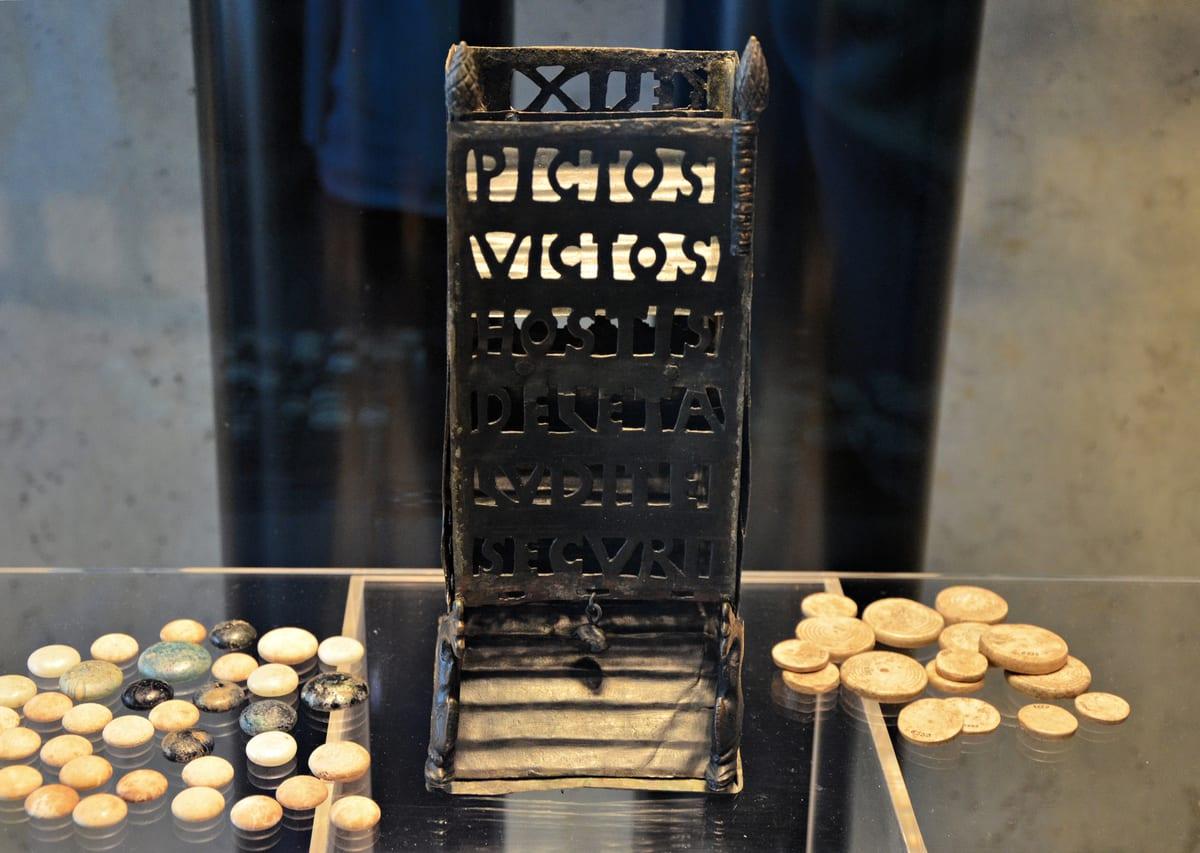
Size It Around Your Dice, Not Around the Design
The single most common problem with a downloaded tower is that it jams. Almost always this is because the design was drawn around standard 16mm dice and the owner rolls chunky 25mm ones, or metal dice, or a mix.
The working rule is that the internal chute should be at least 1.5 times the widest dimension of your largest die. A standard polyhedral set clears a 30mm chute comfortably. An oversized set wants 40mm. Anything below 1.3 times and dice will occasionally wedge between a baffle and the wall, which is worse than no tower at all because it happens unpredictably and always at the wrong moment.
Widest dimension of common dice types
A dice tower chute should clear roughly 1.5 times the widest die you own, so 30mm handles standard 16mm and 20mm dice while chunky 25mm sets need about 40mm.
| die | Widest dimension (mm) |
|---|---|
| Mini polyhedral | 12mm |
| Standard d6 | 16mm |
| Casino d6 | 19mm |
| Standard d20 | 20mm |
| Chunky / oversized d20 | 25mm |
| Jumbo d20 | 35mm |
Source: Common manufacturer dice specifications: 16mm standard d6, 19mm casino d6, approximately 20mm standard polyhedral d20, July 2026
If you roll metal dice, say so
Metal dice weigh four to five times what a resin die does, and they dent PLA baffles over a few hundred rolls. They are also dramatically louder. A tower for metal dice wants PETG rather than PLA, thicker baffles, and felt or foam damping from the start. This is a design decision, not an accessory you can add later.
What One Costs to Commission
Price tracks print hours and assembly, not the size of the tower in any simple way. A tall plain tower prints fast because it is mostly air. A short, heavily detailed one at a fine layer height can take twice as long.
Commissioned dice tower cost by design type
A plain functional dice tower costs $22-40 to commission and a large multi-part themed build $80-160, with detail level driving the price far more than height does.
| type | Typical low | Typical high |
|---|---|---|
| Plain functional (150mm) | $22 | $40 |
| Collapsible / travel | $35 | $75 |
| Themed and detailed | $45 | $90 |
| Large multi-part castle | $80 | $160 |
Source: 3D Print Bounty maker quotes and comparable independent commissions, July 2026. Ranges, not point prices.
The material is almost free; the hours are not. A functional tower is 8-20 hours of print time across one or two plates, and a large castle design with separate turrets and a detailed facade runs 25-40 hours plus glue-up and clean-up. Ask for a coarser layer height on the interior parts, since nobody sees the inside of a chute. You can price the material side yourself with our 3D print cost calculator.
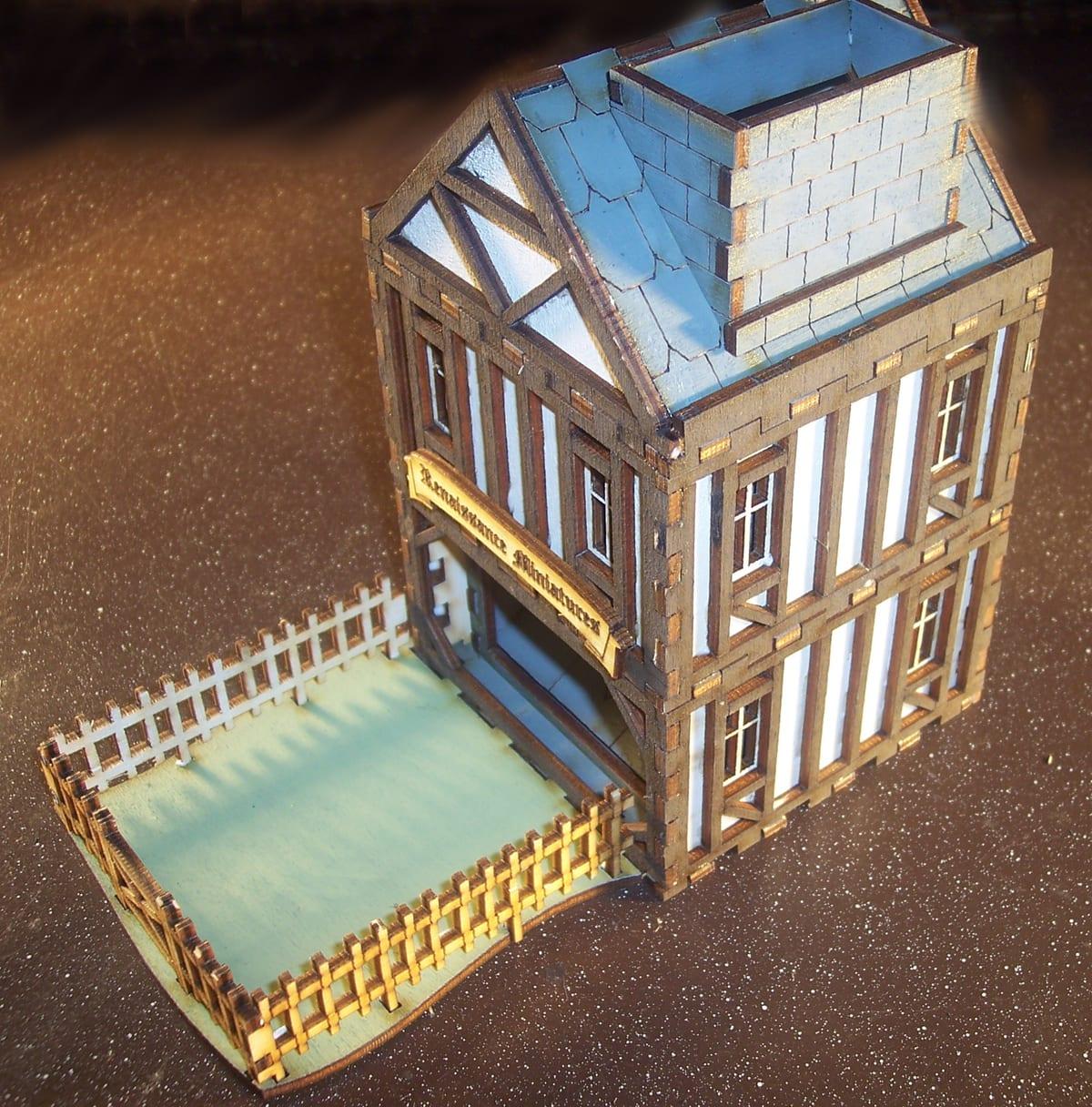
Noise Is the Complaint Nobody Warns You About
A printed dice tower is a thin-walled hollow box, which is the definition of a resonator. Dropping hard dice through one is loud in a way that a wooden tower is not, and it is the single most common regret people report after printing their first.
Four fixes, in order of effect per dollar:
- Self-adhesive craft felt or 2mm foam on the face of every baffle and across the tray floor. This alone removes most of the noise and costs a few dollars.
- Walls of at least 2.5mm instead of the 1.2mm most designs default to. Heavier walls resonate less and the extra filament costs cents.
- Rubber or TPU feet, so the table stops acting as a soundboard.
- Higher infill in the base, 25% or more, which adds mass exactly where the impacts land.
All four are things to specify when posting the job. Retrofitting felt into a finished tower with a narrow chute is fiddly and imprecise.
Design Choices That Change the Quote
| Choice | What it does to the price |
|---|---|
| Collapsible or flat-pack | Adds $10-25. Needs tighter tolerances on the joints and usually embedded magnets, which means pausing the print to insert them. |
| Integrated catch tray | Roughly neutral, and it is what most people want. A separate tray prints faster but is another thing to carry. |
| Dice storage compartment | Adds $5-15 and a lid. Say how many dice, because a seven-die set and a 40-die collection are different designs. |
| Fine layer height for detail | Roughly doubles print time going from 0.28mm to 0.12mm. Only worth it on the exterior faces. |
| Multi-colour or painted | Adds $15-60 depending on whether it is filament changes or hand painting. Hand painting is by far the bigger line. |
Increments are typical adjustments seen on comparable independent commissions, July 2026.
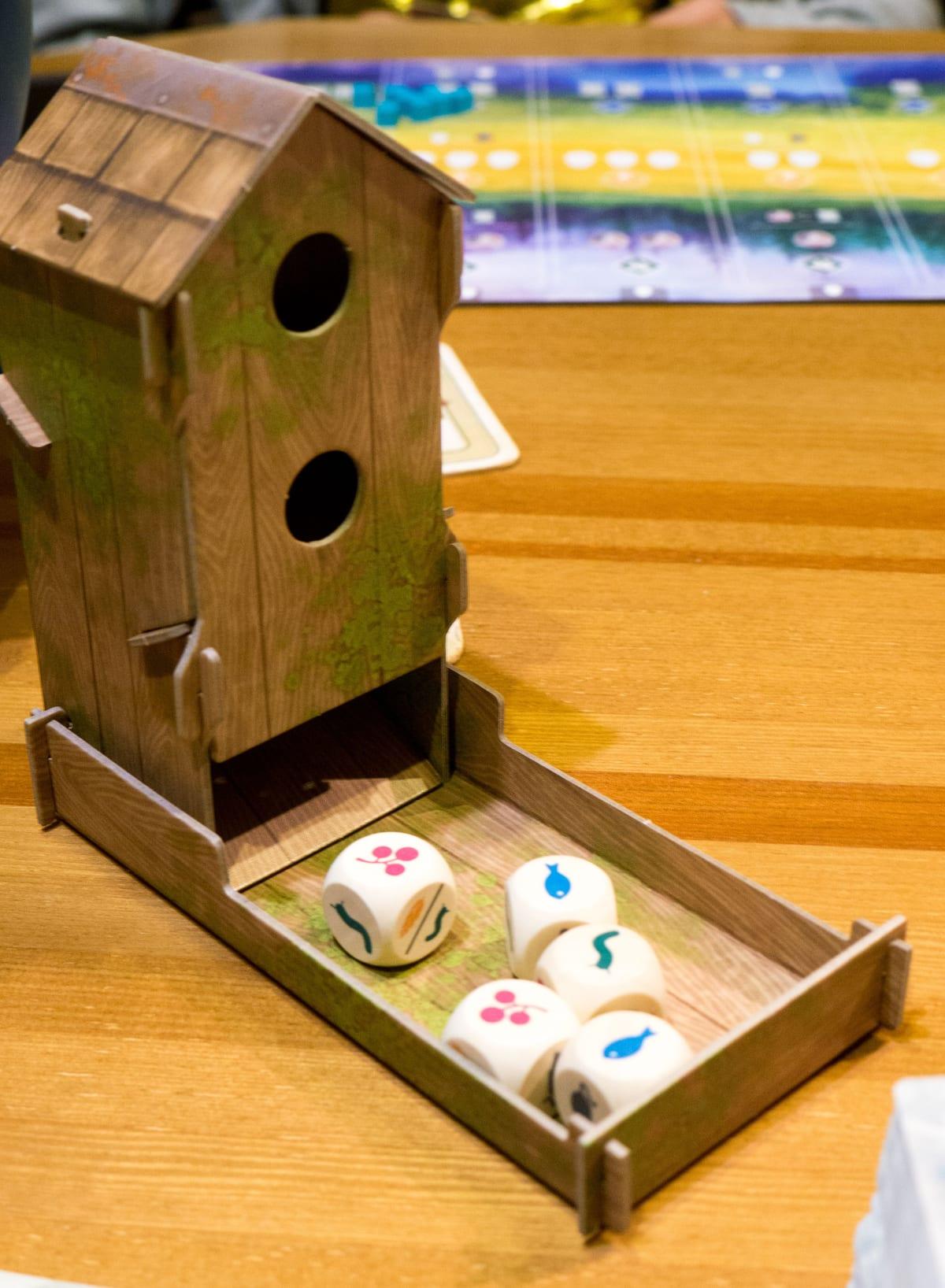
If You Already Have the Files
Plenty of people arrive with a model already downloaded. That usually makes the job cheaper, because nobody has to design anything. It also introduces a licensing question worth handling upfront.
Patreon, MyMiniFactory and Printables do not impose licence terms on the models distributed through them; each designer sets their own. Some permit printing on your own machine but exclude commissioned or commercial printing by a third party, and where that is the case a maker is entitled to decline the job. Read the licence that came with the file, and paste the relevant line into your project description so the makers bidding can see it. Our guide to print rights on Patreon files covers how those terms usually read.
If no suitable design exists, you are commissioning modelling as well as printing. Budget two to five hours of CAD on top, and ask to receive the files afterwards.
One last thought if you are kitting out a whole game shelf: a tower and a fitted box organiser are often quoted together at a discount, since it is one job for the maker. Our post on 3D printed board game inserts covers what those cost.
Frequently asked questions
How much does a 3D printed dice tower cost?
A commissioned 3D printed dice tower typically costs $22-90 as of July 2026. A plain functional tower around 150mm tall sits at $22-40, a themed or detailed one at $45-90, and a large multi-part castle design at $80-160. Filament accounts for only $2-8 of that; the rest is 8-20 hours of print time.
Does a dice tower actually make rolls more random?
Not more random than a good hand roll on a soft surface, but harder to control. The value of a tower is that it removes deliberate and accidental throwing technique, stops dice landing cocked against terrain, and keeps them off the floor. Treat fairness claims as being about eliminating manipulation, not about improving randomness.
How wide does the chute need to be for my dice?
Roughly 1.5 times the largest dimension of your biggest die. Standard 16mm d6 and 20mm polyhedral sets are comfortable in a 30mm chute. Chunky or oversized dice at 25mm need about 40mm, and jumbo 35mm dice need a tower designed around them from the start. Tell your maker which dice you own.
Why is my 3D printed dice tower so loud?
Because it is a hollow plastic box acting as a resonator. The standard fixes are self-adhesive craft felt or thin foam on each baffle and on the tray floor, walls of at least 2.5mm rather than the usual 1.2mm, and rubber feet. Ask for these when you commission it, not afterwards.
Can I have a dice tower printed from a design I downloaded?
Only if your licence allows a third party to print it. Patreon and MyMiniFactory set no licence of their own — each designer writes the terms, and some restrict printing to your own machine and exclude commercial or commissioned printing. Check the licence text that came with the file before you post the job, and send it along with the files.
Get a Tower Built Around Your Dice
Post your largest die size, the theme you want and whether it needs to fold flat. Makers who have built towers before will bid, and your payment stays in escrow until you have approved photos of the finished tower.