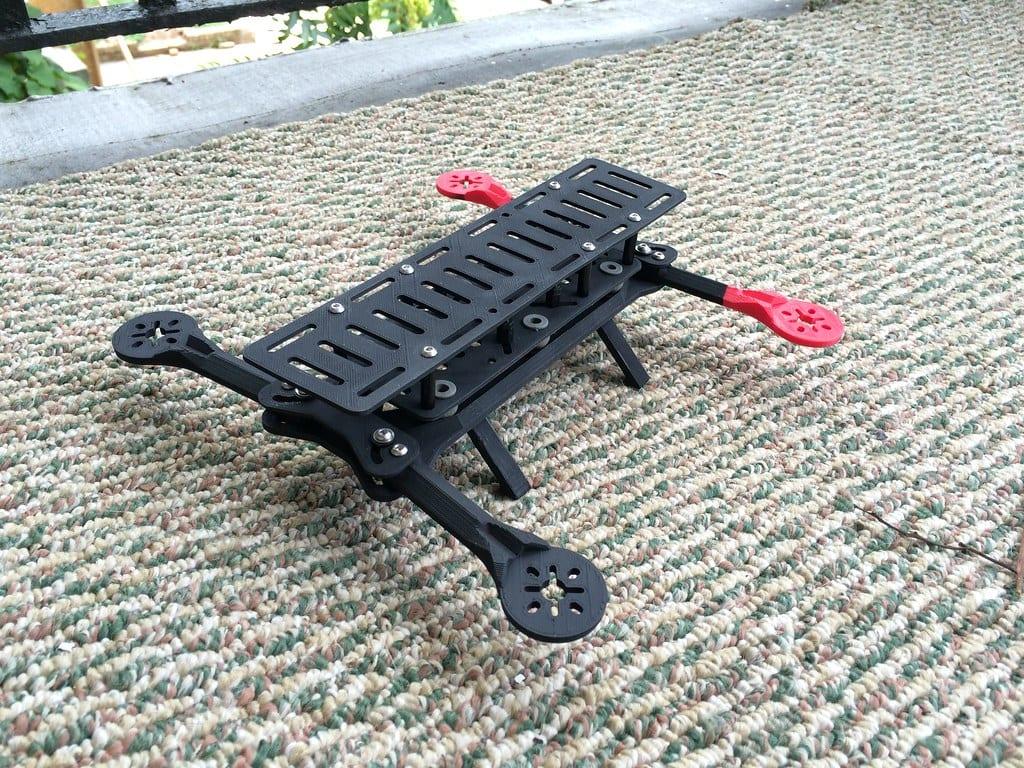
3D Printed Drone Parts They Stopped Selling
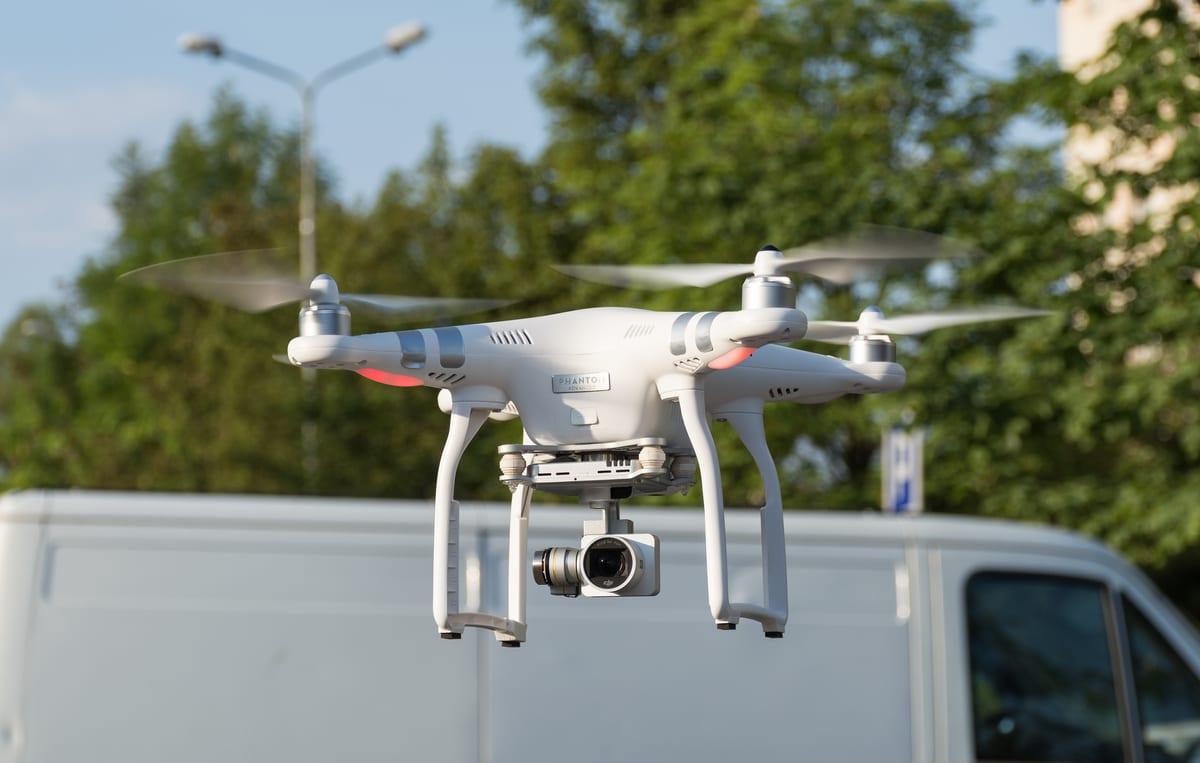
The gimbal guard for a Phantom 3 costs nothing to make and cannot be bought. It is a nine-gram clip of plastic that protects a camera assembly worth several hundred dollars, it was discontinued years ago, and the listings that still exist are either counterfeits or someone's garage stock at collector prices.
Consumer drones age out of parts support faster than almost anything else people own. This post is about replacing those specific discontinued components on an aircraft you already own: which are sensible to have printed, what they cost, the two hard limits that keep coming up, and the weight rule that catches people out. If instead you are designing an airframe from scratch and choosing between printed structure and carbon, that is covered in our guide to custom 3D printed drone frames.
Which discontinued drone parts can you have 3D printed?
Non-flight-critical parts the manufacturer no longer sells: battery covers, gimbal guards, camera and antenna mounts, landing gear feet, prop guards and case inserts, typically $15–110 commissioned as of July 2026. Never print propellers, motor mounts or airframe arms. Watch total mass: the FAA threshold is 250 g, and printed prop guards add about 38 g.
Last verified: July 2026
Key takeaways
- •Printed replacement drone accessories cost $15–110 commissioned as of July 2026, with covers and guards at the cheap end and fitted transport case inserts at the top.
- •Never print propellers. A 5-inch prop at 25,000 rpm has a tip speed near 166 m/s, and printed blades fail by delaminating along a layer.
- •The FAA registration threshold is 250 g. Printed additions of 30–40 g can move a sub-250 g drone into a different regulatory category.
- •TPU is the right material for anything that takes an impact: prop guards, landing feet and camera mounts. PLA is for rigid, light, non-impact parts.
- •Model revision matters more than model name. A Phantom 3 Standard, Advanced and Professional do not share the same gimbal parts.
Why Drone Parts Disappear So Fast
Consumer drone model cycles are short, often eighteen months to three years, and the spare parts chain is tied to the model rather than to a platform. When a line is retired, the small injection-moulded accessories go first: covers, guards, clips, mounts. They are cheap, model-specific, and there is no aftermarket volume to justify anyone tooling up for them.
What is left is a marketplace of unbranded clones of wildly variable fit, plus genuine new old stock at collector prices. Neither is satisfying when the part you need is a nine-gram plastic clip and the aircraft itself still flies perfectly. That is the exact gap our replacement parts service exists to fill.
The other thing that pushes people here is crash damage. Landing legs, prop guards and camera mounts are consumables in practice, and a maker who has already modelled one for your airframe can print a batch of three for barely more than one.
What to Print, What to Be Careful With, What Never to Print
The sorting question is the same as for any aircraft part: if this fails in flight, does the aircraft still fly? Answer that honestly and the categories fall out.
| Category | Parts | Material and notes |
|---|---|---|
| Print it | Battery and port covers, gimbal guards and lens hoods, camera and GPS mounts, antenna holders, motor dust covers, landing gear feet, controller phone and tablet holders, sunshades, stick protectors, transport case inserts, LED and beacon mounts. | PLA for rigid low-mass parts; TPU for anything that meets the ground. Failure is cosmetic or, at worst, drops a small part. |
| Careful: consumable, inspect every flight | Full landing gear legs, prop guards on heavier multirotors, arm covers, payload brackets carrying a light camera, gimbal vibration dampers. | TPU or nylon. Treat as consumables and replace after any hard landing. Check the mount points before every flight. |
| Never print | Propellers. Motor mounts and motor bells. Airframe arms and centre plates on any aircraft you value. Battery compartments that constrain a LiPo. Anything on a drone flown over people, at night, or beyond visual line of sight. Anything on a commercially operated aircraft without your operator's approval. | No filament choice fixes these. Printed parts have no fatigue data and fail suddenly along layer boundaries. |
Why Propellers Are Never on the List
A propeller is the highest-stress component on a multirotor and the one with the least tolerance for imperfection. Run the numbers: a 5-inch FPV propeller at 25,000 rpm has a blade tip travelling at roughly 166 m/s, about 600 km/h. Every gram of blade material is being flung outward continuously, and the blade's bending and twisting loads work the layer boundaries directly, which is where an FDM part is weakest.
Balance is the second problem. Commercial props are moulded to tight mass symmetry and still get balanced. A printed blade carries seam artefacts, variable infill and stringing, none of which are symmetrical. The vibration that produces destroys motor bearings and blurs footage long before the blade actually breaks.
Injection-moulded props cost two to five dollars each and are available for essentially every airframe ever made. There is no scenario where printing one is the sensible choice.
Our policy on flight-critical parts
We do not accept jobs for propellers, motor mounts, or primary airframe structure. A desktop FDM part has anisotropic strength, no fatigue characterisation and no batch traceability, and none of that is fixed by printing it thicker. Everything else on a drone, which is most of what people actually need, is fair game.
The Weight Rule Nobody Mentions
The FAA requires registration for uncrewed aircraft weighing 0.55 lb (250 g) or more, and drones that require registration must also comply with Remote ID rules. An entire product category exists specifically to sit just under that line, often with only a few grams of margin.
Bolt a set of printed prop guards onto a 249 g drone and you have changed its regulatory category. Guards are the worst offender because they are large, but a beefy camera mount and a couple of accessories add up too. Weigh the aircraft on a kitchen scale after fitting anything, and tell your maker the target if you are trying to stay under.
The good news is that mass is a lever the maker controls. Dropping the infill, cutting a perimeter and switching a non-impact part from PETG to PLA all take weight out without changing the geometry at all. Ask for the lightest version that does the job, and ask for the printed mass before you commit.
Typical printed mass of common drone accessories
A set of four printed prop guards adds around 38 g, which is enough to move a sub-250 g drone over the FAA registration threshold. Covers and mounts are 4–14 g each and rarely matter individually.
| part | Printed mass (g) |
|---|---|
| Battery port cover | 4 g |
| Gimbal guard | 9 g |
| Camera mount | 11 g |
| Landing leg (each) | 14 g |
| Prop guard set of 4 | 38 g |
Source: Slicer mass estimates for typical geometries at 3 perimeters and 20% infill, using PLA at 1.24 g/cm³ and TPU at 1.21 g/cm³, July 2026. Actual mass varies with the specific model and print settings.
What Printed Drone Parts Cost
Almost all of the cost is modelling. A gimbal guard is a few grams of plastic and well under an hour on the plate; what you are paying for is somebody measuring your airframe and getting the clip geometry right. If a design already exists for your exact model and revision, the same part drops to the bottom of its range.
Typical commissioned cost of printed drone parts
Battery and port covers are the cheapest at $15–30, while a fitted transport case insert runs $40–110. Where a model already exists for your exact airframe revision, expect the low end of each range because only print time is being charged.
| part | Typical low | Typical high |
|---|---|---|
| Battery / port cover | $15 | $30 |
| Gimbal guard / lens hood | $20 | $40 |
| Landing gear leg (each) | $20 | $45 |
| Camera / GPS mount | $25 | $55 |
| Controller accessory | $25 | $60 |
| Prop guard set of 4 | $35 | $75 |
| Transport case insert | $40 | $110 |
Source: 3D Print Bounty maker quotes and comparable independent commissions, July 2026. Ranges reflect whether the part must be reverse-engineered from your measurements or an existing model can be adapted.
Filament on any of these parts is cents rather than dollars, which you can confirm yourself with our 3D printing cost calculator. Ordering two or three of a consumable part in one job is close to free once the model exists, and worth doing for landing legs and prop guards specifically.
What Your Maker Needs
Drone parts are unusually sensitive to model revision, so precision about which aircraft you have matters more here than in most categories.
- Exact model and variant. Not "Phantom 3" but "Phantom 3 Advanced". Sub-variants frequently differ in the exact area you need.
- Photos of the mounting area with the part removed, from at least three angles, with a ruler in frame.
- The broken part itself photographed flat next to a ruler, even if it is in pieces.
- Caliper measurements of every clip, tab and hole that engages the airframe. These are the fits that have to be right first time.
- Your target all-up weight if you are trying to stay under 250 g.
- Whether the part takes impacts. This decides TPU versus PLA and changes both the price and the design.
Material: Match It to the Impact
PLA has the best stiffness per gram of the common filaments and prints the most accurately, which makes it right for covers, hoods, antenna holders and any mount that will never see a hard landing. Its weakness is heat: a drone left in a car boot on a summer day will come out with deformed PLA parts.
TPU is the correct answer for anything that meets the ground. Prop guards, landing feet and camera mounts printed in TPU absorb crash energy by deforming and springing back, where a rigid part transmits the shock straight into the airframe. It prints more slowly and costs a little more, and it is worth it every time.
PETG or nylon sits in between for landing gear that has to carry static weight without flexing. Nylon in particular has excellent fatigue resistance, though it needs drying and not every maker stocks it.
Frequently asked questions
What drone parts can be 3D printed safely?
Non-flight-critical accessories: battery and port covers, gimbal guards and lens hoods, camera and GPS mounts, antenna holders, landing gear feet and extensions, prop guards, controller accessories and transport case inserts. Anything that can fall off without bringing the aircraft down is a reasonable candidate. Anything in the flight load path is not.
Can you 3D print drone propellers?
No, and this is the clearest line in the hobby. A 5-inch propeller at 25,000 rpm has a tip speed of roughly 166 m/s, around 600 km/h. Printed blades are anisotropic, cannot be balanced to the tolerance a prop needs, and fail by delaminating along a layer. A blade shedding at that speed is genuinely dangerous.
How much does a 3D printed replacement drone part cost?
A battery or port cover costs $15–30 commissioned, a gimbal guard $20–40, a landing gear leg $20–45 each, and a set of four prop guards $35–75 as of July 2026. Cost is dominated by modelling: if a design already exists for your exact model and revision, expect the low end of every range.
Will a printed part push my drone over the 250 g registration limit?
It can. The FAA requires registration for uncrewed aircraft weighing 0.55 lb (250 g) or more, and drones requiring registration must also comply with Remote ID. A set of four printed TPU prop guards adds around 38 g. On a sub-250 g drone with only a few grams of headroom, that changes your regulatory category.
What material should 3D printed drone parts use?
PLA for light, rigid, non-impact parts such as covers, mounts and hoods, where its stiffness-per-gram is excellent. TPU for anything that takes a hit: prop guards, landing feet, camera mounts. PETG or nylon for landing gear that carries weight. Never leave PLA drone parts in a hot car, where they will deform.
Get a Discontinued Drone Part Quoted
Post your exact model and variant, photos of the mounting area with a ruler in frame, and your target weight if it matters. Makers who have done drone accessories before will bid, and your payment stays in escrow until the part is in your hand and clips on.