Food-Safe 3D Printing: What's Actually Safe to Eat Off
Filament listings say "food safe" constantly. What they mean, at most, is that the raw polymer as supplied by the resin producer meets a food-contact regulation. What you want to know is whether it is fine to eat off the thing you just printed, and those are two genuinely different questions with two different answers.
This is the practical version: which printed items are realistically fine, which are not, what the actual failure modes are, and what it costs to get a custom food-contact part made properly rather than hopefully.
Is 3D printing food safe?
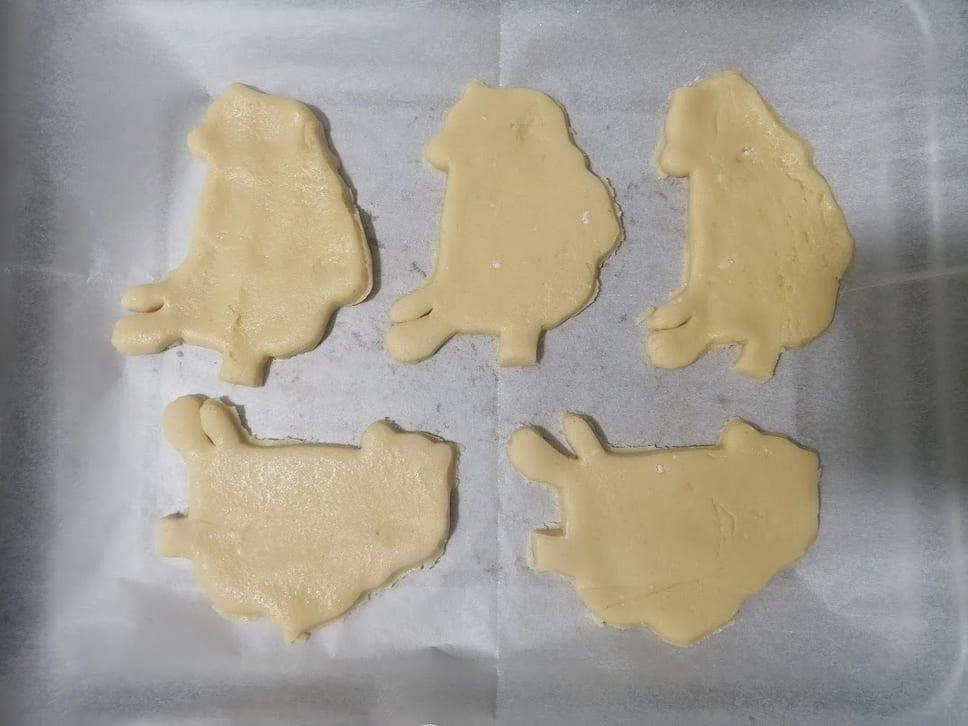
A standard FDM print is not food safe for repeated use. Layer lines trap residue in crevices no sponge or dishwasher jet reaches, and PLA deflects at 55°C, below the 65.6°C rinse an NSF/ANSI 184 certified machine uses to sanitise. Dry, single-session use such as cookie cutters is the limit; anything wet needs silicone.
Last verified: July 2026
Key takeaways
- •A food-contact regulation applies to the base polymer as supplied, not to a spool of filament or a printed part. Colourants and additives are separate substances, and the FDA certifies no finished article.
- •Layer lines are the real hygiene problem: a printed surface is porous at a scale a sponge cannot reach, so a part cannot be reliably cleaned.
- •PLA has a heat deflection temperature of 55°C at 0.45 MPa. A dishwasher certified to the voluntary NSF/ANSI 184 standard finishes with a 150°F (65.6°C) rinse to claim sanitisation.
- •Standard printer nozzles are machined from free-cutting brass. The common C36000 alloy carries 2.5 to 3.7 percent lead under the ASTM B16 rod-stock specification, and nozzle makers rarely state the alloy. Specify a stainless or hardened steel nozzle for anything touching food.
- •A printed mould plus platinum-cure food-grade silicone costs $70 to $160 for a small item and is the only route that gives a genuinely non-porous, dishwasher-safe result.
The Real Problem Is Not the Plastic
The layer lines are the problem. An FDM part is built from stacked extrusions that never fuse into a continuous solid, so the surface is a field of parallel grooves with voids behind them. Food residue works into those grooves, a sponge does not, and neither does a dishwasher jet. Over a few weeks of wet use you have a part that cannot be cleaned and cannot be inspected.
That is why the material question is a distraction. You can print in the most impeccably documented food-grade polymer available and still end up with an uncleanable object, because the geometry is what fails, not the chemistry. Resin parts are smoother but introduce their own issue: standard photopolymer resins are not food safe and incomplete post-curing leaves unreacted monomer at the surface.
The Four Things That Actually Go Wrong
| Failure mode | Why it happens | Can you engineer around it? |
|---|---|---|
| Porous surface | Layer lines and inter-extrusion voids trap residue below the cleanable surface | Only by sealing with a food-safe coating or casting the part in silicone |
| Additives and colourants | A regulation covering the base resin says nothing about pigments, processing aids or recycled content in that spool | Yes. Use natural, uncoloured filament from a brand that publishes food-contact documentation |
| Leaded brass nozzle | Free-cutting brass rod is 2.5–3.7% lead under the ASTM B16 specification, and the nozzle is in contact with molten polymer | Yes, completely. A stainless or hardened steel nozzle costs $10–25 |
| Heat failure | PLA deflects at 55°C, so hot liquid, a dishwasher or a car boot deforms it | Yes. PETG at 68°C or ABS at about 100°C, but neither fixes porosity |
Heat resistance versus a dishwasher sanitising rinse
PLA deflects at 55°C, below the 65.6°C final rinse a residential dishwasher must reach to claim sanitisation. PETG clears that bar by barely two degrees; ABS and polycarbonate clear it comfortably.
| material | Temperature (°C) |
|---|---|
| PLA | 55°C |
| Dishwasher sanitise rinse | 66°C |
| PETG | 68°C |
| ABS | 100°C |
| PC Blend | 113°C |
Source: Filament manufacturer technical data sheets, heat deflection temperature at 0.45 MPa (Prusa Polymers PLA, PETG; Polymaker PolyLite ABS V5.5; Prusament PC Blend), July 2026. Dishwasher figure is the 150°F (65.6°C) final rinse a residential machine must reach to claim sanitisation under the voluntary NSF/ANSI 184 certification.
What Is Realistically Fine, and What Is Not
The useful dividing line is contact duration and moisture, not the word "food". Brief contact with dry or about-to-be-cooked food is a genuinely low-risk use. Prolonged contact with wet, room-temperature food in a part you reuse for months is not.
| Item | Verdict | Reasoning |
|---|---|---|
| Cookie cutters, fondant stamps | Fine in practice | Seconds of contact with dough that then gets baked; washed and dried immediately |
| Dry-goods scoops and funnels | Fine in practice | No moisture means no bacterial growth in the layer voids |
| Chocolate and ice-cube moulds | Borderline | Cast the shape in food-grade silicone from a printed master instead. Better result and no argument |
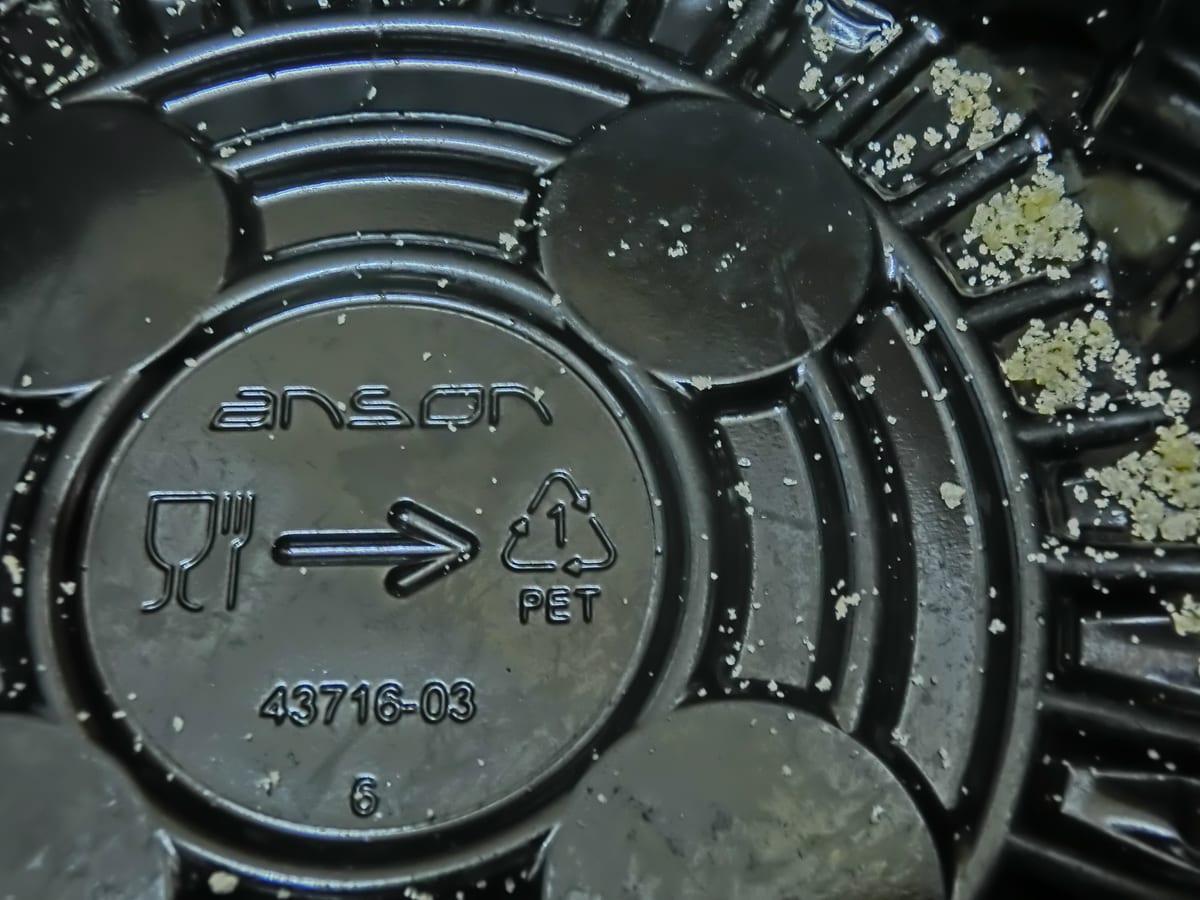
| Cups, bowls, plates, straws | No | Prolonged wet contact, repeated reuse, and they need dishwasher sanitising that PLA cannot take |
| Anything for a baby or toddler | No | Sterilising temperatures, mouthing, and a population with no margin for error |
| Standard resin (SLA) parts | No | Common photopolymer resins are not food safe, and incomplete post-curing leaves unreacted monomer at the surface |
How to Get a Food-Contact Part Made Properly
There are two honest routes to a custom part you can put wet food on, and one of them is much better than the other.
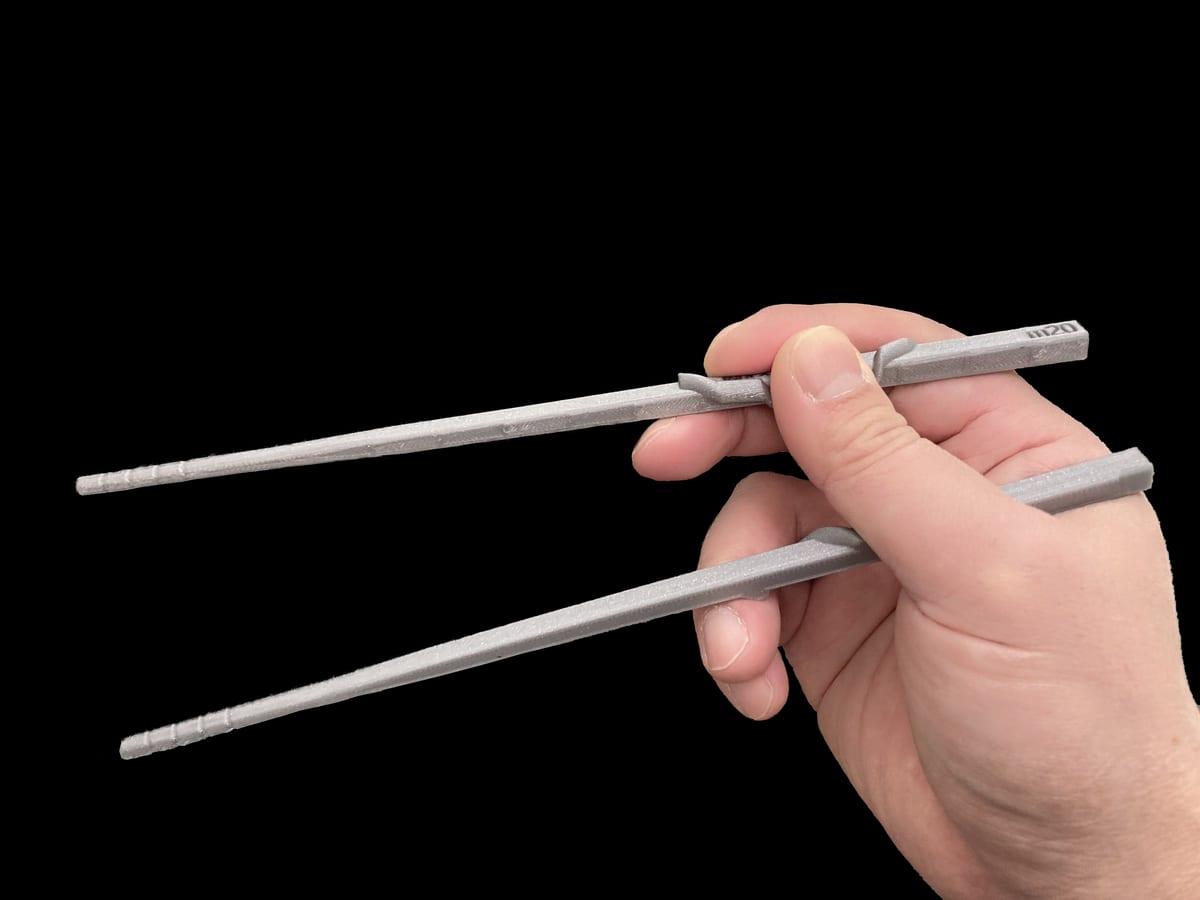
Silicone casting is the good one. Print the shape as a master or a mould, then cast it in platinum-cure food-grade silicone. The result is genuinely non-porous, flexible, dishwasher-safe and holds documentation you can actually read. It costs $70 to $160 for a small custom item, most of which is the silicone and the maker's time rather than the print.
Sealing is the acceptable one. A printed part coated in a food-safe epoxy fills the layer voids and gives a wipeable surface for $35 to $80. The catch is that the coating is now the food-contact material, so it has to be applied thoroughly, fully cured, and inspected for chips. Reapply it when the surface starts to dull rather than when it visibly fails.
Neither route makes sense if a mass-produced equivalent exists. A silicone ice tray costs eight dollars. Custom only earns its keep when the geometry genuinely does not exist commercially, which is the case for things like a scoop sized to a specific container or a mould in a shape nobody sells.
Cost to reach each level of food-contact confidence, small item
Buying an off-the-shelf equivalent at $8 to $30 undercuts everything, which is why custom only earns its keep on a shape nobody sells. Among the custom routes a raw printed part is cheapest and least defensible, while a printed mould cast in food-grade silicone costs $70 to $160 and is the only one that produces a genuinely non-porous, dishwasher-safe result.
| route | Typical low | Typical high |
|---|---|---|
| Buy an off-the-shelf equivalent | $8 | $30 |
| Raw printed part (dry contact only) | $15 | $40 |
| Printed part + food-safe epoxy | $35 | $80 |
| Printed mould + food-grade silicone | $70 | $160 |
Source: 3D Print Bounty maker quotes plus US retail prices for food-safe epoxy and platinum-cure food-grade silicone, July 2026. Assumes a hand-sized item.
What to Specify When You Order One
If you are commissioning a food-contact part, four lines on the order do almost all the work. Makers will not assume any of them.
- Say it touches food. This changes nozzle choice, filament choice and handling. It is the single most useful sentence on the brief.
- Ask for a stainless or hardened steel nozzle and natural, uncoloured filament. Both are cheap requests and both remove a real variable.
- State the contact conditions: dry or wet, cold or hot, single use or reused for months. This is what decides whether a coating is needed.
- Ask what the maker will not do. A maker who declines to call a printed cup food safe is telling you they understand the problem. That is the one you want.
Material choice interacts with price more than people expect, since PETG and polypropylene both cost more than PLA and print slower. Our 3D printing cost guide breaks down where that difference lands on a quote.
Frequently asked questions
Is 3D printing food safe?
A standard FDM print is not food safe for repeated use. The layer lines form microscopic crevices that trap food residue and bacteria where washing cannot reach, and PLA deflects at 55°C at 0.45 MPa so it cannot survive a dishwasher sanitising cycle. Dry, single-session contact such as cookie cutters is the realistic limit.
Is PLA food safe?
The FDA does not approve or certify finished articles for food contact. A resin producer can state that its base polymer meets a US food-contact regulation, but that statement covers the polymer as supplied, not a spool of filament or a printed part. Colourants, processing additives and any recycled content are separate substances, and most filament brands publish no food-contact documentation for the finished product at all.
Can you put a 3D printed item in the dishwasher?
Not if it is PLA. PLA has a heat deflection temperature of 55°C at 0.45 MPa, and a residential dishwasher certified to NSF/ANSI 184 finishes with a 150°F (65.6°C) rinse to claim sanitisation. PETG at 68°C clears that by barely two degrees and ABS at about 100°C clears it comfortably, but neither solves the layer-line hygiene problem.
Do I need a stainless steel nozzle for food-contact prints?
Yes, if the part will touch food at all. Standard 3D printer nozzles are machined from free-cutting brass, and the common C36000 alloy contains 2.5 to 3.7 percent lead under the ASTM B16 rod-stock specification. Nozzle makers rarely state which alloy they used, which is the problem. A hardened steel or stainless steel nozzle costs $10 to $25 and removes the question entirely. Specify it on the order.
What is the safest way to get a custom food-contact part made?
Print the shape and use it as a mould for platinum-cure food-grade silicone, which gives a genuinely non-porous, dishwasher-safe part. Expect $70 to $160 for a small custom item. The cheaper alternative is a printed part sealed with a food-safe epoxy coating, at $35 to $80, which works but needs recoating over time.
Get a Food-Contact Part Made by Someone Who Asks Questions
Post what the part is, what it touches and how often it gets washed. Makers who handle food-contact work will tell you which route fits, and your payment stays in escrow until you have approved photos of the finished part.