Shower Door Handle Replacement When the Part Is Obsolete
The handle came off in your hand. There is a sticker inside the frame with a name on it, you type that name into Google, and you find a company that stopped trading years ago, an old forum thread where three people asked the same question and nobody answered, and a dozen listings for handles that are almost right.
That is the actual problem with shower door handles. It is not that they are expensive. It is that the specific one you need has not been manufactured for a decade, and the "universal" alternatives all want holes in different places than the ones already drilled through your tempered glass. This guide covers why that happens, what it costs to have the original part reproduced, and the three measurements that turn a vague enquiry into a firm quote.
Where do you get a shower door handle when the part is discontinued?
Discontinued shower door handles are rarely stocked, because enclosure hardware is not catalogued like appliance parts. The practical fix is reproducing the original from measurements: a commissioned 3D printed replacement costs $22-40 for a 100mm D-pull and $28-55 for a standard 150mm one, reusing your existing bolt holes, versus $300-900 to replace the door.
Last verified: July 2026
Key takeaways
- •Shower enclosure hardware is not indexed by the major appliance-parts catalogues, so a discontinued handle usually cannot be bought at any price.
- •A commissioned 3D printed replacement costs $22-40 for a small D-pull, $28-55 for a standard one, and $45-85 for a matched back-to-back pair as of July 2026.
- •Three measurements decide the job: bolt-hole centre-to-centre spacing, glass thickness, and standoff height from the glass face to the grip.
- •Use PETG or ASA, never PLA. PLA deflects from around 55C and degrades in permanently humid air.
- •On frameless doors with 10-12mm glass, ask for a metal sleeve through the mounting boss so the bolt clamps steel rather than plastic.
Why Nobody Sells Your Handle
Shower enclosures are not made the way appliances are. A dishwasher comes off one production line with a model number that a parts catalogue can index against. A shower enclosure is far more often assembled by a regional glass fabricator from extrusions, seals and hardware bought from whichever supplier was cheapest that season, then sold under a house brand or no brand at all.
That has two consequences. First, there is frequently no model number that means anything to anyone outside the shop that installed it, and that shop has probably changed hands. Second, handles are low-margin cosmetic SKUs, so when a supplier rationalises a catalogue the handles go first. Hinges and rollers survive longer because they fail more often and sell more.
The big replacement-parts retailers are excellent at appliances and largely blank on shower hardware for exactly this reason. If you have already searched three of them and found nothing, you have not searched badly. The part genuinely is not there.
Which leaves four options, and only one of them keeps your existing holes:
| Option | Typical cost | The catch |
|---|---|---|
| Universal handle | $15-45 | Only works if its hole spacing matches yours exactly. Tempered glass cannot be drilled after manufacture without shattering, so "close enough" is not a thing. |
| OEM part, if it still exists | $30-90 | Worth twenty minutes of searching. If the enclosure is fairly recent and carries a real brand, it is occasionally still stocked. |
| Reproduce the original | $22-55 | Needs measurements from you, and a few days of turnaround. Reuses the existing holes, which is the whole point. |
| Replace the door | $300-900 | Framed door plus fitting. A frameless enclosure replacement runs considerably higher. This is a $30 problem, so treat this row as the thing you are avoiding. |
Cost column: prices commonly listed by US retailers and typical installer quotes, July 2026. Ranges, not point prices.
The Three Measurements That Decide Everything
Almost every delayed quote on a handle job traces back to one missing number. Send these three and a maker can price the work without asking you anything.
1. Bolt-hole centre-to-centre spacing. Measure between the centres of the two through-holes in the glass, not between their edges. This single number is what makes a replacement fit or not fit, and it is the one universal handles almost never match. Measure in millimetres if you can; a handle that is 2mm off will not go on.
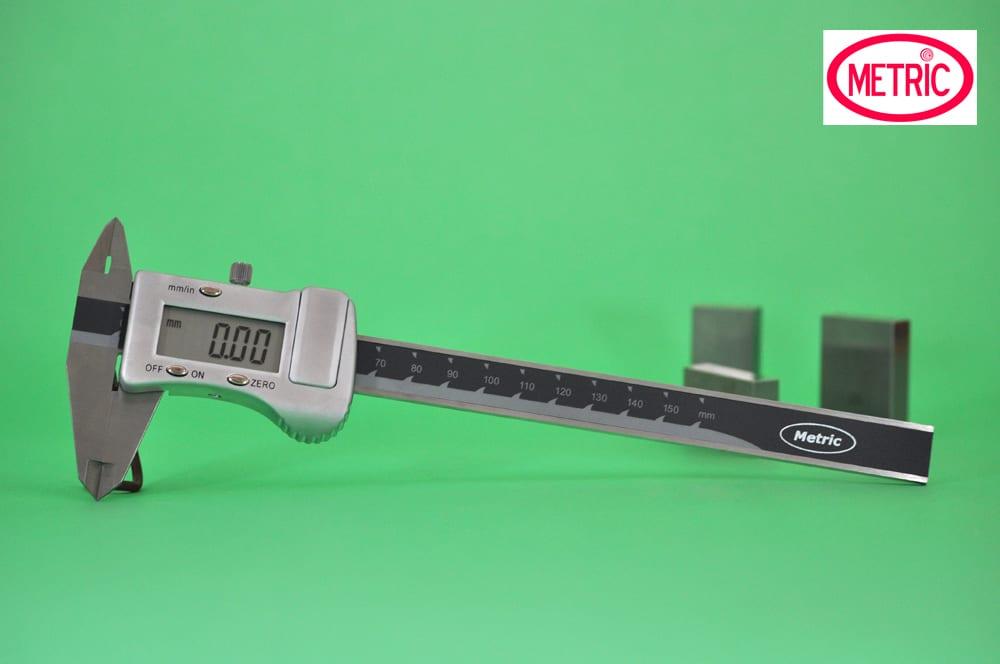
2. Glass or panel thickness. Framed doors are typically 5-6mm (3/16" to 1/4") tempered glass. Frameless doors are typically 10mm or 12mm (3/8" or 1/2"). This decides the length of the through-bolt and how deep the handle boss has to be relieved. Measure at an exposed edge with a caliper.
3. Standoff height. The distance from the face of the glass to the underside of the grip. Get this wrong and you either lose knuckle clearance or the handle fouls the door frame when it closes. 25-40mm is the usual range on framed doors.
Two more things cost nothing to include and prevent almost all remaining back-and-forth: the through-bolt thread (commonly M4 or M5 on imported enclosures, #8-32 or #10-24 on older North American ones) and clear photos of both faces of the door around the handle area. If you still have the broken part, photograph it next to a ruler.
What a Reproduced Handle Costs
Price is driven by modelling time and print hours, not by material. A simple D-pull is a couple of hours of CAD from your measurements; a towel-bar handle with a curved profile and decorative end caps is more.
Commissioned replacement handle cost by type
A single reproduced shower door handle typically costs $22-40 for a small D-pull and $28-55 for a standard one, with a matched back-to-back pair at $45-85, because the modelling work is done once and printed twice.
| type | Typical low | Typical high |
|---|---|---|
| Small D-pull (100mm) | $22 | $40 |
| Standard D-pull (150mm) | $28 | $55 |
| Back-to-back pair | $45 | $85 |
| Towel-bar handle (450mm) | $55 | $110 |
Source: 3D Print Bounty maker quotes and comparable independent commissions, July 2026. Ranges, not point prices.
The gap between a dollar or two of plastic and a $40 quote is the part people query, so here is where it goes. A handle is a load-bearing part in a wet room, which means thick walls, high perimeter counts and no interest in going fast. Below is what a maker is actually budgeting when they price your job. You can sanity-check the material half yourself with our 3D print cost calculator.
Filament weight and print time by handle type
A standard D-pull uses roughly 45g of filament and about 4 hours of printing at settings appropriate for a wet-room structural part.
| type | Filament (grams) | Print time (hours) |
|---|---|---|
| Small D-pull | 30 | 3 |
| Standard D-pull | 45 | 4 |
| Back-to-back pair | 90 | 7 |
| Towel-bar handle | 130 | 10 |
Source: 3D Print Bounty cost calculator, PETG at 0.2mm layers, 4 perimeters and 35% infill, July 2026
Which Material Survives a Bathroom
Ask for PETG or ASA and refuse PLA. A bathroom is a permanently humid box that periodically fills with 40-50C steam, and those two conditions rule out the default filament that most hobby printers reach for first.
| Material | Heat deflection, 0.45 MPa | Verdict for a shower handle |
|---|---|---|
| PLA | 55C | No. Close to shower steam temperature, and it slowly hydrolyses in permanently damp air. It will work for months and then fail without warning. |
| PETG | 68C | The default choice. Tough, water-stable, slightly flexible rather than brittle, and easy enough to print that any maker can take the job. |
| ASA | 93C | Better still if the bathroom has a window that puts direct sun on the door. Needs an enclosed printer, so fewer makers will bid. |
| Nylon (PA6-CF) | 186C | Overkill and awkward. Nylon absorbs moisture readily, which is a strange property to invite into a shower. |
Heat deflection temperatures at 0.45 MPa: Prusament PLA, PETG and ASA technical data sheets and the Bambu Lab PA6-CF TDS, July 2026. HDT is not the same as glass transition temperature, and a part under sustained load can creep well below its HDT.
Print orientation matters more than material here. A layered part is weakest between layers, so the handle should be oriented so that pulling the door does not peel layers apart. In practice that means the bolt axis wants to lie in the print plane rather than running up the Z axis, so the pull loads the part along its layers instead of straight across a layer boundary, with four or more perimeters carrying the bolt load. If a maker does not mention orientation when quoting, ask. It is a good filter.
When Printing Is the Wrong Answer
Three cases where you should not commission a handle.
Your hole spacing matches a stock universal handle. If a $20 part off the shelf lines up with the holes you already have, buy it. Reproducing a part is for when nothing fits, not as a matter of principle.
The handle is structural on a heavy frameless door. A 10-12mm frameless panel can weigh 30-40kg, and its handle is often the only thing anyone touches. Plastic can do this, but only if the design includes a metal sleeve through the mounting boss so the through-bolt clamps steel instead of compressing a plastic wall. Say so when you post the job.
The glass itself is damaged. A chip or crack anywhere near a mounting hole means the panel is at end of life. Tempered glass fails all at once, and no handle makes that safer.
The same logic applies across household repairs generally, and our guide to 3D printed replacement parts covers which broken parts are good candidates and which are not.
How to Order One Without Three Rounds of Questions
Post the job with the three measurements, the bolt thread, photos of both door faces, and a photo of the broken part next to a ruler. State the material you want and whether you need one handle or a matched pair. Makers who have done shower hardware before will bid immediately; the ones who ask what a standoff is will not.
Expect a design proof before printing. On a part where 2mm of hole spacing is the difference between a repair and a coaster, a maker who sends you a dimensioned drawing to approve is doing the job properly.
One last thing worth asking for: the files. If the handle fails in five years, or the second bathroom has the same enclosure, having the model means a reprint costs print time and nothing else.
Frequently asked questions
Where can I buy a replacement shower door handle if the model is discontinued?
Usually nowhere. Shower enclosure hardware is not catalogued the way appliance parts are, because most enclosures were installed by regional glass shops using supplier hardware that changes every few years. Your three real options are a universal handle that needs new holes drilled, replacing the whole door, or having the original handle reproduced from measurements.
How much does a 3D printed shower door handle cost?
A single commissioned replacement handle typically costs $22-55 depending on size, and a matched back-to-back pair costs $45-85, as of July 2026. Filament is only $0.90-3.90 of that. The rest is modelling time from your measurements plus 3-10 hours of print time, which is why a pair costs less than two singles.
What material should a 3D printed shower door handle be?
PETG or ASA. PETG holds its shape to 68C and ASA to 93C, both clear of shower steam, and both shrug off constant humidity. Avoid PLA: it deflects from around 55C and slowly hydrolyses in permanently damp air, so a PLA handle in a steamy bathroom is a part with an expiry date rather than a repair.
What measurements does a maker need to reproduce my shower door handle?
Three numbers cover most jobs: bolt-hole centre-to-centre spacing, glass or panel thickness, and the standoff height between the glass face and the grip. Add the through-bolt thread size and photos of both faces of the door. With those, a maker can quote without a single follow-up message.
Is a plastic printed handle strong enough for a heavy glass shower door?
For framed doors on 5-6mm glass, yes: a PETG or ASA handle printed with four perimeters carries far more than the few kilograms of swing load involved. For frameless doors on 10-12mm glass, ask for a metal sleeve through the boss so the through-bolt clamps steel rather than compressing plastic.
Get Your Handle Reproduced
Post your measurements and photos, and makers who have printed shower hardware before will bid on the job. Your payment stays in escrow until you have approved photos of the finished part.