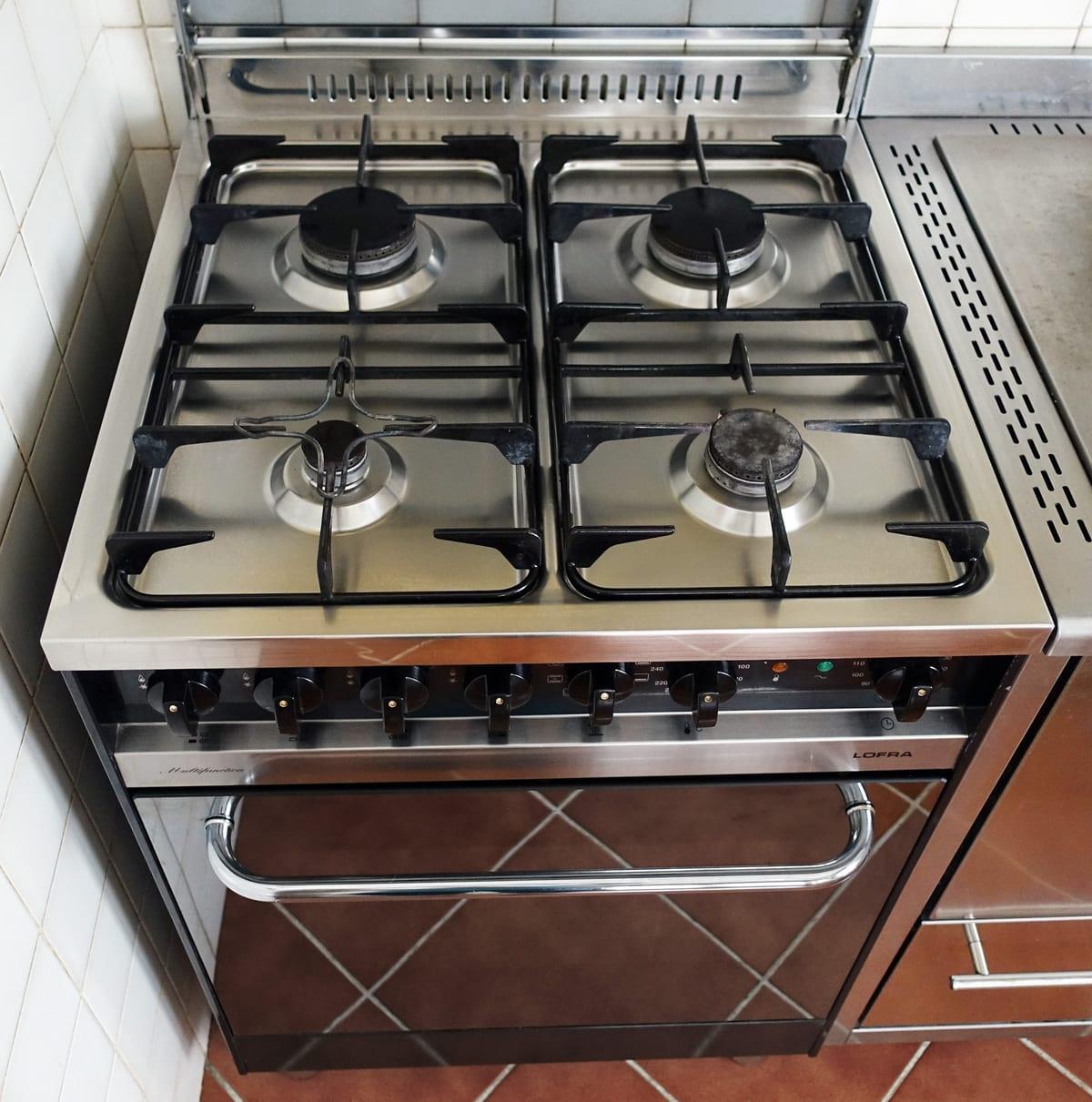
Stove Knob Broken and Discontinued? Print a Replacement
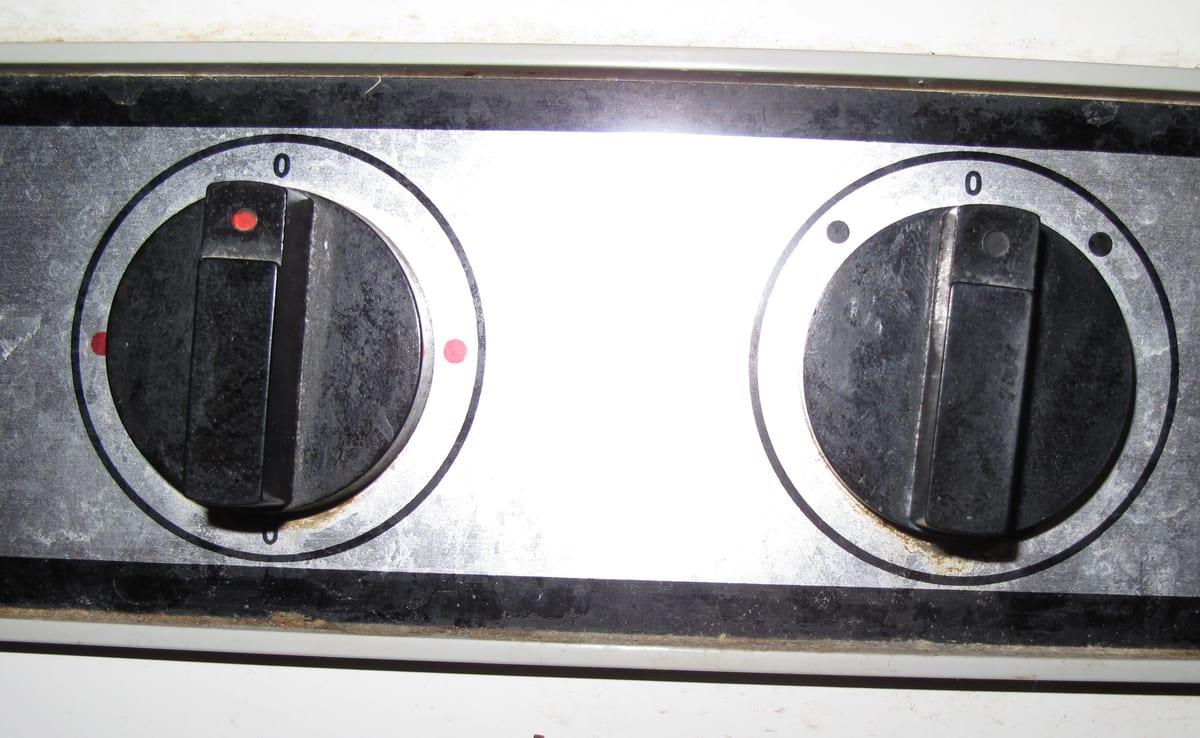
The knob does not break dramatically. The little plastic D-socket inside it splits, the knob spins freely, and you end up turning the burner on with a pair of pliers. Then you look up the part number, discover the range has been out of production for years, and find that the only new-old-stock knobs left are resale listings priced like collectibles.
A stove knob is close to the perfect 3D printing job: small, low-load, geometrically simple, and impossible to buy. This is what a printed replacement costs, what material it needs to be, and the four measurements that decide whether it works on the first attempt.
Can you 3D print a replacement stove knob, and what does it cost?
Yes. A custom 3D printed stove knob costs $18–45 for a single knob and $55–140 for a matching set of five, against $40–150 for a discontinued OEM knob if you can find one. Print it in PETG, not PLA, and send the maker your shaft diameter, the width across the D-flat, and the shaft protrusion.
Last verified: July 2026
Key takeaways
- •A printed stove knob costs $18-45 each, or $55-140 for a matching set of five, and takes 3-7 days once the maker has your measurements.
- •PLA deflects at about 55C and is the wrong material for a control panel. PETG at 68C is the sensible default; ASA at 93C or ABS at about 100C for hot panels.
- •Four measurements decide success: shaft diameter, width across the D-flat, shaft protrusion, and knob face diameter.
- •Push-to-turn child-safety knobs contain a spring detent. A printed copy must reproduce it or the safety feature is lost, so say so upfront.
- •Discontinued OEM knobs are commonly listed at $40-150 each on the resale market, so a printed set of five at $55-140 can cost less than one original.
Your Four Options, Priced
The reason people end up printing is arithmetic, not enthusiasm. If your range is still supported, buy the OEM knob and stop reading. If it is not, the resale market prices a single knob like a collectible, and at the top of that range a printed set of five costs less than one original.
Cost of replacing a broken range knob, by route
A printed set of five knobs at $55-140 lands in the same band as one discontinued OEM knob at $40-150, so where a single original is listed at the top of its range the whole printed set costs less. Against an in-production OEM knob, printing does not compete.
| option | Typical low | Typical high |
|---|---|---|
| Universal push-on knob | $12 | $25 |
| OEM knob, in production | $15 | $60 |
| OEM knob, discontinued | $40 | $150 |
| 3D printed, one knob | $18 | $45 |
| 3D printed, set of five | $55 | $140 |
Source: Prices commonly listed by US appliance parts retailers and on the resale market, against 3D Print Bounty maker quotes, July 2026. Ranges, not point prices.
The fifth option, which appliance repair techs mention and homeowners rarely consider, is replacing the entire control panel or the range itself. A panel assembly for a discontinued model is usually unavailable for the same reason the knob is, and a new range starts around $600. A $25 printed knob solving a $600 problem is the whole case for this repair, and it is the same case we make across 3D printed replacement parts generally.
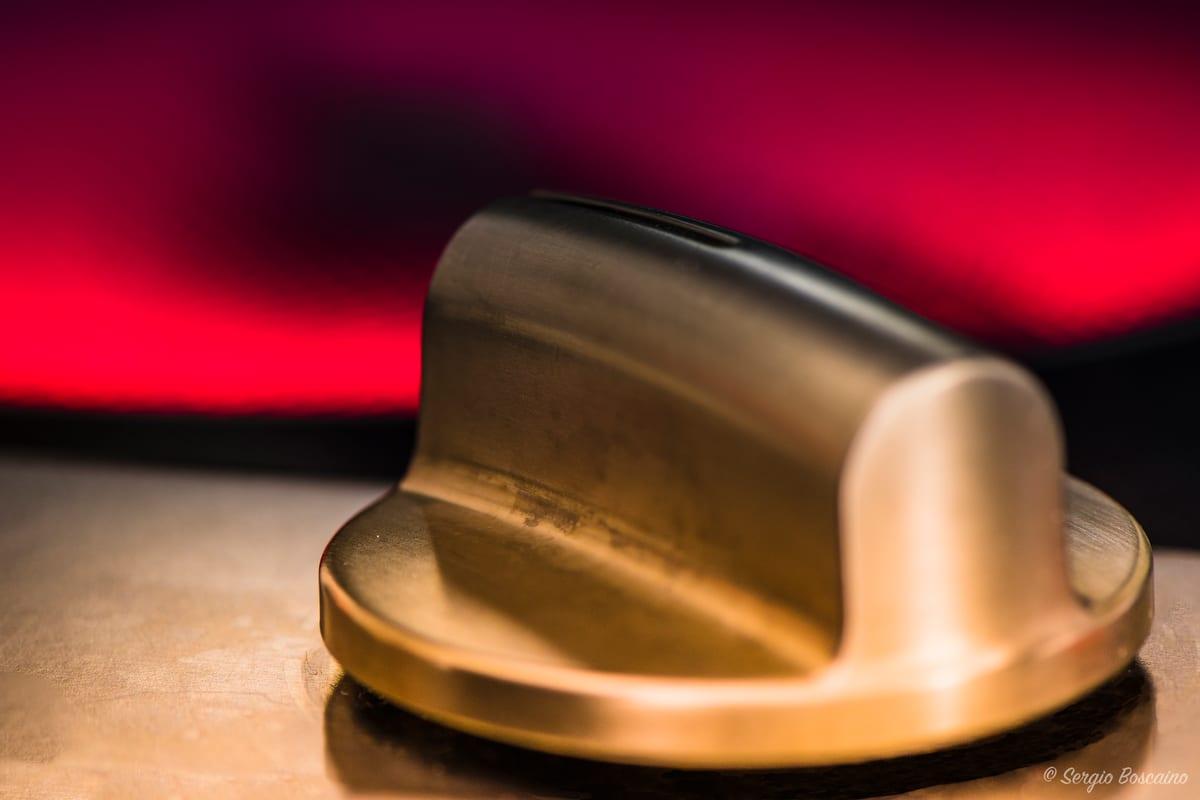
Know Your Shaft Type Before You Ask for a Quote
Everything about a knob commission comes down to the socket. Pull the broken knob off, look at the metal stem sticking out of the panel, and match it to one of these. Then photograph it end-on, because the photo settles arguments the description does not.
| Shaft type | How to recognise it | Printing notes |
|---|---|---|
| D-shaft (single flat) | Round stem with one flat side. The most common design on US and European ranges, usually around 6.0–6.4mm diameter. | Easiest case. Needs about 0.15–0.25mm of clearance on the round and a tight fit on the flat, or the knob will rock. |
| Double-D (two flats) | Flat on opposite sides, so the knob can go on two ways round. Common on gas valve stems. | Straightforward, but the knob orientation is ambiguous. Say which way the pointer should face at the OFF position. |
| Splined | Many fine teeth around the stem. Feels like a gear when you run a fingernail across it. | Hardest to reproduce on an FDM printer. Ask for a resin-printed insert, or accept a D-shaft adapter sleeve inside the printed knob. |
| Round with set screw | Plain round stem, and the old knob had a tiny grub screw in its side. | Needs a brass threaded insert heat-set into the printed knob. Plastic threads strip. Confirm the maker will do this. |
The other question worth settling early: does your knob push in before it turns? Many gas ranges use a spring-loaded push-to-turn detent as a child safety feature. That is a functional mechanism, not decoration, and a printed knob that ignores it removes a safety interlock. It is reproducible, but it changes the design and the quote, so mention it in your first message.
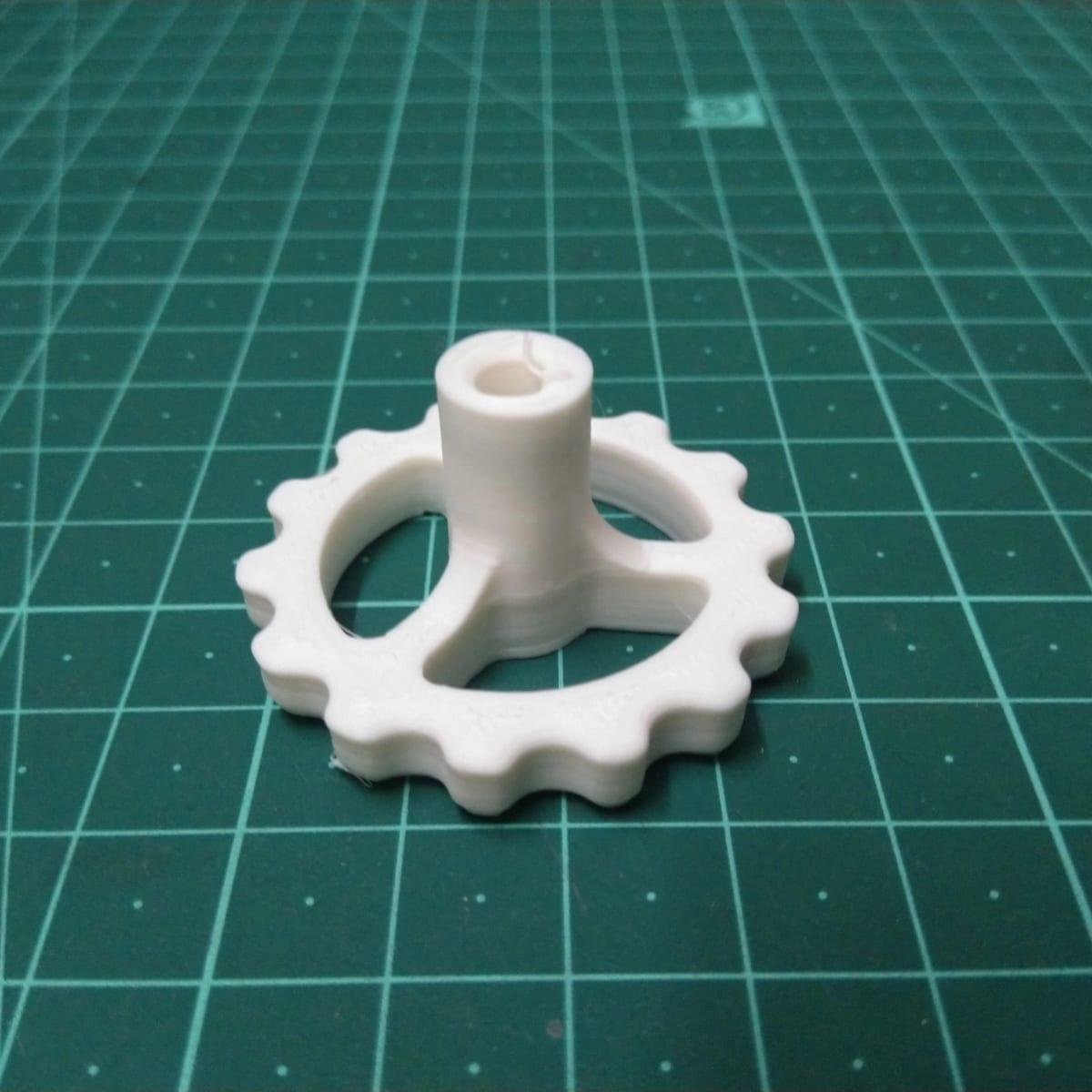
Material: PETG, Not PLA
This is the one place a stove knob differs from an ordinary printed part. PLA deflects at around 55°C, and a control bezel is one of the few household surfaces that reaches it. On a gas range the knob itself usually stays near ambient, because the valve stem is not a heat path. On an electric coil range, or any oven that vents warm air under the control panel, the bezel area routinely runs warm enough to distort a PLA knob into an oval over a few months.
PETG at 68°C clears the panel temperature on a domestic range. ASA at 93°C and ABS at around 100°C are the upgrade for a panel you can feel heat through, and ASA additionally resists the UV in a kitchen window. The trade-off is that ABS and ASA need an enclosed printer, so fewer makers can quote them and lead times run a day or two longer.
Heat deflection temperature by filament, at 0.45 MPa
PLA deflects at about 55C, below the temperature a warm control panel can reach. PETG at 68C is the practical minimum for a stove knob, with ASA at 93C and ABS at about 100C for hot panels.
| material | Heat deflection temp |
|---|---|
| PLA | 55°C |
| PETG | 68°C |
| ASA | 93°C |
| ABS | 100°C |
| PC blend | 113°C |
| Nylon (PA6-CF) | 186°C |
Source: Prusament PLA, PETG, ASA and PC Blend technical data sheets, the Polymaker PolyLite ABS TDS V5.5 and the Bambu Lab PA6-CF TDS, heat deflection temperature at 0.45 MPa, July 2026
What to Send Your Maker
Send all of this in the first message and you will get a firm quote rather than a conversation. Digital calipers cost about $12 and are the difference between one print and three.
| Measurement or detail | Why it matters |
|---|---|
| Shaft diameter | Sets the socket bore. A 0.2mm error either cracks the knob going on or leaves it spinning. |
| Width across the flat | This is the dimension that actually transmits torque. Measure from the flat to the opposite round face. |
| Shaft protrusion from the panel | Decides socket depth. Too shallow and the knob does not seat; too deep and it bottoms out before it grips. |
| Old knob face diameter and skirt depth | Keeps the new knob visually matched to the remaining originals and clear of a recessed bezel. |
| Range brand and model number | Lets the maker check whether an existing community model already fits, which cuts the price to print time only. |
| Markings you need | OFF, LO, MED, HI, or a plain pointer. Recessed text with a contrasting paint fill survives cleaning; surface-printed text wears off. |
| Push-to-turn, yes or no | Changes the internal design entirely. Omitting this is the most common cause of a printed knob that fits but does not work. |
When a Printed Knob Is the Wrong Answer
Your range is current. If the manufacturer still sells the part, buy it. An in-production OEM knob at $15–60 beats a custom commission on hassle, and usually on price too.
The knob was not the failure. If the shaft itself is stripped, chewed or loose in the valve body, a new knob will fail the same way in a month. That is a valve or switch repair and worth an appliance tech's call-out fee.
You need a backlit or indicator knob. Some induction and premium ranges run a light pipe or an electrical contact through the knob. Those are assemblies, not mouldings, and printing reproduces the shell but not the function.
For everything else, this repair sits in the same category as the rest of the parts covered in our guide to getting a broken part 3D printed: cheap, quick, and only available because someone will make one of something.
Frequently asked questions
Can you 3D print a replacement stove knob?
Yes. A stove knob is a small, low-load part with a simple internal shaft socket, which is close to an ideal 3D printing job. A custom printed replacement typically costs $18–45 for one knob or $55–140 for a matching set of five, and takes 3–7 days once the maker has your shaft measurements.
What material should a 3D printed stove knob be?
PETG for almost every range, and ASA or ABS if the control panel gets genuinely hot. PLA is the wrong choice because it deflects around 55°C, and the bezel area on an electric coil range or an oven with a vent under the panel can exceed that. Ask your maker to print in PETG unless you have measured otherwise.
Why will not a universal stove knob fit my range?
Universal knobs come with adapters for common D-shafts, but they usually lack the correct OFF/LO/HI markings for your burner layout, may not clear a recessed bezel, and cannot reproduce a push-to-turn safety detent. They work as a stopgap on a plain electric range and rarely satisfy anyone long term.
How do I measure my stove knob shaft?
Pull the knob off and measure four things with digital calipers: the shaft diameter, the width across the flat on a D-shaft, how far the shaft protrudes from the panel, and the face diameter of the old knob. Photograph the shaft end-on as well. Those four measurements are what a maker needs to model a socket that grips without cracking and a knob that matches the rest of the set.
Is it safe to use a 3D printed knob on a gas stove?
On a standard gas range the knob itself stays near room temperature because the valve stem is not a heat path. The genuine caution is push-to-turn safety knobs: if your original has a spring-loaded child-safety detent, a printed copy must reproduce it or the safety feature is lost. Tell your maker if yours pushes in to turn.
Get Your Knob Set Quoted
Post a photo of the shaft end-on, your four measurements and your range model. Makers who have done appliance parts before will bid, and your payment stays in escrow until you confirm the knob fits.