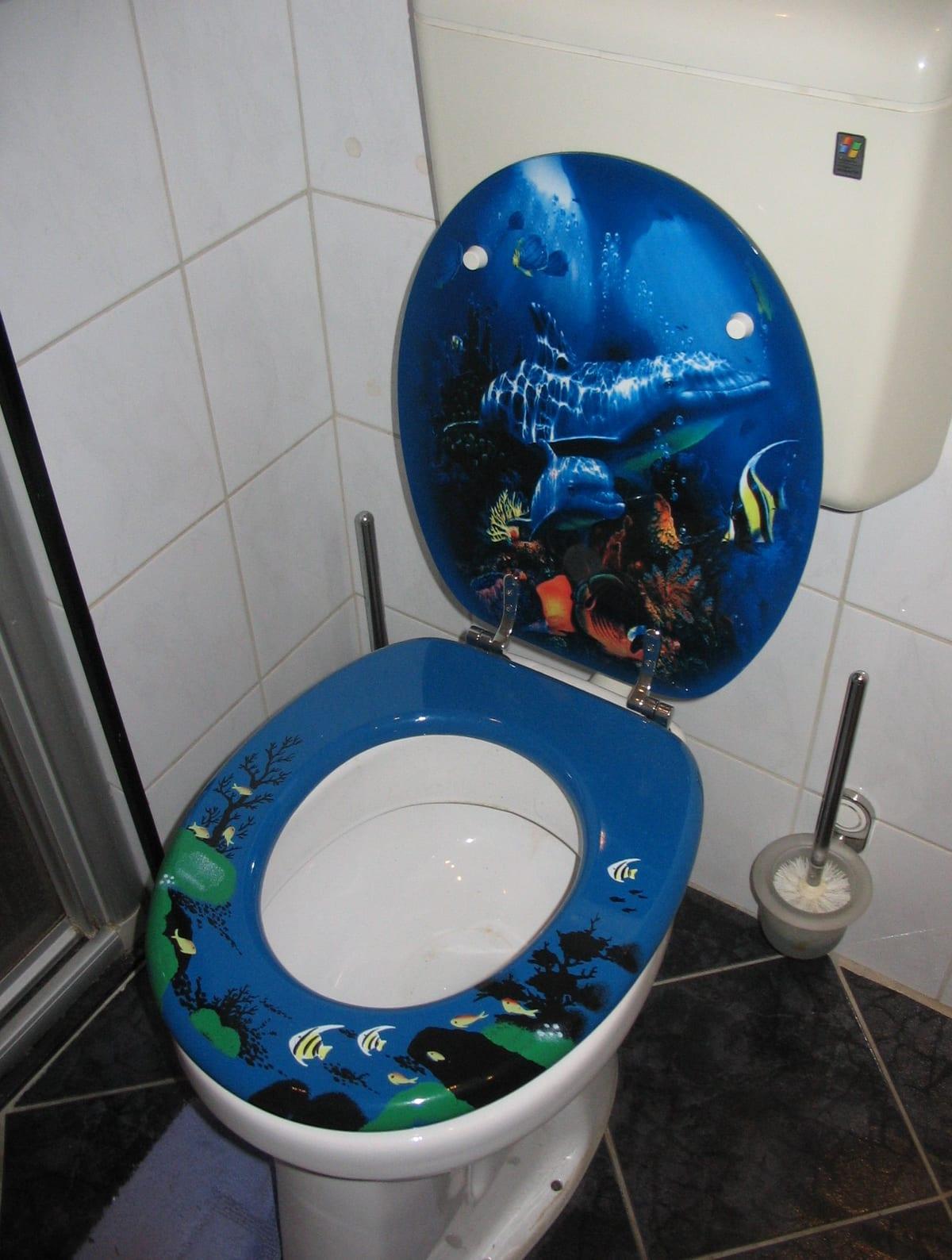
Toilet Seat Hinge Broken? Print the Exact Replacement
The seat is fine. The lid is fine. One 40mm piece of moulded plastic snapped at the pin, and now the whole thing slides sideways every time somebody sits down. You go looking for a replacement hinge and discover the seat model was discontinued years ago, the manufacturer has no spares page, and the only advice online is "just buy a new seat."
Sometimes that is the right advice. If your seat is a $22 white plastic one from a big-box store, buy the new seat. But if it is a soft-close unit, an odd colour, a non-standard shape, or attached to a toilet whose bowl is not a normal round or elongated size, a printed hinge is cheaper and faster than replacing something that is otherwise perfect. Here is what it costs, what it needs to be printed in, and exactly what to measure.
Can you 3D print a replacement toilet seat hinge, and what does it cost?
Yes. A custom 3D printed toilet seat hinge pair costs $25–60 commissioned from an independent maker, against $15–70 for a complete new seat. Printing wins when the seat is a discontinued colour, a non-standard shape, or an expensive soft-close unit worth keeping. Print it in PETG, ASA or nylon. PLA creeps under constant load and fails.
Last verified: July 2026
Key takeaways
- •Almost every US toilet made in recent decades places the two seat-post holes 5.5 inches (140mm) apart, centre to centre. That number is the first thing to check before anything else.
- •A commissioned printed hinge pair costs $25-60. Most of that is modelling time, not plastic: the filament in a hinge pair is about a dollar.
- •PLA is the wrong material. It creeps under sustained load, so a PLA hinge slowly deforms while the lid rests on it. PETG, ASA and nylon do not.
- •The hinge does not carry your body weight on a standard two-post seat. The seat ring transfers that straight to the porcelain rim.
- •If the seat is a plain white round or elongated unit, a new seat at $15-30 beats a printed hinge on both cost and time. Say so before you post the job.
Why the Hinge Breaks and Nothing Else Does
Toilet seat hinges fail in three predictable places.
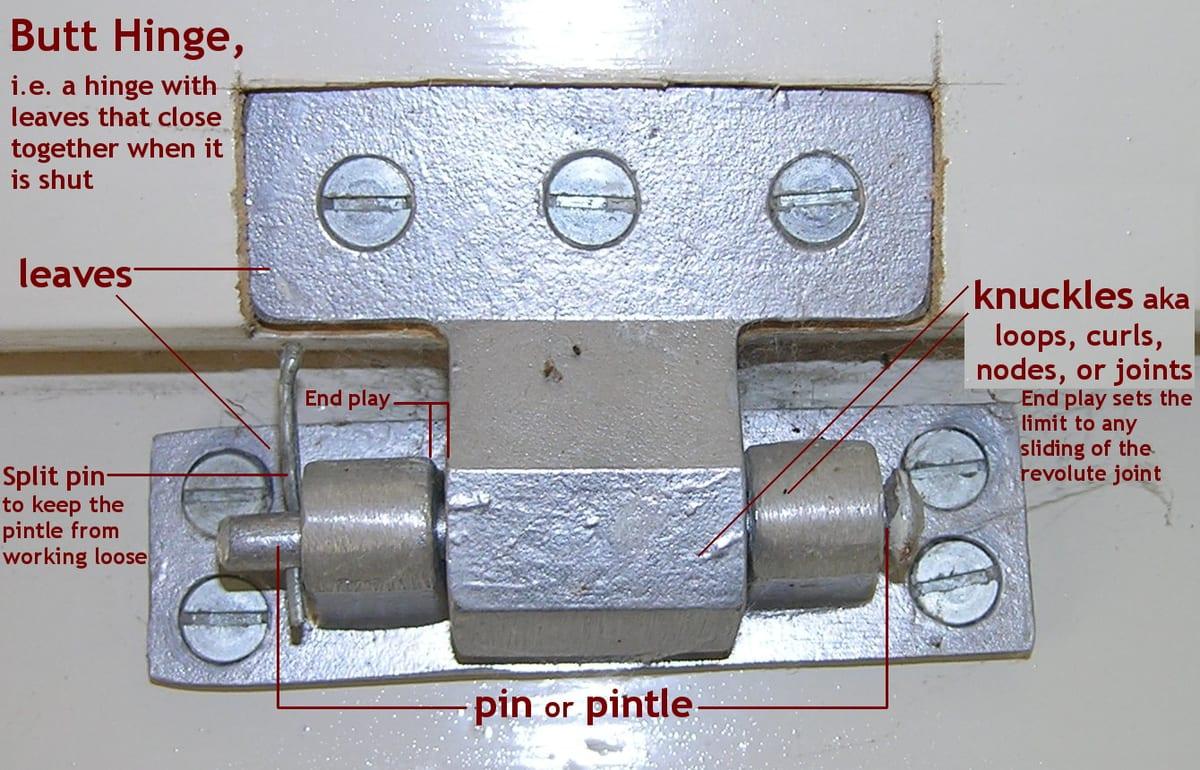
The pin or pintle is the rod the lid rotates around. It is the thinnest load-bearing feature on the whole assembly and the first to shear, usually when somebody drops the lid hard or leans on it. The post is the vertical column that passes through the bowl hole and takes the bolt. Posts crack lengthwise, generally because the bolt was overtightened at install and has been slowly splitting the plastic ever since. The soft-close damper is a sealed rotary cylinder filled with viscous fluid; when it fails, it does not snap, it just stops damping and the lid slams. Dampers cannot be printed. That is a bought part or a whole new hinge.
Pins and posts are both good print candidates. Both are simple solids with a couple of bores, both live in a room that never exceeds 40°C, and neither needs a surface finish anybody will ever look at closely.
Can You Just Buy the Hinge?
Usually not, and the reason is structural rather than malicious. Seat manufacturers sell seats. A hinge is moulded to fit exactly one product line, product lines get replaced every few years, and stocking a $4 spare for a $30 product does not pay for the shelf it sits on. Premium brands do sell soft-close hinge kits for current models, which is worth two minutes of searching before you do anything else. For discontinued and budget seats the part genuinely does not exist any more.
Universal aftermarket hinge kits exist and are worth trying first at under $20. They work when your seat uses a common lug geometry and fail when it does not, which you can only establish by buying one. Printing is what you do after that.
What each route to a working seat costs
A printed hinge pair at $25-60 costs roughly double a budget replacement seat at $15-30, and about the same as a soft-close seat at $30-70. It only pays when the seat you are saving is worth more than a new budget seat: a soft-close unit, a discontinued colour, or a non-standard shape.
| route | Typical low | Typical high |
|---|---|---|
| Budget replacement seat | $15 | $30 |
| Soft-close replacement seat | $30 | $70 |
| OEM hinge kit (if sold) | $12 | $45 |
| Commissioned printed hinge | $25 | $60 |
Source: US big-box retail seat pricing and comparable independent maker quotes for a small modelled-from-photos part, July 2026
The honest test
Would you pay $40 for this seat again today? If yes, print the hinge. If no, buy a new seat and spend the $40 on something else. We would rather tell you that than take a job you will regret. The same logic runs through our wider guide to 3D printed replacement parts: printing wins on discontinued, obsolete and odd, not on cheap and available.
Where the $25–60 Actually Goes
A hinge pair weighs roughly 20–40 grams. At typical filament prices that is around a dollar of plastic, which surprises people who assume the quote is mostly material. It is not. It is almost entirely the hour or two somebody spends turning your photos and measurements into a solid model that fits a bowl they have never seen.
Cost lines inside a typical $43 printed hinge commission
Modelling from photos is over half the cost of a small custom replacement part. Filament is about a dollar. This is why sending accurate measurements up front is the single biggest lever you have on the price.
| line | Share of quote |
|---|---|
| Filament | $1 |
| Print time | $6 |
| Modelling from photos | $24 |
| Fit check + reprint allowance | $5 |
| Shipping | $7 |
Source: 3D Print Bounty maker quotes for small modelled-from-photos parts, with PETG priced from the site cost calculator at $0.030/g, July 2026
The practical consequence: supply the broken part itself, or clean calliper measurements, and you knock the largest line off the quote. To sanity check the material side of any bid, run it through our 3D print cost calculator.
Material: PETG, ASA or Nylon. Not PLA.
This is the one decision that determines whether the part lasts a decade or six months, and it is the one most first-time buyers get wrong because PLA is the default everywhere else.
The problem with PLA here is not heat and it is not humidity. It is creep: sustained load deforms PLA permanently over weeks even at room temperature. A toilet lid resting on its hinge is exactly that kind of sustained load. On top of that, PLA is brittle at the thin pin sections a hinge needs, so the first sharp drop of the lid tends to be the last.
| Material | Verdict for a seat hinge | Why |
|---|---|---|
| PETG | Default choice | Tough rather than brittle, resists creep far better than PLA, handles bathroom humidity, and every maker on any platform can print it well. |
| Nylon (PA12, PA6-CF) | Best, if you can get it | Wear-resistant at a rotating joint and very hard to snap. Costs more and fewer makers print it. Worth asking for in a busy family bathroom. |
| ASA / ABS | Good | Stiff, creep-resistant and stable. Needs an enclosed printer to come out dimensionally accurate, so specify it and expect a slightly higher quote. |
| PLA | Avoid | Creeps under the lid's constant load and is brittle at the pin. Fine for a two-week stopgap while you wait for the real part, nothing more. |
| Resin (SLA) | Wrong tool | Standard photopolymer resins are brittle and degrade in UV. The detail advantage is irrelevant on a part nobody looks at. |
Ask for a solid or near-solid part: 60–100% infill with four or more perimeters costs a few extra minutes and pennies of filament, and removes the most common failure mode. Ask too for the pin to be printed lying down, so its layer lines run along the length of the pin rather than stacking across it. FDM parts are weakest between layers, and a pin printed standing upright shears along a single layer boundary the first time the lid is dropped.
Exactly What to Send Your Maker
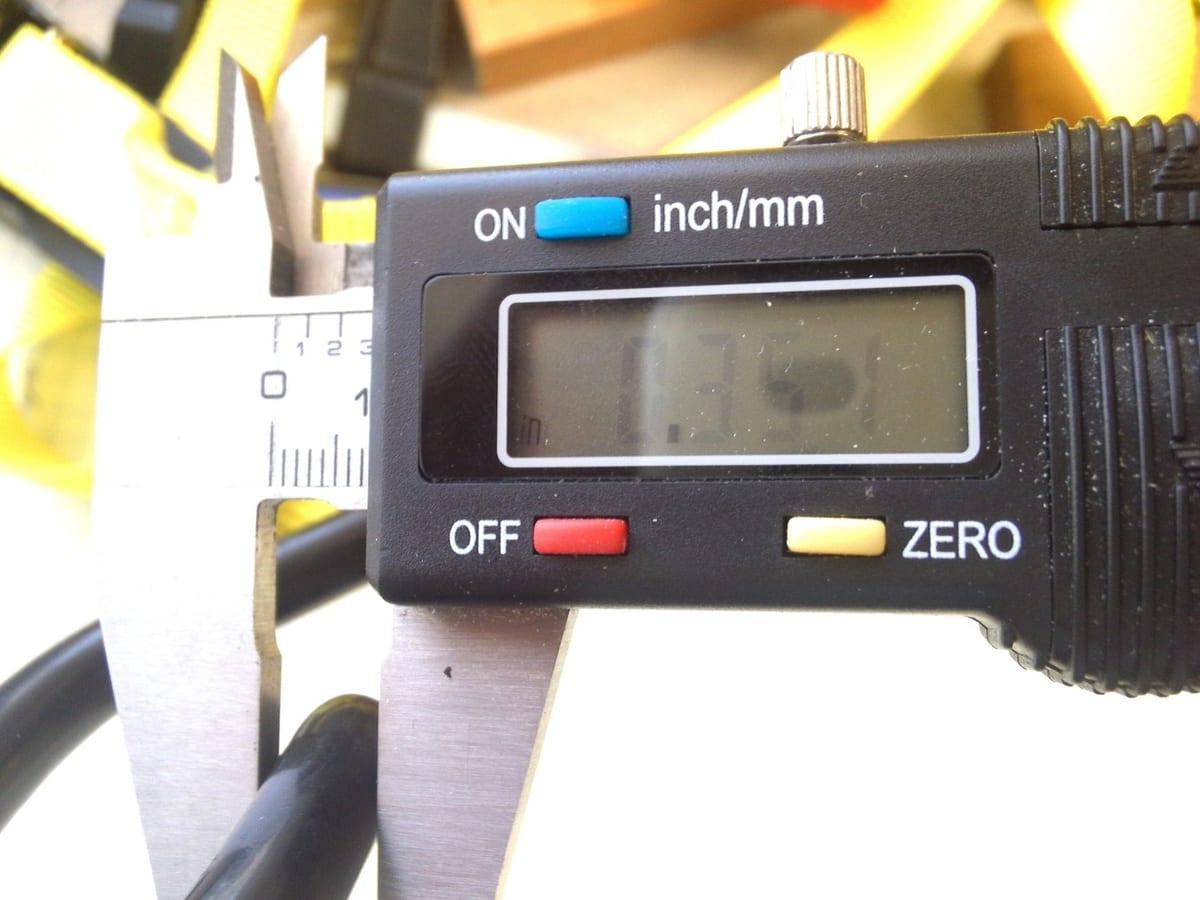
Send all six of these and you get a firm quote instead of a week of messages. Miss any one of them and the maker either guesses or asks, and both cost you time.
| Measurement | Why it matters |
|---|---|
| Mounting hole spacing, centre to centre | Almost always 5.5 inches (140mm) on a US toilet. If yours is not, say so loudly: it means no off-the-shelf part will ever fit and printing just became the only option. |
| Mounting hole diameter | Sets the maximum post diameter. Commonly a little over half an inch, but it varies enough that guessing produces a post that will not go in. |
| Seat lug width and thickness | This is the moulded tab on the seat that the hinge grips. It defines the slot the new hinge has to accept, and it is the dimension people forget. |
| Pin diameter and length | Drives the strength of the new part. If the original pin is under 5mm the maker will usually want to thicken it, which needs your permission because it changes the fit. |
| Bolt type and diameter | Plastic wing bolt, metal bolt with a nut, or top-fix expanding anchor. Each needs a different bore and a different amount of material around it. |
| Photos of the broken part against a ruler | Three angles, good light, ruler in frame for scale. This is what lets a maker reconstruct the shape between your numbers. |
If you can post the broken part to the maker, offer it. Having the original in hand converts a modelling job into a copying job, and modelling is the largest line in the chart above. Our guide to getting any broken part 3D printed covers the photograph-and-measure workflow in more detail, and it applies to every small household part, not just hinges.
When Printing Is the Wrong Answer
Three cases where you should close this tab and go buy a seat.
The damper has failed, not the hinge. Soft-close mechanisms are sealed fluid cylinders. Nobody prints those. If your lid slams but nothing is broken, you need a replacement damper cartridge or a new seat.
The seat itself is cracked. A seat with a hairline crack through the ring is going to fail somewhere else within a year. Printing a hinge for it is throwing $40 after a $20 problem.
It is a plain white round seat. A new one is $15–30 and takes twenty minutes to fit. Print a hinge only when the seat you are saving is worth more than that.
Frequently asked questions
Can you 3D print a toilet seat hinge?
Yes. A toilet seat hinge is a small, low-speed, moderately loaded part, which is exactly what FDM printing handles well. Print it in PETG, ASA or nylon rather than PLA. A commissioned pair typically costs $25-60 including modelling, against $15-70 for a whole new seat, so it only makes sense when the seat itself is worth keeping.
Why can I never buy just the toilet seat hinge?
Because seat makers sell seats, not spares. Hinges are moulded to fit one product line, the line gets discontinued every few years, and stocking a $4 part for a $30 product is not worth the warehouse space. Premium brands sometimes sell soft-close hinge kits, but for budget and older seats the part effectively does not exist.
What material should a 3D printed toilet seat hinge be?
PETG for most jobs, ASA or nylon for heavy use. PLA is the wrong choice: it creeps under sustained load, so a PLA hinge slowly deforms while the lid rests on it, and it is brittle at the thin sections a hinge needs. Bathroom humidity is not the problem. Constant load and repeated bending are.
What measurements does a maker need to print a toilet seat hinge?
Centre-to-centre distance between the two mounting holes on the bowl, the diameter of those holes, the width and thickness of the seat lug the hinge grips, the length of the hinge post, and the bolt diameter. Photos of the broken part next to a ruler, from three angles, plus the broken part itself if you can post it.
Is a 3D printed toilet seat hinge strong enough to sit on?
The hinge does not carry your weight. On a standard two-post seat the load path runs through the seat ring onto the porcelain bowl rim, and the hinge only locates the seat and carries the lid. A correctly walled PETG or nylon hinge handles that comfortably. A hinge printed with thin walls and low infill will not.
Get a Quote for Your Hinge
Post three photos of the broken hinge next to a ruler, your mounting hole spacing, and the seat brand if you know it. Makers who have printed replacement hardware before will bid, and your payment stays in escrow until you have seen photos of the finished part.